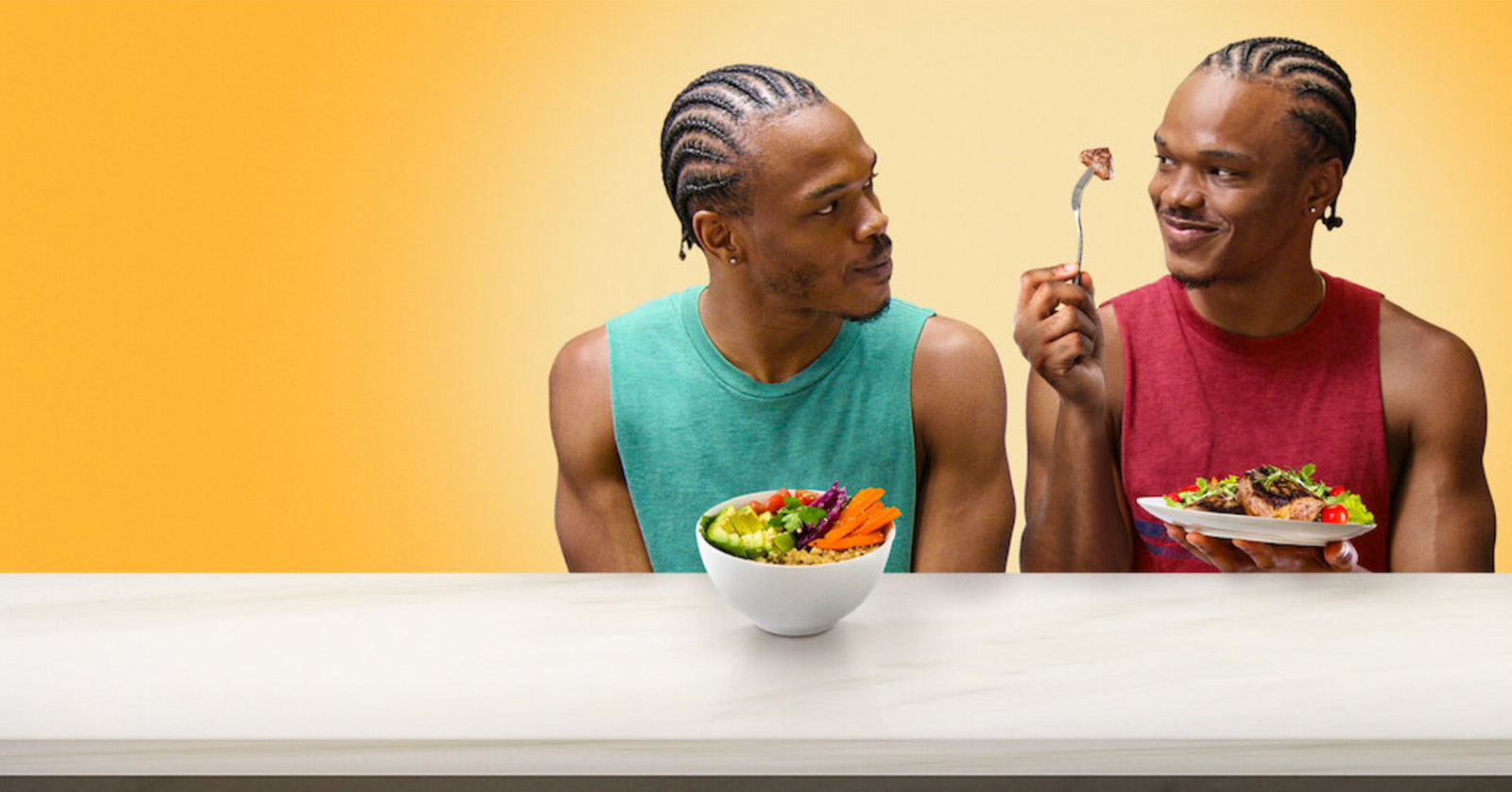
We’ve all heard it a thousand times. Your grandmother probably said it while pushing a plate of broccoli toward you. You see it on gym walls and Instagram captions. You are what you eat. It’s one of those rare clichés that managed to stay relevant for over a century, but honestly, we’ve been looking at it all wrong. Most people think it just means if you eat junk, you feel like junk. While that's technically true, the actual science happening inside your gut is way more intense and localized than a simple "calories in, calories out" equation.
Every single cell in your body is built from the materials you provide. Your skin? Rebuilt every month or so. Your skeleton? Completely replaced over about a decade. If you’re building a house with cardboard instead of brick, you can’t be surprised when the roof leaks.
The Gut Microbiome is Your Second Brain
There are trillions of microbes living in your digestive tract. Trillions. That’s more than the stars in our galaxy. These little guys—bacteria, fungi, viruses—are actually pulling the strings on your mood, your immune system, and even your cravings. When we say you are what you eat, we’re really saying you are what you feed your microbiome.
Research from the American Gut Project has shown that people who eat more than 30 different types of plants per week have significantly more diverse microbiomes than those who stick to the same ten foods. Diversity is the goal. A diverse gut is a resilient gut.
Serotonin and the Gut-Brain Axis
Did you know about 95% of your body's serotonin is produced in your gastrointestinal tract? Serotonin is that "feel-good" hormone. If your diet is heavy on ultra-processed foods, you’re basically starving the bacteria responsible for helping produce that chemical. You aren't just physically sluggish; you're mentally drained. This isn't just a theory. A landmark study known as the SMILES Trial, led by Professor Felice Jacka at Deakin University, found that a modified Mediterranean diet significantly improved symptoms of clinical depression.
It’s wild to think that a salad might do more for your Tuesday afternoon slump than a third espresso. But it does.
Ultra-Processed Foods and the Inflammation Trap
We have to talk about the "UPFs." These aren't just "unhealthy" foods; they are industrially manufactured substances that our bodies barely recognize as fuel. Think about a generic snack cake. It has emulsifiers, stabilizers, and artificial dyes.
When you eat these, your immune system kind of freaks out. It treats these foreign additives like invaders, triggering a low-grade inflammatory response. Chronic inflammation is the silent killer. It’s linked to everything from heart disease to Alzheimer’s.
- Emulsifiers (like polysorbate 80) can actually thin the mucus lining of your gut.
- This leads to "leaky gut," where particles enter the bloodstream that shouldn't be there.
- Your body stays in a state of high alert. Always.
It’s exhausting for your system. You might feel "fine" for years, but the internal wear and tear is constant.
Bio-Individuality: Why Your Friend Can Eat Pasta and You Can’t
This is where the old saying gets complicated. You and your best friend could eat the exact same sourdough toast, and your blood sugar responses would look totally different. This is called bio-individuality.
The PREDICT study, the largest ongoing nutritional study of its kind, has proven that even identical twins have different metabolic responses to the same foods. One twin might have a huge insulin spike from a banana, while the other processes it perfectly. This is why "one size fits all" diets almost always fail. You have to pay attention to how you feel. If you’re bloated after every bowl of oatmeal, maybe oats aren't your "superfood," regardless of what the box says.
The Role of DNA and Epigenetics
You can’t change your genetic code, but you can change how it’s expressed. This is the field of epigenetics. Think of your DNA as a piano. Your lifestyle and diet are the player. You might have the "gene" for a certain condition, but your diet can keep that gene "silent."
Sulforaphane, a compound found in cruciferous vegetables like broccoli and kale, has been shown to influence gene expression. It's basically a signal to your cells to ramp up antioxidant production. You’re literally talking to your DNA with your fork.
Protein Quality Matters More Than You Think
People obsess over grams of protein. "I need 150 grams today." Okay, cool. But where is it coming from? There is a massive difference between a factory-farmed steak pumped with antibiotics and a piece of wild-caught salmon or organic tempeh.
The amino acid profiles differ, sure. But it's also about the "baggage" that comes with the protein. Antibiotic residues in meat can disrupt your own gut bacteria. It’s a cycle. You eat the animal that ate the poor-quality feed, and suddenly your own microbiome is paying the price.
The Truth About "Superfoods"
The term superfood is mostly marketing. Blueberries are great. Goji berries are fine. But no single food is a silver bullet. You can't out-eat a high-stress, low-sleep lifestyle with a bag of kale chips.
Real nutrition is about consistency over intensity. It's the boring stuff. It’s the water you drink. It’s the fiber you get from beans and lentils. Fiber is arguably the most underrated nutrient in the modern diet. Most Americans get about 15 grams a day, while our ancestors likely ate upwards of 100 grams. Fiber is the "broom" that cleans out your system and the "buffet" for your good bacteria.
Actionable Steps for a Better You
If you want to actually apply the "you are what you eat" philosophy without going crazy, start small.
- The 30-Plant Rule: Try to hit 30 different plant-based foods a week. This includes spices, nuts, seeds, fruits, and veggies. It's easier than it sounds. A handful of mixed nuts gets you four or five right there.
- Watch the Emulsifiers: Start reading labels for things like carrageenan, soy lecithin, and gums. If the ingredient list looks like a chemistry final, put it back.
- Eat with the Seasons: Produce that travels halfway across the world loses nutrient density every day it’s in transit. Buy local when you can. The taste alone will tell you it's "real."
- Prioritize Fermented Foods: A daily serving of kimchi, sauerkraut, or kefir is like a probiotic supplement, but better because it contains a complex community of bacteria.
- The 80/20 Balance: Don't be a perfectionist. Stress is just as inflammatory as a donut. Aim for high-quality, whole foods 80% of the time, and enjoy your life the other 20%.
The shift doesn't happen overnight. You won't wake up tomorrow with brand-new skin and infinite energy because you ate a salad tonight. But in three months? Your cells will be made of better stuff. You’ll think clearer. You’ll sleep better. You will, quite literally, be a different person.
Focus on the quality of your fuel, listen to your body’s unique signals, and stop treating your stomach like a trash can. Your future self is currently being built by whatever you decide to have for dinner. Make it count.