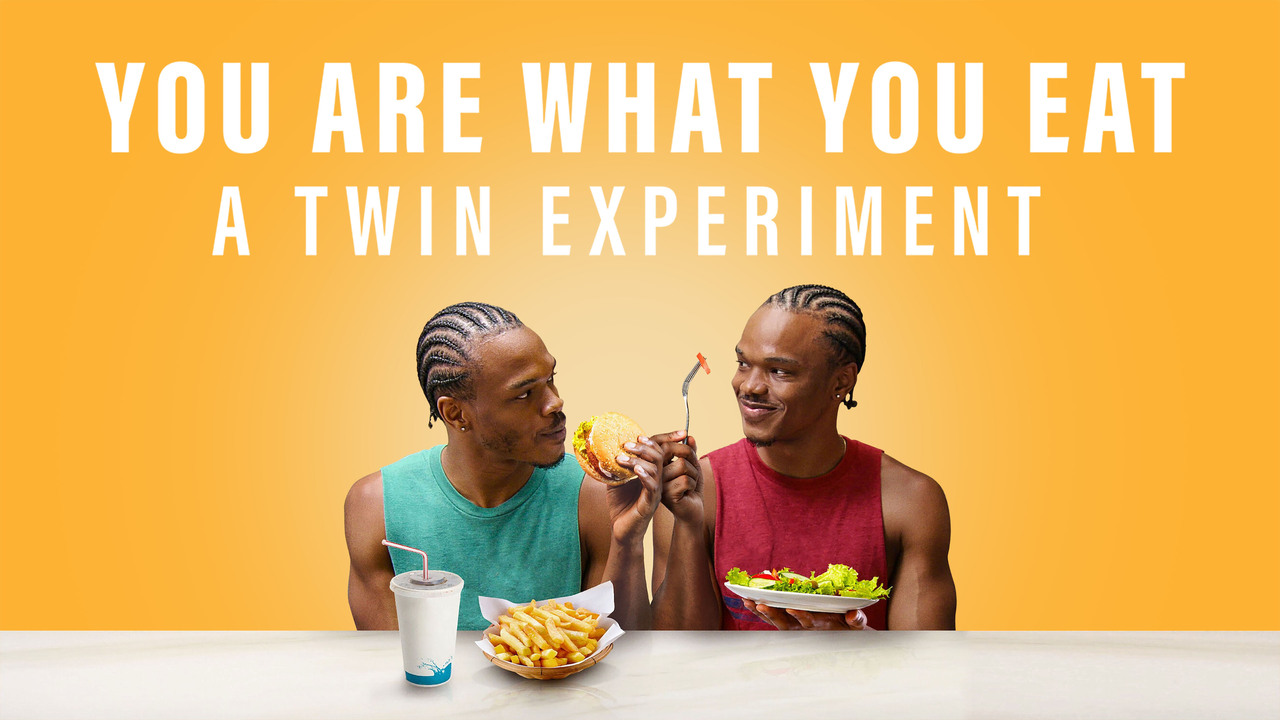
Food is personal. It's cultural, it's emotional, and if you’ve spent any time on Netflix lately, it’s apparently a massive scientific experiment. Most people remember the original You Are What You Eat TV show from the early 2000s where Gillian McKeith would basically terrify people by showing them a table covered in a week's worth of their own bad decisions. It was shock therapy with a side of Tupperware. But the 2024 reboot, You Are What You Eat: A Twin Experiment, shifted the goalposts entirely. It wasn't just about one person’s diet anymore; it was about the fundamental way we produce food in the 21st century.
Honestly, the premise was brilliant. You take identical twins—genetically the same—and put one on a healthy omnivore diet and the other on a strict plant-based diet. It’s the ultimate "nature vs. nurture" showdown.
The Stanford Study Behind the Screen
The show isn't just reality TV fluff. It’s actually based on a real-deal clinical trial conducted by researchers at Stanford Medicine. Published in JAMA Network Open, the study led by Christopher Gardner, PhD, followed 22 pairs of identical twins over eight hours... wait, no, eight weeks. Small slip, but a huge difference in how your body reacts to fiber.
Gardner and his team found that after just two months, the twins on the vegan diet showed significantly lower "bad" LDL cholesterol levels, better insulin levels, and—this is the part that got everyone talking—reduced biological age according to epigenetic clocks.
But here’s the thing. While the You Are What You Eat TV show makes it look like a slam dunk for veganism, the nuance is buried in the data. The omnivore group also ate "healthy." They weren't just pounding burgers; they were eating whole grains, lean proteins, and veggies. Yet, the plant-based group still saw sharper drops in certain health markers. Is it because meat is "evil"? Or is it because the vegan group naturally ended up eating way more fiber and fewer saturated fats? The show leans hard into the former, while scientists are still debating the latter.
Why the Twin Format Changes Everything
If you study nutrition, you know how messy it is. People lie. They forget they ate that handful of almonds at 11 PM. They have different metabolisms. By using identical twins, the You Are What You Eat TV show tries to cut through that noise. If Twin A loses more visceral fat than Twin B, and they have the same DNA, you can finally point a finger at the plate.
Take Pam and Wendy, for example. Or Carolyn and Rosalyn. Watching them navigate the transition was kind of hilarious and heartbreaking at the same time. One twin is mourning the loss of cheese like a dead relative, while the other is discovering that nutritional yeast actually tastes... okay? Sorta.
The show makes a massive pivot halfway through. It stops being just about weight loss and starts being a documentary about the environmental impact of the American food system. This is where it lost some viewers and hooked others. It tackles the massive scale of industrial chicken farming and the runoff from cattle feedlots. It’s not just "eat your greens." It’s "the way we make meat is killing the planet."
Misconceptions About the Results
You’ve probably seen the headlines claiming the vegan twins "stayed younger." Let's be real for a second. Biological age is a relatively new metric. While the telomere data looked promising, eight weeks is a blink of an eye in biological terms.
- Weight Loss Bias: The vegan twins generally ate fewer calories because plant-based foods are often less calorie-dense. Is the health benefit from the plants themselves, or just the fact that they were in a calorie deficit?
- Muscle Mass: This was the scary part. Some of the vegan twins lost more muscle mass than the meat-eaters. If you aren't hitting the gym and tracking your protein, a plant-based shift can sometimes leave you "skinny fat."
- The Satiety Factor: Most people on the You Are What You Eat TV show struggled with feeling full initially. Our brains are wired for calorie density.
The Controversy You Didn't See on Camera
Not everyone in the nutrition world was cheering. Critics argued that the show felt like a feature-length advertisement for veganism. While the Stanford study was rigorous, the TV adaptation definitely had an agenda. It highlighted the horrors of factory farming—which are real—but it didn't spend much time on how a sustainable, regenerative animal farm might differ from a massive industrial complex.
There is also the "supplement" issue. If you go strictly plant-based, you basically have to keep an eye on B12. The show touches on it, but for a casual viewer, it might seem like you can just swap steak for salad and be Superman. It takes work. It takes planning.
What This Means for Your Own Kitchen
If you watched the You Are What You Eat TV show and felt a sudden urge to throw out everything in your freezer, take a breath. The biggest takeaway from the twin study wasn't necessarily that everyone must become 100% vegan tomorrow. It was that the average diet is so devoid of fiber and over-reliant on processed meats that even a moderate shift makes a massive difference.
You don't need a twin to see the results.
Most of us are walking around with chronic inflammation. We're tired. We're foggy. When the twins on the show started eating whole foods—regardless of which group they were in—their energy levels usually stabilized. That’s the "secret" that isn't really a secret. It’s just hard to do when a salad costs ten bucks and a double cheeseburger is on the dollar menu.
Beyond the Screen: Actionable Steps
Watching the show is one thing. Changing your life is another. If the You Are What You Eat TV show motivated you, don't just let the credits roll and forget about it.
Start with a "Fiber Audit." Most Americans get about 15 grams of fiber a day. The twins who saw the most improvement were hitting 30 to 40 grams. You can get there by adding beans to your soup or swapping white rice for farro. It’s boring advice, but it’s what the bloodwork supports.
Next, look at your protein sources. You don't have to quit chicken cold turkey (pun intended). Just try the "half and half" rule. If you're making tacos, use half the beef and replace the other half with lentils or black beans. You're lowering saturated fat and upping fiber without sacrificing the flavor you're used to.
Finally, ignore the "all or nothing" mentality that reality TV promotes. The twins had a team of chefs and doctors. You have a microwave and a job. Success isn't about being a perfect vegan; it's about being a "qualitarian." Buy the best quality food you can afford, eat as many colors as possible, and maybe, just maybe, stop worrying so much about what a TV doctor thinks of your poop.
The real lesson from the You Are What You Eat TV show is that your body is remarkably resilient. It wants to heal. It wants to feel better. You just have to stop getting in its way with a constant stream of ultra-processed fuel.
Start by swapping one meal a day. Just one. See how you feel in two weeks. You might not have a twin to compare yourself to, but your own mirror and your own energy levels will tell you everything you need to know.
Actionable Insights for Your Nutrition Journey:
- Prioritize Fiber Density: Aim for 30g of fiber daily. This single metric often correlates more closely with improved gut health and lower LDL than almost any other dietary change. Use split peas, raspberries, and avocados as high-yield sources.
- Monitor Saturated Fat: If you choose to keep meat in your diet, keep an eye on the saturated fat "ceiling." Replacing butter with extra virgin olive oil and swapping ribeye for sirloin or fish mimics the heart-health benefits seen in the Stanford twin study.
- The 80/20 Whole Food Rule: You don't need to be a monk. Aim for 80% of your intake to be "one-ingredient foods" (an apple is an apple, a potato is a potato). The remaining 20% allows for the flexibility needed to actually stick to the plan long-term.
- Get Your Bloodwork Done: Don't guess. Get a baseline of your LDL, HbA1c, and Vitamin D levels. Re-test after 12 weeks of dietary changes to see what is actually working for your specific biology.



