You just did something nice. Maybe you held the door open at a bakery in Berlin or helped someone with their heavy suitcase on a train in Munich. They look at you and say, "Danke." Now what? Most people freeze. They reach into the dusty corners of their brain and pull out the one phrase they learned in middle school: "Bitte." It works. It's fine. But honestly, it’s a bit boring. German is a language of layers, and if you want to sound like a real person rather than a translation app, you’ve got to mix it up.
Knowing how to say you are welcome in German isn't just about translation. It’s about social cues. It’s about understanding the "Vibe" of the city you’re in. Northern Germans might find a long, flowery response a bit much, while someone in the south might appreciate a bit more warmth.
The Swiss Army Knife: Bitte and its Cousins
Let’s start with the basics. Bitte is the undisputed heavyweight champion of German politeness. It means please. It means you’re welcome. It can even mean "pardon?" if you say it with a rising intonation. It’s short. It’s safe. You can’t really mess it up.
But if you want to add a tiny bit more flavor without trying too hard, you say Bitte schön or Bitte sehr. These are the "standard" ways to respond to a thank you. They aren't fancy. They aren't particularly regional. They’re just polite. If a waiter brings your coffee and you say danke, they’ll almost certainly hit you with a bitte schön.
Interestingly, the word schön means beautiful and sehr means very. So, literally, you’re saying "please beautifully" or "please very." German is weirdly poetic like that, even when it’s being functional.
When "No Problem" is the Better Vibe
Sometimes, "you are welcome" feels a bit too formal for the situation. If you’re at a bar and you pass someone a napkin, saying "Bitte schön" feels like you’re wearing a tuxedo to a backyard BBQ. You need something casual.
Kein Problem.
This is exactly what it looks like. No problem. It’s universal. It’s easy. Younger Germans use this constantly. It’s the linguistic equivalent of a shrug and a smile. It tells the other person that what you did was so small it’s not even worth the "danke" they gave you.
Another great one is Nichts zu danken. This translates to "nothing to thank for." It’s a bit more humble. You’re basically saying, "Don't worry about it, it was nothing." It’s a classic, humble response that works in almost any setting.
Gerne: The Word That Makes You Sound Fluent
If there is one word that will instantly upgrade your German status, it’s Gerne.
Technically, it means "gladly." When someone says thank you and you respond with Gerne, you’re telling them that you enjoyed helping them. It’s warmer than bitte. It feels more personal.
You’ll often hear the variation Gern geschehen. This translates to "happily happened" or "it was my pleasure." It’s widely considered one of the most polite and "correct" ways to respond to gratitude. Use this with your boss, your partner's parents, or that elderly neighbor who always watches you through their curtains. It’s classy.
Why Regionality Changes Everything
Germany isn’t a monolith. The way people talk in Hamburg is vastly different from the dialect in Stuttgart. If you use a local phrase for you are welcome in German, you’ll see people’s eyes light up.
In the North—think Hamburg, Kiel, or Bremen—you might hear Da nich für. This is very colloquial. It’s a shortened version of "Dafür nicht," meaning "Don't thank me for that." It’s dry. It’s efficient. It’s very Northern.
Then you have the South. Bavaria and Austria have their own flavor. Passt schon is a common one. It basically means "it’s fine" or "all good." It’s not strictly a "you’re welcome," but in the context of someone thanking you, it serves as a way to wave off the gratitude.
The Trap of Over-Translation
One mistake English speakers make is trying to translate "It was my pleasure" literally. While you can say "Es war mir ein Vergnügen," it sounds incredibly formal. Like, "I just saved your life from a burning building" formal. Or maybe "I just closed a multi-million dollar merger" formal.
Unless you are actually at a gala or speaking to a head of state, skip the "Vergnügen." Stick to the simpler stuff.
Context Matters: From Business to Bread Shops
How you say you are welcome in German depends heavily on who is looking at you.
Imagine you are in a high-stakes business meeting. Someone thanks you for a presentation. You wouldn't say "Kein Problem." That sounds too nonchalant, maybe even a bit lazy. You’d say, "Gern geschehen" or "Sehr gerne." It shows professionalism. It acknowledges the effort.
Contrast that with a friend picking up a tab at a "Späti" (a late-night convenience store). If they say thanks, a simple "Passt" or "Kein Ding" (no thing/no biggie) is all you need.
Kein Ding is particularly popular among Gen Z and Millennials in Berlin. It’s very "cool." Use it sparingly if you aren’t under 30, or you might look like you’re trying too hard.
Beyond the Words: Body Language
Germans are often stereotyped as being cold, but that’s not really true. They just value directness. When you say your version of "you're welcome," make eye contact. A small nod goes a long way. In many cultures, a fake smile is standard, but in Germany, a sincere, neutral expression is often more appreciated than a forced grin.
If you’re in a crowded U-Bahn and someone says "Danke" because you moved your bag, a simple nod and a "Gerne" is the perfect interaction. No need for a conversation. Just acknowledgment and moving on.
Common Mistakes to Avoid
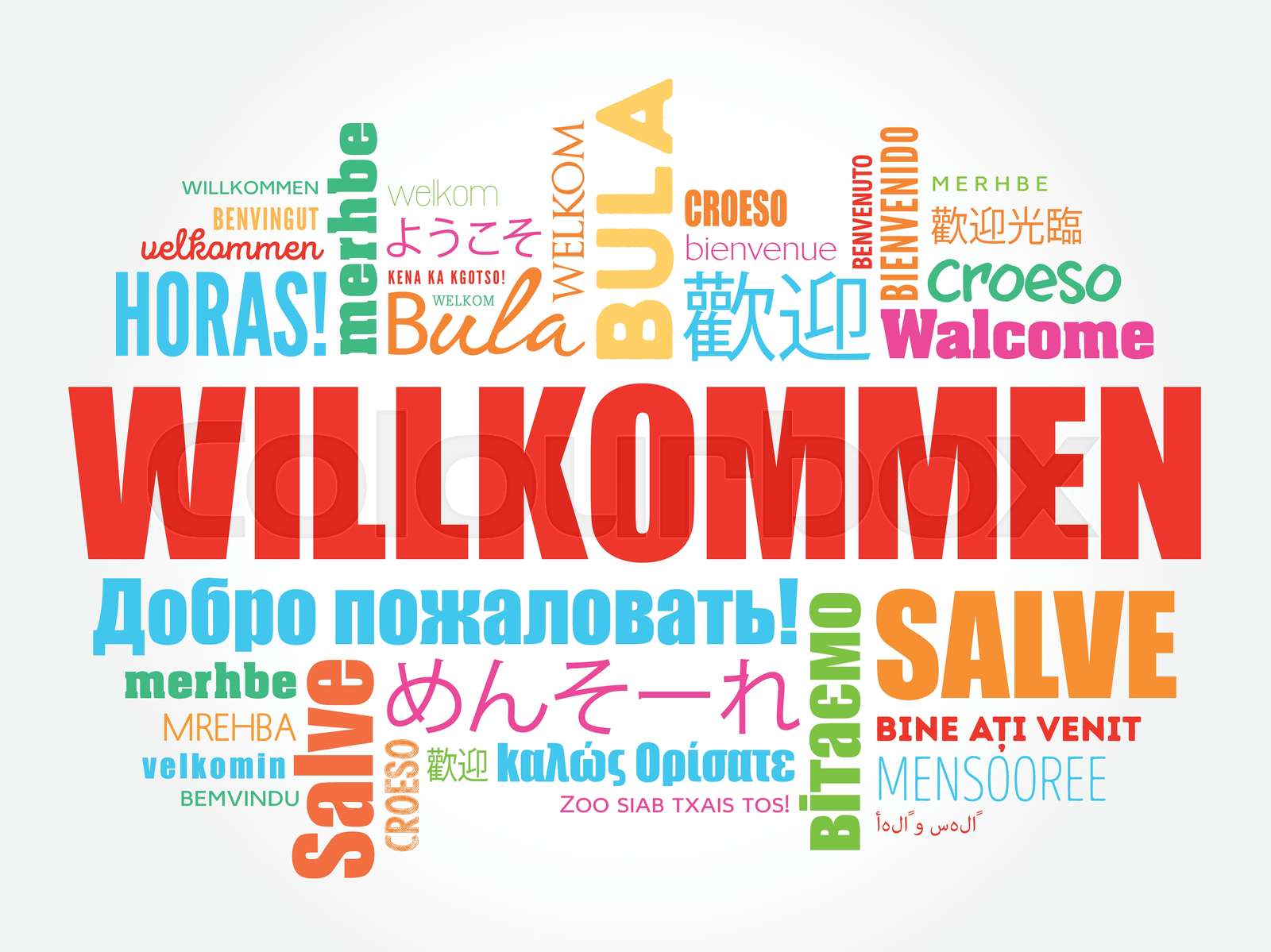
Don't use Willkommen as a response to thank you.
This is the biggest "English-speaker trap" there is. In English, we use "welcome" for two things: welcoming someone to our home and responding to "thank you." German uses two different words.
- Willkommen is for: "Welcome to my house!"
- Bitte is for: "Thank you for the gift!"
If you say "Willkommen" after someone says "Danke," they will look at you very confused. They might think you’re inviting them somewhere or that you’ve forgotten how the language works.
Practical Steps to Master the Response
Don't try to learn all of these at once. You’ll get tongue-tied and end up saying nothing at all.
- Master the "Gerne": Start using Gerne instead of Bitte. It’s a small change that makes you sound 50% more fluent. It’s easy to pronounce and fits almost every situation.
- Listen to the locals: Next time you’re in a shop or a cafe, listen to what the cashier says when someone thanks them. Do they say Bitte schön? Or do they just grunt a polite Gerne? Mimic that.
- Match the energy: If someone gives you a very heartfelt, long thank you, don’t respond with a short "Kein Ding." Use "Gern geschehen." If it’s a quick "thanks" for holding a door, "Bitte" is plenty.
- Learn one regional phrase: If you’re visiting a specific part of Germany, learn their local way. In the West (Rhineland), people are generally more talkative and "loose" with their language. In the East, it can be more traditional.
The goal isn't to be a human dictionary. It’s to connect. Language is just the tool you use to tell the person across from you, "Hey, I acknowledge you, and I’m glad I could help."
Start with Gerne. It’s the safest, most effective bridge from "tourist" to "person who actually gets it." Once that feels natural, start playing with the others. German is a blunt instrument sometimes, but when it comes to politeness, it has more nuance than people give it credit for. Use it.



