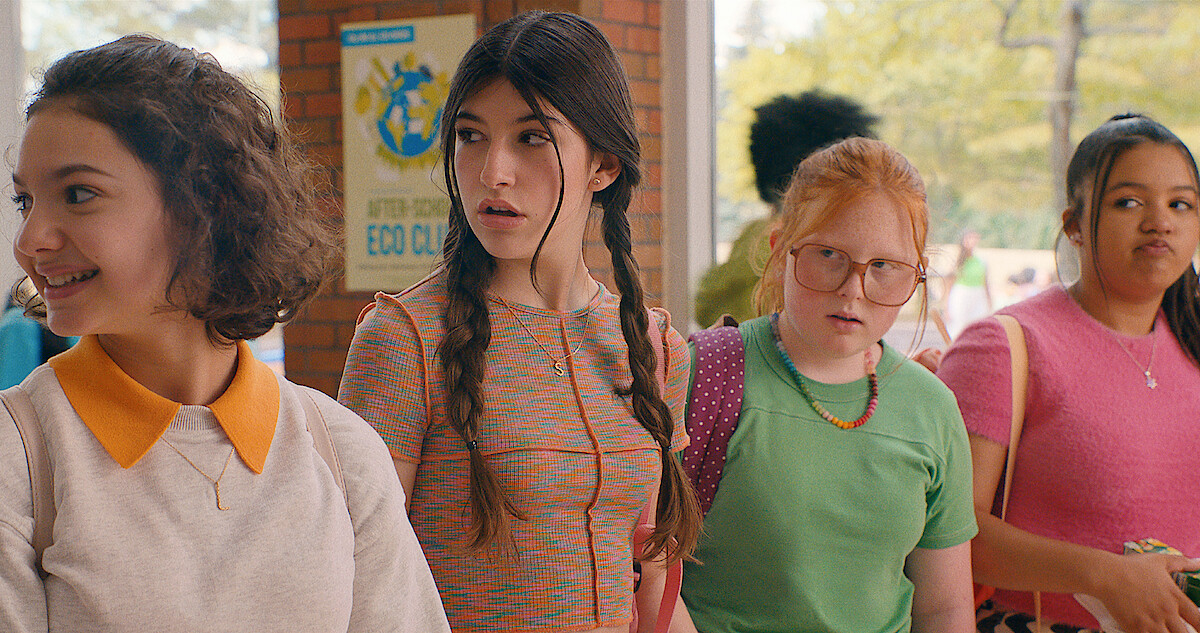
Honestly, it shouldn't have been this good. When a movie features a massive movie star, his real-life wife, and both of his biological daughters, the "nepo baby" discourse usually starts screaming before the first trailer even drops. But You Are So Not Invited to My Bat Mitzvah did something rare. It stayed grounded. It felt real. Instead of a vanity project, Netflix gave us a surprisingly sharp, sweet, and occasionally cringey look at what it actually feels like to be a thirteen-year-old girl navigating the high-stakes social minefield of middle school.
Adam Sandler has been a staple of our screens for decades, but here, he steps into the background. He lets his daughter, Sunny Sandler, take the lead as Stacy Friedman. It was a risky move. Usually, when family members are cast together, the chemistry feels forced or overly polished. Not here. The bickering feels authentic because, well, they probably bicker like that at home.
The movie, directed by Sammi Cohen and based on Fiona Rosenbloom’s 2005 novel, captures a very specific cultural moment. It’s not just about a party. It’s about the terrifying realization that your best friend might be outgrowing you, or worse, betraying you.
The Plot That Hit Too Close to Home
The story is simple. Stacy and Lydia are best friends. They have spent their whole lives planning their dream Bat Mitzvahs. They have a specific vision involving "epic" parties, the right boys, and a social status that feels like life or death. Then, a boy named Andy Goldfarb enters the mix.
Stacy has a crush. Lydia ends up kissing him.
Suddenly, the title becomes a weapon. "You are so not invited to my Bat Mitzvah" isn't just a sentence; it's a declaration of social war. What follows isn't some high-concept comedy routine. It’s a series of escalating, desperate, and often embarrassing attempts by Stacy to get revenge or reclaim her dignity. We’ve all been there. Maybe not with a Torah reading looming over our heads, but we’ve all felt that sting of "best friend" betrayal.
What people get wrong about this movie is thinking it's just a "teen flick." It’s actually a movie about forgiveness. It’s about the "Mitzvah" part of the Bat Mitzvah. It asks if you can actually be a grown-up if you’re still holding onto petty grudges.
Why the Sandler Casting Actually Matters
Let’s talk about the elephant in the room. Nepotism.
In Hollywood, "nepo baby" is a dirty word lately. But Sunny Sandler carries this movie. She isn't just "Adam's kid." She has a specific, awkward energy that fits Stacy Friedman perfectly. She’s not playing a polished TikTok star; she’s playing a kid who doesn't quite know what to do with her limbs yet.
Idina Menzel plays the mom, Bree. It’s a nice Uncut Gems reunion for those of us who liked seeing her and Adam Sandler play a married couple before, though this version is significantly less stressful. Sadie Sandler, Adam’s older daughter, plays Stacy’s sister, Ronnie. Ronnie is arguably the best character. She’s deadpan, cynical, and clearly over the drama. Her performance provides the necessary friction to Stacy’s high-energy meltdowns.
Adam Sandler plays Danny Friedman. He’s a "dad" in the truest sense. He’s wearing cargo shorts. He’s making bad jokes. He’s stressed about the cost of the party. It’s a nuanced performance because he isn't trying to be "The Waterboy" or "Billy Madison." He’s just a Jewish father trying to make sure his daughter doesn't ruin her life over a middle school boy with questionable hair.
A Cultural Snapshot of 2020s Jewish Life
The film does a fantastic job of portraying modern Reform Judaism without making it a caricature.
- The Rabbi: Sarah Sherman (of SNL fame) plays Rabbi Rebecca. She’s eccentric. She sings. She rides a treadmill while talking about the Torah. While some might find it over the top, anyone who grew up in a modern congregation knows that Rabbi. The one trying desperately to make ancient texts "relevant" to Gen Z.
- The Cantor: Dan Bulla plays Cantor Itzhak. The music, the Hebrew practice, the looming pressure of the "D’var Torah"—it’s all there.
- The Party Culture: The movie highlights the absurdity of the modern Bar/Bat Mitzvah circuit. The "themes," the professional dancers, the extravagant venues. It’s a "coming of age" ritual that has, in many circles, become a high-end production.
By focusing on these details, the movie feels lived-in. It’s not a generic story that you could swap for a Sweet 16 or a Quinceañera without changing the script. The Jewish identity is baked into the conflict. Stacy’s struggle to find a "Mitzvah project" that isn't selfish is the central arc of her character growth.
Breaking Down the "Lydia vs. Stacy" Dynamic
The heart of the film is the friendship between Stacy (Sunny Sandler) and Lydia (Samantha Lorraine).
Female friendships at thirteen are intense. They are soul-mate level connections. When Lydia starts hanging out with the "popular girls" and starts dating Andy, Stacy doesn't just feel jealous; she feels erased.
The film captures the digital side of this perfectly. The "burn leak" video, the social media stalking, the group chats—it’s a nightmare. But the movie doesn’t blame technology. It blames the emotions behind it. Stacy makes a mistake. A big one. She creates a video that humiliates Lydia at her own Bat Mitzvah.
This is the moment where the movie could have lost the audience. Stacy becomes the villain for a second. But because we’ve seen her insecurity throughout the film, we understand why she did it, even if we hate that she did it. It makes the eventual reconciliation feel earned rather than scripted.
How it Ranks Against Other "Coming of Age" Movies
If you compare You Are So Not Invited to My Bat Mitzvah to something like Are You There God? It's Me, Margaret. or Eighth Grade, it holds its own.
It’s less "prestige" than Eighth Grade. It’s funnier and more commercial. But it shares that same DNA of respecting the problems of young people. It doesn't pat them on the head and say "you'll get over it." It acknowledges that, at thirteen, your best friend not inviting you to a party is, effectively, the end of the world.
Critics generally loved it. It holds a surprisingly high "Fresh" rating on Rotten Tomatoes (hovering around 91% for a long time). That’s higher than most of Adam Sandler’s comedies from the last decade. It suggests that when Sandler steps out of the spotlight and focuses on producing a story with heart, the results are much better than when he’s just doing goofy voices in Hawaii.
The Lessons Learned (The Actionable Part)
If you’re watching this with your kids, or if you’re a fan of the genre, there are some actual takeaways here. It’s not just "mindless Netflix fodder."
- Ownership of Mistakes: Stacy only finds peace when she stops blaming Lydia and Andy and looks at her own behavior. The climax of the film isn't the party; it's Stacy's speech where she finally tells the truth.
- The "Mitzvah" Matters: Doing good isn't a checked box for a ceremony. The movie argues that adulthood starts when you put someone else's needs above your own ego.
- Parental Presence: Danny and Bree Friedman don't fix Stacy’s problems for her. They provide a "guarded" space for her to mess up, feel the consequences, and then try again.
What You Should Do Next
If you enjoyed the movie, you should definitely check out the original book by Fiona Rosenbloom. It was written in the mid-2000s, so the "tech" is different (think Sidekicks and IM), but the core emotional struggle is identical.
Also, look into Sammi Cohen’s other work, like Crush (2022). She has a knack for directing young actors and making teen dialogue sound like things people actually say, rather than how 50-year-old screenwriters think teens talk.
Finally, if you’re planning a big event—whether it’s a Bat Mitzvah, a wedding, or a birthday—take a page out of this movie's book. The "theme" doesn't matter. The guest list doesn't matter. What matters is that the people you love are actually there, and that you haven't burned every bridge in the process of planning the "perfect" day.
Basically, don't be a Stacy. But if you are a Stacy, be brave enough to apologize before the DJ starts the "Hora."



