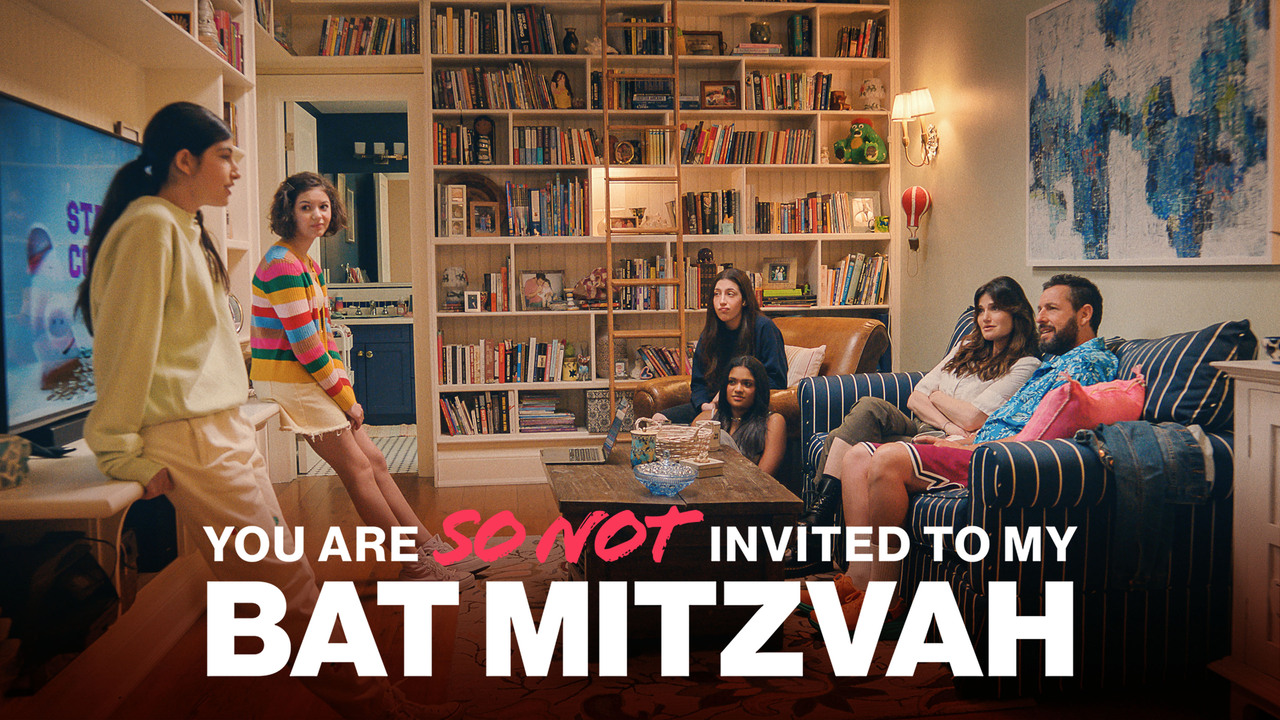
Middle school is a nightmare. It is. Everyone who says those are the "best years of your life" is either lying to you or had a very strange experience. It's a time of braces, questionable fashion choices, and the absolute, soul-crushing terror of being left out. That is exactly why You Are So Not Invited To My Bat Mitzvah hit such a nerve when it landed on Netflix. It wasn't just another teen movie. It felt real.
Most coming-of-age films try too hard. They use slang that was outdated six months before filming started. They cast 25-year-olds to play 13-year-olds. But this film, starring Sunny Sandler and produced by Adam Sandler’s Happy Madison Productions, actually captured the high-stakes, low-logic world of being a young girl on the verge of womanhood.
The Sandler Family Dynamic and Why It Matters
Let's address the elephant in the room. Nepotism. People love to talk about "nepo babies," and yeah, the cast is basically a Sandler family reunion. You have Sunny Sandler as Stacy Friedman, Sadie Sandler as her sister Ronnie, and Adam himself playing Danny Friedman. Even Idina Menzel—who played Sandler's wife in Uncut Gems—is back as the mom.
But here’s the thing. It works. It works because the chemistry isn't manufactured. When Danny and Stacy argue about the cost of a DJ or why she’s wearing a specific dress, it feels like a real father and daughter. It doesn't feel like two actors hitting marks. It feels like a Tuesday night in Suburban New Jersey.
Director Sammi Cohen, who also directed Crush, clearly knows how to handle this age group. Cohen avoids the trap of making the kids look like caricatures. Stacy is messy. She is selfish. She makes terrible decisions. She betrays her best friend, Lydia, over a boy named Andy Goldfarb who—honestly—is not worth the drama. But that is the point of being thirteen. Your world is the size of a postage stamp, and every minor slight feels like the end of the universe.
Why the Bat Mitzvah Setting is More Than Just a Backdrop
The Bat Mitzvah is a huge deal. For those outside the Jewish faith, it might just look like a big party with a Torah reading. But in the context of the film, and in real life, it’s a massive milestone. It represents the transition from childhood to adulthood.
The movie handles the religious aspect with a surprising amount of grace. It’s not just about the party themes and the "entrance" videos, though those are hilariously accurate. It’s about the "Mitzvah" part—the good deed. Stacy’s journey isn't finished when she gets the perfect dress. It’s finished when she realizes that being a woman means taking responsibility for the people you’ve hurt.
Sarah Sherman (of Saturday Night Live fame) plays Rabbi Rebecca. She is a chaotic, singing, eccentric breath of fresh air. While her character provides most of the big laughs, she also anchors the film’s moral compass. She keeps pushing Stacy to actually learn her Torah portion and understand what it means to be part of a community. It’s a subtle touch that elevates the movie from a standard teen comedy to something with actual heart.
Friendship, Betrayal, and the "Andy Goldfarb" Problem
The core of the movie isn't the party. It's the friendship between Stacy and Lydia. They have a plan. They've been planning their "epic" Bat Mitzvahs forever. They have a specific brand of humor, a shared history, and a level of comfort that only exists between girls who have known each other since they were in diapers.
Then comes Andy.
Andy Goldfarb is the quintessential middle school heartthrob. He’s not particularly deep. He’s not even that nice. But to Stacy, he is everything. When Lydia starts dating him, the betrayal feels total. It's a "scorched earth" situation.
The film captures that specific brand of middle school cruelty. The "you are so not invited to my bat mitzvah" line isn't just a movie title; it’s a weapon. In that social ecosystem, the guest list is the hierarchy. Excluding someone is a public execution of their social standing.
What the movie gets right—and what Fiona Rosenbloom’s 2005 novel also nailed—is that Stacy isn't the hero for most of the second act. She's the villain. She spreads rumors. She makes a "hater" video. She’s awful. And seeing a young female protagonist allowed to be that flawed is refreshing. We’ve had decades of "nice girl" leads. Stacy Friedman is a "real girl" lead. She’s a work in progress.
The Evolution of the Happy Madison Brand
For a long time, Adam Sandler’s production company was known for a specific type of humor. It was loud, often crude, and usually centered around a group of guys in cargo shorts. You Are So Not Invited To My Bat Mitzvah marks a shift.
It’s part of a broader evolution we’ve seen with Sandler. Between his serious turns in Hustle and The Meyerowitz Stories, he’s clearly interested in telling different kinds of stories. By stepping into the background and letting his daughters take the lead, he’s created a movie that feels gentler and more observant than the typical Happy Madison fare.
The film currently sits with a very high Rotten Tomatoes score, which is a bit of a rarity for Sandler’s pure comedies. Critics praised the "sweetness" and the "authenticity." It’s a movie that parents can actually watch with their kids without cringing every five seconds. It treats the problems of young girls as worthy of a 100-minute feature film, rather than just something to be laughed at.
Real-World Lessons for the Mitzvah Season
If you are actually planning a Bat Mitzvah or dealing with the fallout of middle school social politics, there are a few things this movie highlights that are 100% true in the real world.
- The Guest List is Never Just a List. It’s a political document. People get their feelings hurt over the "B-list" or the "no-invite" more than anything else. If you're a parent, stay out of the drama as much as possible, but be the voice of reason when things get "Stacy Friedman" levels of petty.
- The "Grand Entrance" Video is Overrated. Every kid thinks they need a cinematic masterpiece for their entrance. Half the time, the guests just want to eat the appetizers. Focus on the meaning, not the production value.
- Friendship is Fragile. One boy or one misunderstanding can wreck years of history. The movie shows that the only way back is through genuine apology. Not a text. Not a DM. A real, face-to-face "I messed up."
Navigating the Fallout of Being "Uninvited"
It happens. You or your child gets left off the list. It feels like the end of the world. In the movie, the fallout is spectacular, involving a high-profile video montage gone wrong. In real life, it’s usually quieter but just as painful.
Psychologists often note that for 12 and 13-year-olds, social belonging is tied to their developing identity. Being uninvited is a rejection of who they are. If you’re a parent helping a child through this, acknowledge the pain. Don’t dismiss it as "just a party." To them, it’s the Super Bowl, the Oscars, and a Royal Wedding combined.
At the same time, the movie teaches us that these social rifts are often temporary. The "drama" of October is forgotten by April. The people Stacy thought were her "new" friends were shallow. The person she pushed away was the only one who actually knew her. It’s a lesson in value—valuing people over status.
Actionable Steps for Parents and Teens
Watching the movie is a great starting point, but if you're dealing with the actual pressure of this milestone, here’s how to handle it without the cinematic meltdown.
- Audit the Priorities: Before the planning starts, decide what matters more: the party or the ceremony. If the party is the only focus, the pressure becomes unbearable. Balance the two.
- The "Sleep On It" Rule: If a teen wants to "uninvite" someone or send an angry text, make them wait 24 hours. Most of the time, the heat of the moment fades.
- Focus on the Service: The Torah portion is the "adult" part of the Bat Mitzvah. Encourage the teen to find a connection to their reading. It grounds them and reminds them that the day is about something bigger than them.
- Keep the Budget in Check: Stacy’s dad constantly complains about the cost. It’s a real stressor. Be transparent with kids about what things cost so they don’t develop "Stacy-level" expectations that can't be met.
Ultimately, You Are So Not Invited To My Bat Mitzvah is a success because it doesn't try to be cool. It’s dorky. It’s emotional. It’s awkward. It captures the exact moment when you start to realize that the world is bigger than your bedroom, and that growing up is mostly just learning how to say you’re sorry.
To make the most of this cultural moment, use the film as a conversation starter. Talk about the "Andy Goldfarbs" in your own life. Talk about the times you were the one doing the uninviting. The movie isn't just a Netflix hit; it's a mirror. And while what we see in that mirror—braces and all—might be a little uncomfortable, it’s also remarkably human.



