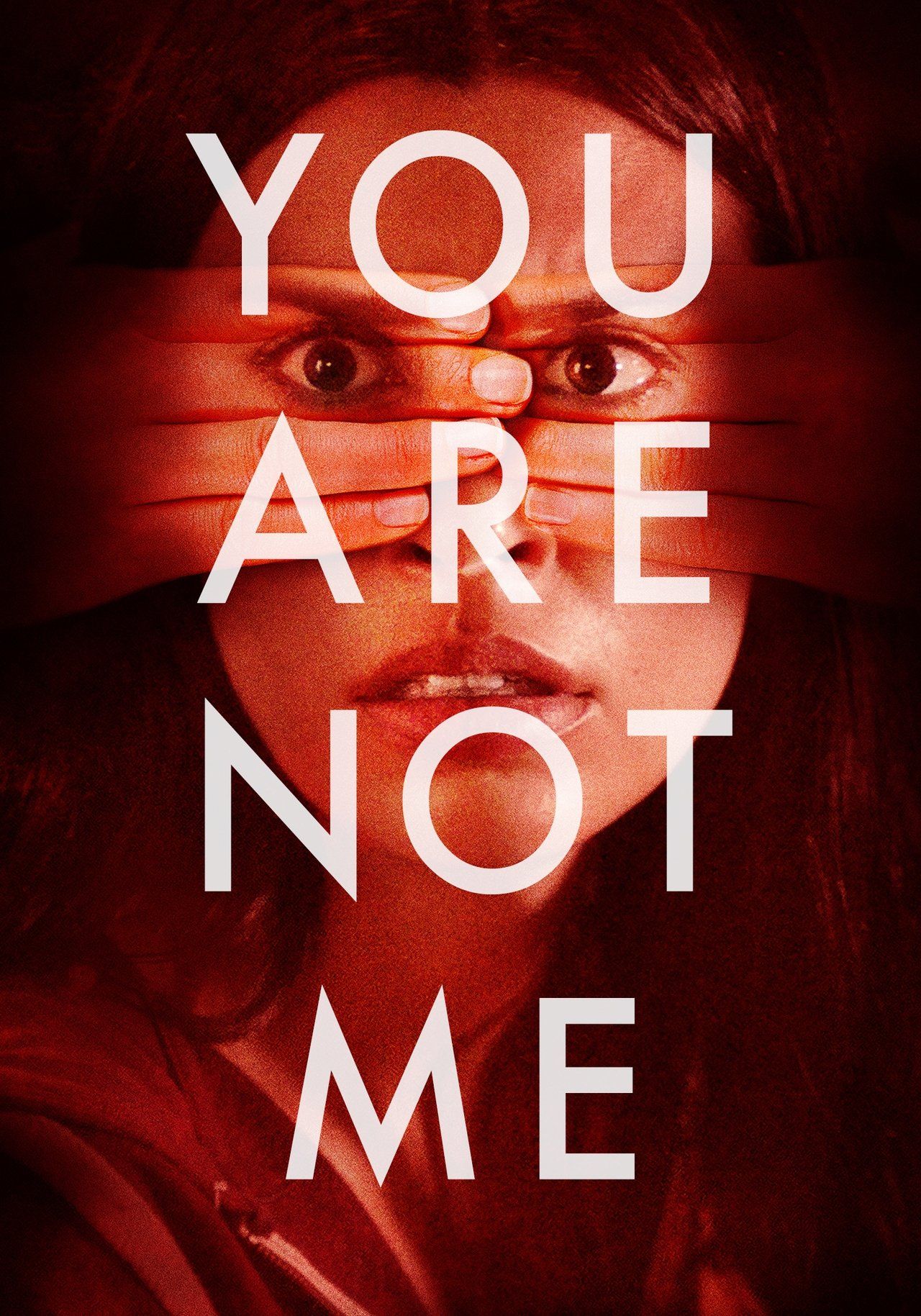
Movies about homecomings usually go one of two ways. Either it's a tear-jerking reunion or a slow-burn nightmare. You Are Not Me (originally titled Que Nadie Duerma or often associated with the Spanish title Tú no eres yo) firmly plants its feet in the latter, and honestly, it’s one of the most unsettling things to come out of the Spanish genre scene in years. It’s weird. It’s quiet. It makes your skin crawl because it taps into a very specific, primal fear: the idea that the people who raised you might actually be complete strangers.
Directors Marisa Crespo and Moisés Romera didn't just make another "creepy family" flick. They built a trap. When Aitana returns home for Christmas after a long absence, she expects the usual awkward dinners and forced small talk. Instead, she finds a version of her family that feels like a glitch in the matrix.
What Actually Happens in You Are Not Me?
The setup is deceptively simple. Aitana has been gone for three years. That’s a long time, but not long enough to forget how your parents breathe or how your house smells. When she walks through the door, things are... off. Her parents are overly welcoming. Their smiles stay on a second too long. There’s a new "guest" in the house who seems to have filled Aitana’s vacancy.
It's the pacing that gets you. Most horror movies jump the gun. They give you the jump scare in the first ten minutes because they don't trust the audience's attention span. You Are Not Me doesn't do that. It lets the silence sit. It forces you to watch Aitana realize that her childhood home has become a stage play where she’s the only one who didn’t get the script.
The film premiered at major festivals like the Tallinn Black Nights Film Festival (PÖFF) and the Valencia International Film Festival (Cinema Jove), where critics immediately noted the "clinical" feel of the cinematography. It’s cold. Even the Christmas lights look like they’re buzzing with a threatening energy.
The Psychology of the Uncanny Valley
Why does this movie work? It’s the Uncanny Valley effect applied to human relationships. We usually use that term for robots that look almost—but not quite—human. But in You Are Not Me, the "uncanny" part is the family unit.
- The Mother: She’s too perfect. She performs motherhood like she’s studied it in a textbook.
- The Father: He’s distant but observant, watching Aitana like a specimen under a microscope.
- The House: It’s a character itself. Every creak feels intentional.
The movie plays with the concept of "gaslighting" before that word became a tired internet cliché. Aitana questions her own memory. Did Dad always hold his fork that way? Was Mom always this obsessed with certain rituals? By the time the third act hits, the tension isn't just about what might happen—it's about the crushing weight of being told your reality is wrong.
Why Spanish Horror is Currently Winning
Spain has a long history of "prestige horror." Think The Orphanage or The Others. There’s a specific texture to these films that Hollywood often misses. They’re grounded in Catholicism, repressed trauma, and the architectural claustrophobia of European homes.
You Are Not Me fits perfectly into this lineage. It’s not interested in CGI monsters. It knows that a parent standing in a dark hallway saying "I love you" in the wrong tone of voice is infinitely scarier than a demon in a basement.
The film’s lead, Roser Tapias, carries the entire weight of the narrative. Her performance is frantic yet internal. You see the gears turning. You see the moment she realizes she isn't just a guest; she’s a target. The chemistry—or lack thereof—between her and the rest of the cast creates this friction that makes the viewer want to look away, but you can't.
Breaking Down the Visual Language
Directors Crespo and Romera used a specific color palette. Forget the warm oranges of a typical Christmas. This movie is bathed in sterile blues and harsh, sickly yellows. It feels like a hospital.
Interestingly, the film explores the idea of "substitution." In a world where we are increasingly replaceable—in our jobs, in our digital lives—the movie asks if we are replaceable in our own families. It’s a grim thought. It suggests that the "roles" we play (the daughter, the son, the provider) are more important to the system than our actual identities.
Is it Worth the Watch?
If you want a popcorn flick with loud noises and masked killers, no. This isn't that. But if you want a movie that stays in your head while you’re trying to sleep, then yes.
People have compared it to Goodnight Mommy or even The Visit, but You Are Not Me feels more sophisticated. It’s less about a "twist" and more about an inevitable, sinking realization. The ending doesn't just wrap things up; it pulls the rug out from under you in a way that feels earned, even if it’s devastating.
Real Talk: The Distribution Struggle
One of the biggest hurdles for You Are Not Me has been its availability. Like many European genre films, it hit the festival circuit hard but took its time reaching global streaming platforms. This "scarcity" actually helped its reputation. It became a "if you know, you know" title among horror buffs.
When it finally started popping up on VOD services and specialized horror streamers like Shudder or local equivalents, the word of mouth exploded. It’s the kind of movie you finish and immediately text your friends about just so you have someone to help you process what you just saw.
Actionable Insights for the Genre Fan
If you're planning to dive into You Are Not Me, or if you've already seen it and want more of that specific brand of dread, here is how to navigate the landscape:
1. Watch the Shorts First The directing duo, Crespo and Romera, have a massive catalog of short films (like 9 Steps). Watching these gives you a blueprint of how they build tension. They are masters of the "micro-thriller," and you can see those techniques expanded in the feature-length runtime of You Are Not Me.
2. Contextualize the "Homecoming" Trope To really appreciate what this movie does, watch it as part of a triple feature with The Invitation (2015) and Speak No Evil (2022). All three films deal with the "politeness trap"—the idea that we let dangerous things happen because we don't want to be rude or cause a scene.
3. Pay Attention to the Sound Design If you have a good pair of headphones, use them. The foley work in this movie is intentional. The sound of a knife hitting a plate or the rustle of bedsheets is dialed up to an uncomfortable degree. It’s designed to make you feel hyper-alert, just like Aitana.
4. Research the "Doppelgänger" Mythos The movie flirts with the idea of the "Fetch" or the "Doppelgänger." In many cultures, seeing a double of yourself or a loved one is an omen of death. You Are Not Me takes this folklore and modernizes it, stripping away the supernatural elements to leave something much more grounded and terrifying.
The film serves as a brutal reminder that the "safe" spaces we return to aren't always as solid as we remember. Sometimes, you can't go home again—not because the house is gone, but because the people inside it have become something else entirely.