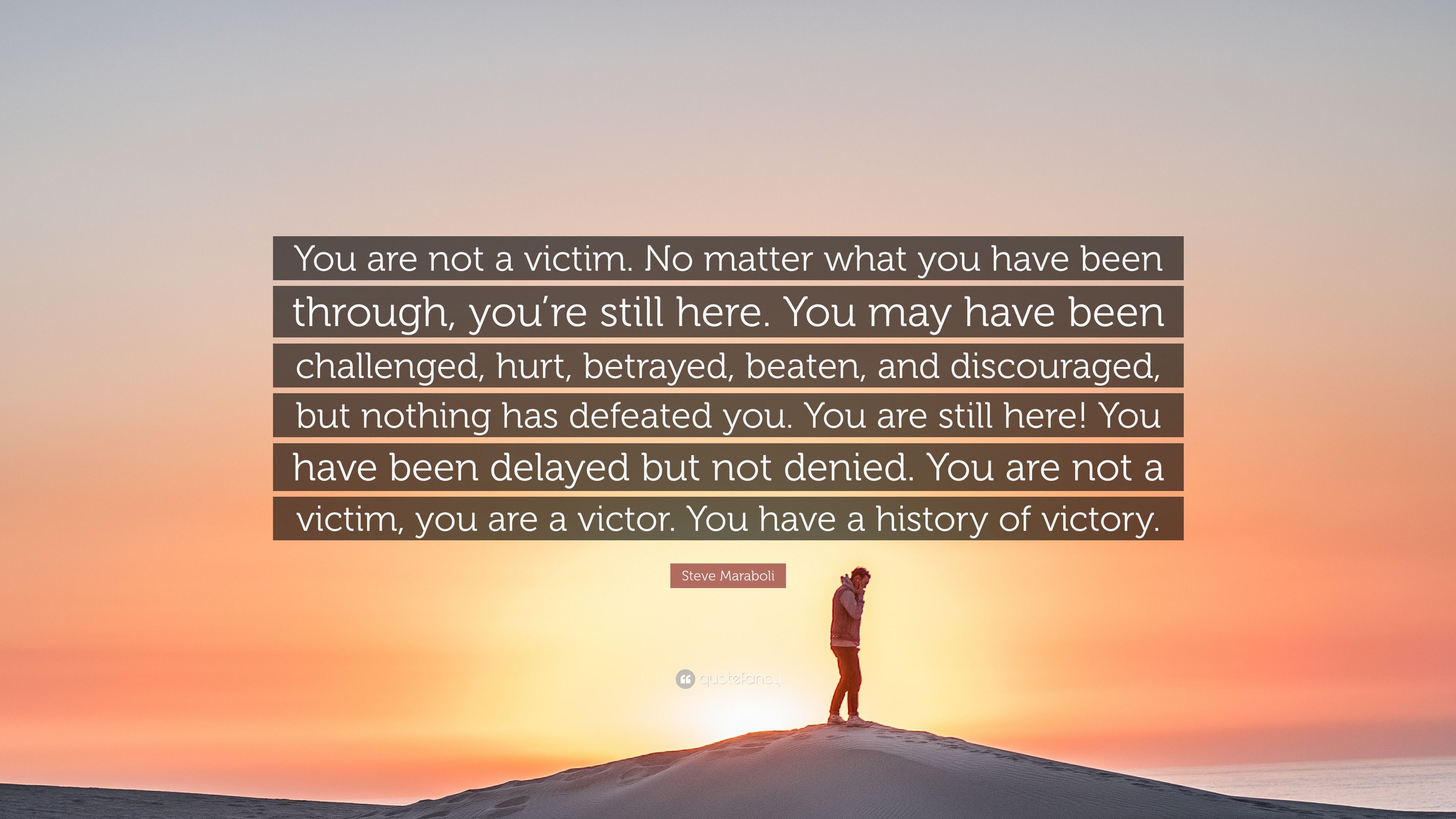
Ever had one of those mornings where you spill coffee on your white shirt, hit every red light on the way to work, and realize you left your laptop charger on the kitchen counter? It feels like the universe is actively conspiring against you. We’ve all been there. It’s easy to throw your hands up and decide the day is cursed. But here is the thing: you are not a victim of fate, even when it feels like a cosmic prank.
Fate is a heavy word. It implies a script written by someone else, a pre-determined path that we’re just stumbling along. It’s comforting, in a weird way. If things go wrong, it’s not your fault; it’s just "the way it was meant to be." But that comfort comes at a massive price. It robs you of your agency. It turns you into a passenger in your own life.
Stop.
Take a breath.
The reality is far more interesting and, honestly, a lot more empowering.
The Psychological Trap of External Locus of Control
Psychologists talk a lot about something called "Locus of Control." It sounds fancy, but it’s basically just where you point the finger when things happen. If you have an external locus of control, you think things happen to you. You’re the leaf in the wind. If you have an internal locus, you believe you’re the one holding the leaf-blower.
Julian Rotter, the psychologist who developed this concept in the 1950s, found that people who lean toward an internal locus of control tend to be less stressed and more successful. Why? Because they don't wait for luck.
When you start believing you are not a victim of fate, your brain literally starts looking for solutions instead of excuses. It’s like switching a lens on a camera. Suddenly, instead of seeing a "bad day," you see a series of manageable (if annoying) events.
The coffee spill? A lack of focus. The red lights? Standard traffic patterns. The forgotten charger? A byproduct of a rushed morning routine.
None of this is "meant to be." It’s just life.
Neuroplasticity vs. The "I’m Just Built This Way" Myth
We used to think the brain was fixed. You were born with a certain personality, a certain set of skills, and that was that. Game over. If you were "born unlucky" or "bad at math," you were stuck.
Science has moved on.
Neuroplasticity is the brain's ability to reorganize itself by forming new neural connections. This happens throughout your entire life. Researchers like Dr. Michael Merzenich have shown that our brains are incredibly plastic. You can literally rewire how you react to stress or how you approach challenges.
If you tell yourself "I’m just a negative person," you’re reinforcing a neural pathway. You’re building a highway to pessimism. But since you are not a victim of fate—or even your own biology—you can choose to pave a different road. It takes work. It’s boring, repetitive work. But it’s possible.
The "fate" people talk about is often just a collection of old habits and inherited beliefs that they haven't bothered to question yet.
The Role of Chaos Theory in Your Daily Life
Okay, let’s be fair. Bad stuff happens. Real, terrible, random stuff.
A company does layoffs. A global pandemic hits. A car runs a stop sign. You didn't "manifest" these things. This is where people get confused. They think that saying you are not a victim of fate means you’re responsible for everything that happens in the world.
That’s not it.
Think about the "Butterfly Effect." In chaos theory, a small change in one state of a deterministic nonlinear system can result in large differences in a later state. Edward Lorenz discovered this while working on weather models. Life is a nonlinear system. You can’t control the wind, but you can absolutely control the sail.
Victimhood happens when we confuse the "event" with our "identity."
The event is the layoff. The identity is "I am a failure who is destined to be broke."
One is a fact. The other is a story you're telling yourself about fate.
Why We Love the Idea of Destiny
Why do we cling to fate so tightly?
Because the alternative is terrifying.
If you are not a victim of fate, then you are responsible for your choices. That’s a lot of weight to carry. It’s much easier to check a horoscope or blame a "mercury retrograde" than it is to admit you didn't prepare for a presentation or that you've been neglecting your health.
Ancient Greeks had the Moirai—the three Fates who spun, measured, and cut the thread of life. It was a way to make sense of a world that felt chaotic and cruel. But even then, philosophers like the Stoics argued that while we can't control the thread, we can control how we feel about it.
Epictetus, who was born a slave and became one of the most influential philosophers in history, famously taught that some things are up to us and some things are not. Our opinions, intentions, desires, and aversions? Those are up to us. Everything else—our bodies, property, reputation—is ultimately out of our hands.
He lived this. He was literally a slave who decided his mind was free. If he wasn't a victim of fate, what’s our excuse?
Cultural Narratives and the "Main Character" Syndrome
We live in a culture obsessed with "manifesting" and "the universe having a plan."
Sometimes this is helpful. It keeps people hopeful. But it can also lead to a dangerous passivity. If the universe has a plan, why bother working hard? If it’s meant to be, it’ll happen, right?
Wrong.
Opportunity is usually just a mix of preparation and timing. If you aren't prepared, the opportunity passes you by, and you call it "bad luck." If you are prepared and the timing hits, you call it "destiny."
In reality, it's just you showing up.
Consider the "Mathew Effect" in sociology, a term coined by Robert K. Merton. It describes how the rich get richer and the successful get more success. It’s often used to describe systemic advantages, which are very real. But on an individual level, it’s also about momentum. When you act like you are not a victim of fate, you take small actions. Those actions build. People notice. Doors open.
It looks like fate from the outside. From the inside, it looks like a lot of Tuesdays spent doing things you didn't feel like doing.
The Trap of "Why Me?"
When things go sideways, the most common question is "Why me?"
It’s a toxic question. It assumes there’s a reason—a cosmic ledger where you’re being punished or tested.
There usually isn't a reason.
The mountain doesn't care if you're climbing it. The ocean doesn't care if you're swimming in it. Nature is indifferent. This sounds cold, but it’s actually incredibly freeing. If there’s no grand design to make you suffer, then your suffering isn't a permanent state. It’s just a temporary circumstance.
Redefining "Luck" Through Data
Is luck real? Sorta.
Dr. Richard Wiseman, a psychologist at the University of Hertfordshire, spent ten years studying "luck." He followed 400 people who considered themselves either exceptionally lucky or exceptionally unlucky.
His findings? Luck isn't a magical ability. It's a way of thinking.
"Lucky" people were more open to new experiences. They followed their hunches. They expected good things to happen, which made them more likely to spot opportunities. Most importantly, they had a "resilient" attitude toward bad luck. They saw a "bad" event as a stepping stone.
"Unlucky" people were the opposite. They were more tense, which narrowed their focus. They didn't see the opportunities right in front of them because they were too busy looking for what they expected—which was trouble.
This is scientific proof that you are not a victim of fate. You are, to a large extent, a victim of your own perspective.
Radical Responsibility: The Path Forward
So, how do you actually live like you are not a victim of fate?
It starts with radical responsibility. This doesn't mean you blame yourself for everything. It means you take responsibility for your response to everything.
Victor Frankl, a psychiatrist and Holocaust survivor, wrote about this in Man’s Search for Meaning. In the middle of the most horrific conditions imaginable, he realized that "everything can be taken from a man but one thing: the last of the human freedoms—to choose one’s attitude in any given set of circumstances."
If Frankl could find agency in a concentration camp, we can find it in our cubicles, our relationships, and our daily struggles.
Actionable Steps to Reclaim Your Agency
Knowing you aren't a victim is one thing. Acting like it is another. Here is how to actually shift the needle.
Audit Your Language
Stop saying "I have to." Start saying "I choose to."
- "I have to go to work" becomes "I choose to go to work so I can pay for the life I want."
- "The traffic made me late" becomes "I didn't leave enough buffer time for traffic." It feels gross at first. It feels like you're being mean to yourself. You're not. You're giving yourself back the power to change the outcome next time.
The 24-Hour Rule for Grievances
When something "unlucky" happens, you get 24 hours to wallow. Cry, scream, eat the ice cream, complain to your friends. But once that clock hits zero, you are legally obligated to ask: "What is the next logical step?"
Focus on Inputs, Not Outputs
You can't control if you get the job (the output). You can control how many applications you send and how much you practice your interview skills (the inputs). If you focus on the inputs, you stop feeling like a victim of the "unfair" hiring process.
Challenge Your Narrative
Write down a "bad" thing that happened recently. Now, write three different ways that event could actually lead to something positive. Not in a "toxic positivity" way, but in a logical, "this opens a different door" way.
Diversify Your Identity
If your whole identity is "Successful Business Owner" and the business fails, you feel like fate destroyed you. If you are a "Resilient Person who happens to own a business," the failure is just data. You are more than your circumstances.
Life is messy. It’s unpredictable. It can be incredibly unfair. But calling it "fate" is just a way to avoid the discomfort of trying.
The moment you accept that you are not a victim of fate, the world stops being a place where things happen to you. It becomes a place where you happen to things. You might still get knocked down. You might still get rained on. But you’ll be the one holding the umbrella, looking for the next path forward, rather than waiting for the stars to align. They aren't going to align for you. You have to move them yourself.
Practical Next Steps
- Identify one area of your life where you feel like a victim (e.g., your health, your career, a specific relationship).
- Write down three things in that area that are 100% within your control right now, no matter how small.
- Execute one of those things today. Don't wait for Monday.
- Track your wins. Keep a "Done List" instead of a "To-Do List" for one week to see how much agency you actually have.
- Notice the "Fate" Talk. Every time you catch yourself saying "It wasn't meant to be," challenge it. Ask: "What could I have done differently, and what will I do differently next time?"



