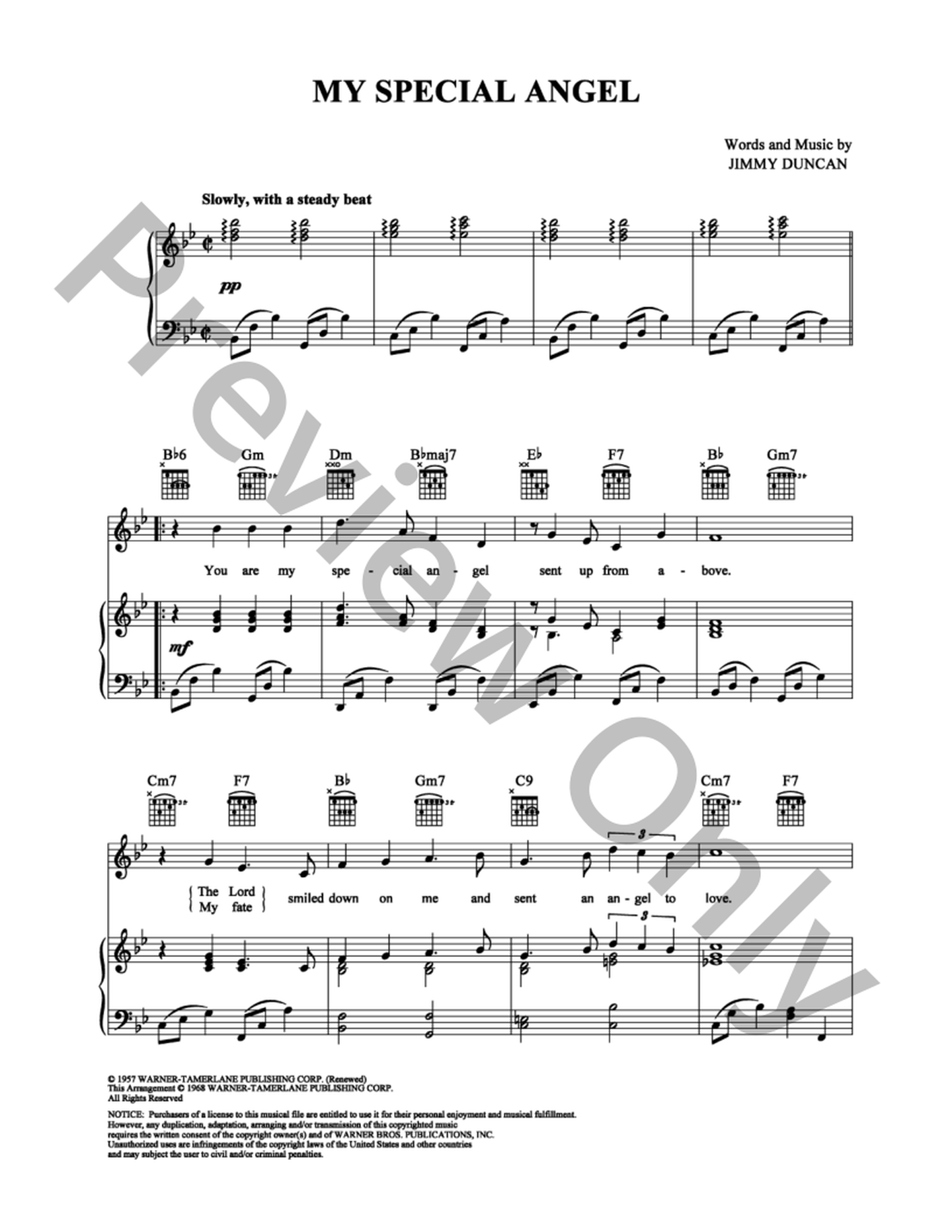
Music has this weird way of sticking to the ribs of history. You know that feeling when a song starts and you're instantly transported to a high school gym in the fifties, even if you weren't actually alive then? That's the power of Bobby Helms. Honestly, most people today recognize him for "Jingle Bell Rock"—it’s the holiday juggernaut that never dies. But it was You Are My Special Angel that really cemented him as a heavyweight in the transition era between country and pop.
It’s a simple song. Or at least, it sounds simple.
Released in 1957, it was a massive crossover success. It hit number one on the Billboard country chart and climbed all the way to number seven on the pop chart. That didn't happen by accident. Jimmy Duncan wrote it, but Helms gave it that specific, polished "Nashville Sound" that was just starting to take over the world. It’s got that lush, almost syrupy orchestration that makes you want to sway. If you listen closely, you can hear the exact moment where the rough edges of honky-tonk were being sanded down to create something suburban audiences could fall in love with.
The Story Behind the Recording
Bobby Helms wasn't some polished city kid. He was a guy from Bloomington, Indiana, who grew up performing in a duo with his brother. By the time he got to Decca Records, the industry was changing. Rock and roll was screaming in the background, but there was still this huge appetite for "sweet" music.
When he stepped into the studio to record You Are My Special Angel, he wasn't trying to be Elvis. He was trying to be the guy you’d feel safe bringing home to meet your mother.
The recording features the Anita Kerr Singers. If you’ve ever wondered why mid-century music sounds so "angelic," it’s usually because of them. They provided those smooth, cascading background vocals that define the era. The session was produced by Paul Cohen, a man who basically helped invent the Nashville recording industry as we know it. He knew that for Helms to succeed, the song needed to bridge the gap between a cowboy hat and a tuxedo.
Why the Lyrics Still Resonate
"You are my special angel, sent from up above."
Kinda cheesy? Sure. But it works because it’s earnest. In the late fifties, the world was a pretty tense place. You had the Cold War ramping up, the Space Race starting, and huge social shifts on the horizon. Music like this acted as a sort of emotional anchor. It’s a song about pure, uncomplicated devotion.
There’s a specific nuance in Helms’ delivery. He doesn't over-sing. He stays in this conversational, intimate register. When he sings about God sending an angel to "track me down," he sounds genuinely surprised by his own luck. That’s the magic. You can’t fake that kind of vulnerability without sounding like a lounge act.
Interestingly, the song has been covered a million times. Everyone from The Vogues to Sonny James has taken a crack at it. The Vogues actually had a huge hit with it again in 1968, proving the song has legs across different generations. Their version is a bit more "vocal group" style, with heavy harmonies, but it lacks that specific, lonesome country soul that Helms brought to the original.
The Nashville Sound Evolution
We have to talk about the technical side of why this song matters. In 1957, country music was at a crossroads. Traditional "hard" country was losing listeners to the energy of rock and roll. To survive, producers like Chet Atkins and Owen Bradley started introducing strings, background choirs, and smoother arrangements.
You Are My Special Angel is a textbook example of this pivot.
It used a "shuffle" beat, which was a staple of country music, but it was dressed up in pop clothing. This was the birth of the "Countrypolitan" movement. It’s the reason why Nashville stayed relevant while other regional music scenes died out. They learned how to produce hits that worked in a diner in Texas and a cocktail lounge in New York City simultaneously.
Common Misconceptions About Bobby Helms
People often think Helms was a one-hit wonder because "Jingle Bell Rock" is so omnipresent. It's actually kind of a bummer. He had a string of hits including "Fraulein," which stayed on the charts for an absurd 52 weeks. That’s a year of your life spent on the Billboard charts.
Another weird thing? People often confuse the song with "Teen Angel" or "Earth Angel."
- "Teen Angel" is a tragedy song about a girl getting hit by a train (grim).
- "Earth Angel" is a doo-wop classic by The Penguins.
- You Are My Special Angel is the one you’d play at a wedding.
Helms himself was a bit of a character. He wore a trademark eyepatch in his later years due to a medical issue, giving him this rugged, pirate-like appearance that contrasted hilariously with his velvet-smooth singing voice. He kept performing until he passed away in 1997, never losing that Midwestern charm.
The Lasting Legacy in Pop Culture
Why do we still care? Because the song captures a very specific type of romanticism that has largely disappeared from modern songwriting. Today, love songs are often about passion, or heartbreak, or "it's complicated" situations. This song is just about gratitude.
It’s appeared in movies and TV shows whenever a director needs to signal "pure 1950s nostalgia." Think about films like Diner or period pieces that want to capture that post-war optimism. It’s sonic shorthand for a simpler time, even if that simplicity was a bit of an illusion.
The song also serves as a masterclass in phrasing. Listen to how Helms holds the notes on the word "angel." He doesn't do runs or "American Idol" style gymnastics. He just hits the note and lets the vibrato do the work. It’s a lesson in restraint that modern singers could probably learn a thing or two from.
Practical Ways to Appreciate the Era
If you're digging this vibe, don't just stop at the Spotify stream. To really understand the context of You Are My Special Angel, you’ve got to look at the broader landscape of the 1957 charts.
- Listen to the "A-Team" musicians. The guys playing on these records were some of the best in the world. Look up Floyd Cramer (piano) and Bob Moore (bass). Their playing on Helms’ tracks defined the sound of an entire decade.
- Compare the Mono vs. Stereo mixes. Early stereo was wonky. The mono mix of this song is where the real punch is. It sounds tighter, more cohesive, and the vocals sit perfectly in the center of the mix.
- Check out the "Fraulein" B-side. If you want to hear the more "country" side of Helms, his other 1957 hits show the range he had before he became the "Christmas guy."
- Analyze the song structure. It follows a standard AABA format, which was the bread and butter of the Great American Songbook. It’s a structure designed for catchiness and emotional payoff.
Basically, the song is a time capsule. It represents a moment where country, pop, and the burgeoning youth culture all shook hands and agreed on one thing: a great melody is a great melody. Whether you’re a vinyl collector or just someone who likes oldies on a road trip, there’s no denying the craft behind this track. It’s a reminder that sometimes, the most enduring art isn’t the most complex—it’s the most sincere.
To get the full experience, track down an original 45rpm pressing if you can. There’s something about the way that heavy vinyl interacts with a needle that brings out the warmth of the Anita Kerr Singers in a way a digital file just can’t replicate. It’s not just a song; it’s a piece of mid-century architecture built out of sound.



