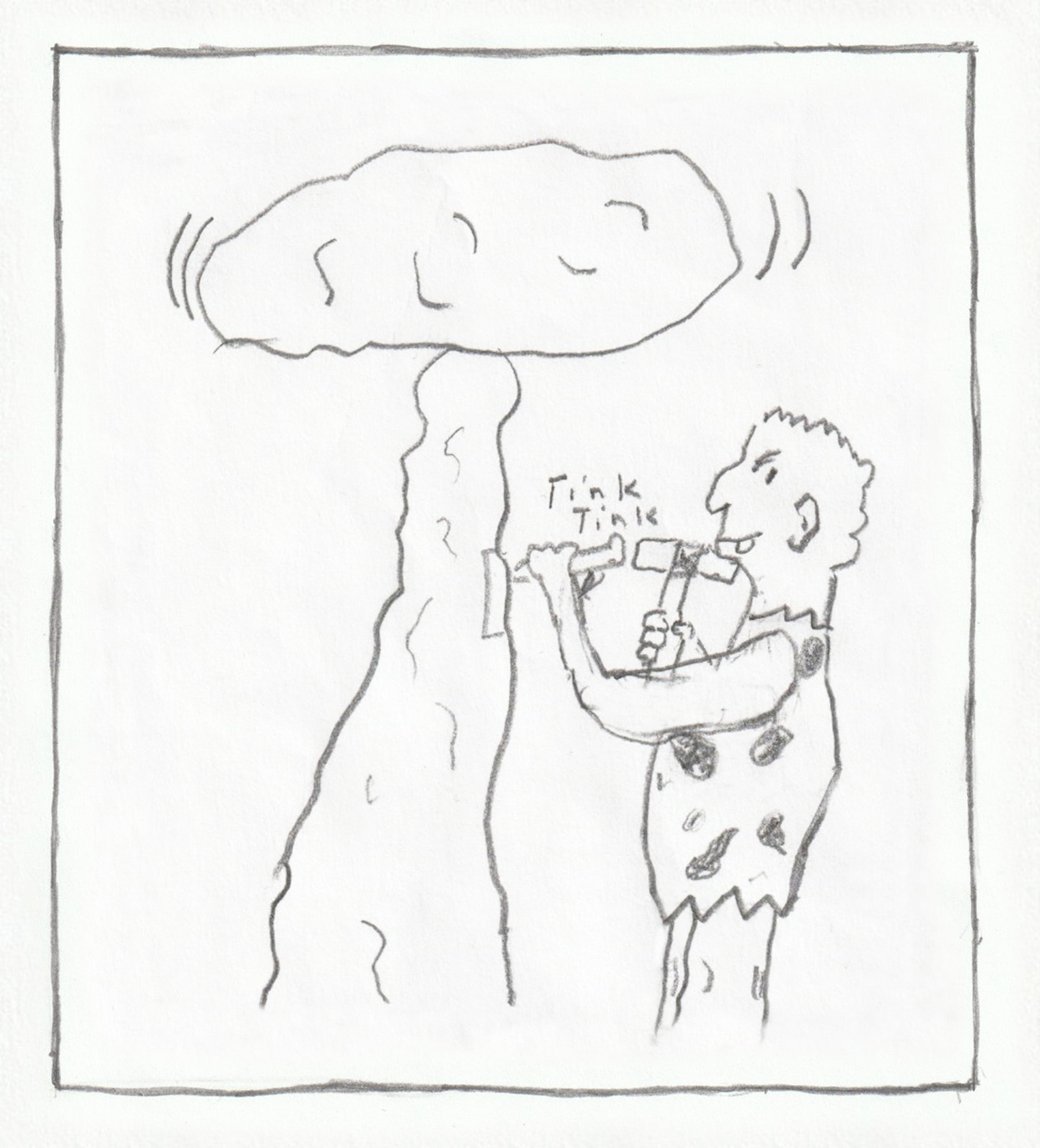
We’ve all heard it. Maybe you’ve said it during a late-night breakdown or written it in a shaky hand on a Father’s Day card. You are my rock. It’s one of those phrases that has become so embedded in our cultural vocabulary that we rarely stop to think about the weight of it. Honestly, it’s a heavy thing to call someone. You’re essentially telling another human being that they are the literal foundation of your emotional world.
Think about the physics of a rock. It’s dense. It’s unmoving. It’s weather-beaten but still there. When the world feels like a chaotic mess of shifting sand, having a "rock" is the only thing that keeps you from being swept out to sea. But here is the thing: being someone's rock isn't always the poetic, beautiful experience the movies make it out to be. It’s often exhausting. It’s quiet. It involves a lot of listening and even more patience.
The Psychology Behind the Rock Metaphor
Why do we gravitate toward this specific imagery? Psychologists often point toward Attachment Theory, originally developed by John Bowlby and Mary Ainsworth. When you tell someone you are my rock, you are identifying them as a "secure base." This is the person who provides the safety you need to go out and take risks in the world, knowing you have a solid place to return to if things go south.
It’s about stability. In a 2014 study published in Personal Relationships, researchers looked at how "invisible support"—the kind of support that doesn't scream for attention—actually correlates more strongly with relationship satisfaction than grand, overt gestures. A rock doesn't perform. It just exists. It’s the partner who makes sure the coffee is brewed when they know you have a stressful 8:00 AM meeting. It’s the friend who sits in silence with you in a hospital waiting room.
However, we need to talk about the "Solidarity Paradox." While it’s incredible to have that support, placing the entire burden of your emotional stability on one person can lead to something called Caregiver Burnout. Even the strongest granite can crack under too much pressure.
Where the Phrase Actually Comes From
You might think it’s just a modern Hallmark sentiment, but the roots go way deeper. Historically, the metaphor is deeply spiritual. In the Hebrew Bible, specifically in the Psalms, the "Rock" is a frequent epithet for God (e.g., Psalm 18:2, "The Lord is my rock, my fortress and my deliverer"). It was a term of absolute, divine reliability.
Fast forward a few thousand years, and we’ve secularized it. It moved from the pulpit to the pop charts. Think about the 1972 Simon & Garfunkel classic, "I Am a Rock," which flipped the script to talk about isolation—the dark side of being unmoving. Or consider the 1990s R&B era where "my rock" became the go-to lyric for every ballad about a ride-or-die partner.
The phrase has survived because it’s simple. It doesn’t require a degree in literature to understand. It’s visceral.
Is It Healthy to Call Your Partner Your Rock?
This is where things get a bit messy. Relationship experts, including those from the Gottman Institute, often emphasize the importance of "interdependence" over "codependency."
- Interdependence: Two strong individuals supporting each other.
- Codependency: One person leaning so hard that if the other moves, they both fall.
If you say you are my rock and you mean "you are the only thing keeping me from a total breakdown 24/7," that’s a red flag. It’s a lot of pressure. It’s like asking a single pillar to hold up a skyscraper. Eventually, that pillar is going to experience fatigue.
Healthy "rock-ness" is reciprocal. It’s a dynamic that shifts. Sometimes you’re the rock; sometimes you’re the one leaning. If the roles never swap, the relationship becomes lopsided. The person who is always the rock starts to feel like they aren't allowed to have bad days. They feel like they have to keep the "strong" mask on at all times, which is a fast track to resentment.
Signs You’ve Found Your Rock (and How to Keep Them)
It isn't about being perfect. Honestly, most "rocks" are just people who are really good at showing up. They don't necessarily have all the answers. They just don't leave when the questions get hard.
- Emotional Consistency: They don't run hot and cold. You know what version of them you're going to get when you walk through the door.
- Active Listening: They don't try to "fix" everything immediately. Sometimes, being a rock just means being a sounding board.
- Physical Presence: In moments of crisis, they are physically there.
But here’s the kicker: rocks need maintenance. You can't just take and take. If you’ve found someone who fits this description, you have to be intentional about checking their "structural integrity." Ask them, "Who is being a rock for you right now?" It’s a powerful question that often goes unasked.
The Cultural Impact: From Lyrics to "The Rock"
We can't talk about this phrase without mentioning Dwayne Johnson. While he literally goes by "The Rock," his public persona actually mirrors the metaphor. He’s built a brand on being the stable, hardworking, "hardest worker in the room" guy. It’s why people love him—he represents that unshakable reliability we all crave in our own lives.
But even in pop culture, the narrative is changing. We’re starting to value vulnerability over stoicism. Being a rock doesn't mean being a statue. It means being a solid foundation that still has a heart.
Real-World Examples of Rock-Solid Support
Let's look at a real-world scenario. Take the story of Susie and Bob. (This is an illustrative example of the dynamic). Bob loses his job at 52. His identity is shattered. Susie doesn't give him a "pull yourself up by your bootstraps" speech. She doesn't panic about the mortgage in front of him. She says, "We will figure this out. I’ve got the lead for now."
She becomes the rock. She absorbs the shock so he can recalibrate. But—and this is the important part—three months later, when Susie’s mother gets sick, Bob has to step up. The rock shifts. That’s the "Secret Sauce" of long-term success.
Common Misconceptions About This Phrase
People often mistake "being a rock" for being "emotionally unavailable." That’s a huge mistake. A rock isn't someone who doesn't feel; it’s someone who manages their feelings so they can be helpful to others. If someone uses "I'm just the rock of this family" as an excuse to never talk about their feelings, that’s actually a defense mechanism, not a strength.
Another myth? That you only need one rock. Ideally, you should have a "bedrock." A whole group of people—friends, family, maybe a therapist—who form a stable base. Relying on one single human for 100% of your emotional needs is a recipe for disaster.
How to Be a Better Rock for Someone Else
If you want to be that person for someone you love, it starts with self-regulation. You can't be stable for someone else if you're a mess internally.
- Practice "Holding Space": This is a term used in therapy. It means being present with someone’s pain without trying to change it or judge it.
- Set Boundaries: Paradoxically, the best rocks have the clearest boundaries. They know when they need to step back and recharge so they don't crumble.
- Reliability Over Intensity: Don't worry about being the "hero." Just be the person who calls when they say they will.
Actionable Steps for Strengthening Your Foundations
If you feel like your relationship needs more of that "rock" energy, or if you feel like you're leaning a little too hard on someone else, here are a few things you can actually do today.
- Acknowledge the Support: If someone has been your rock lately, tell them. Not just a "thanks," but a "I realize you’ve been carrying a lot for us lately, and I see you."
- Conduct a "Load Check": Sit down with your partner or best friend. Ask, "On a scale of 1-10, how much emotional weight are you carrying right now?" If they are at a 9, it’s time for you to take some of the load.
- Diversify Your Support: Reach out to one other person this week. A quick text to a friend you haven't talked to in a while helps spread out your emotional needs so one person doesn't have to do it all.
- Work on Self-Soothening: Develop one habit (journaling, exercise, meditation) that helps you stabilize yourself. The less you need someone to be your rock, the more you can actually appreciate them for being one.
Calling someone a rock is a high compliment, but it’s also a responsibility. It’s about the quiet strength of staying put when everyone else would run. Whether you’re the one leaning or the one standing firm, understanding the balance is the only way to make sure the foundation doesn't eventually give way. Overcoming the "statue" myth and embracing a more fluid, supportive version of this role leads to much healthier, longer-lasting bonds. High-quality relationships aren't built on one person's strength, but on the ability of both people to be the rock when the other one feels like sand.



