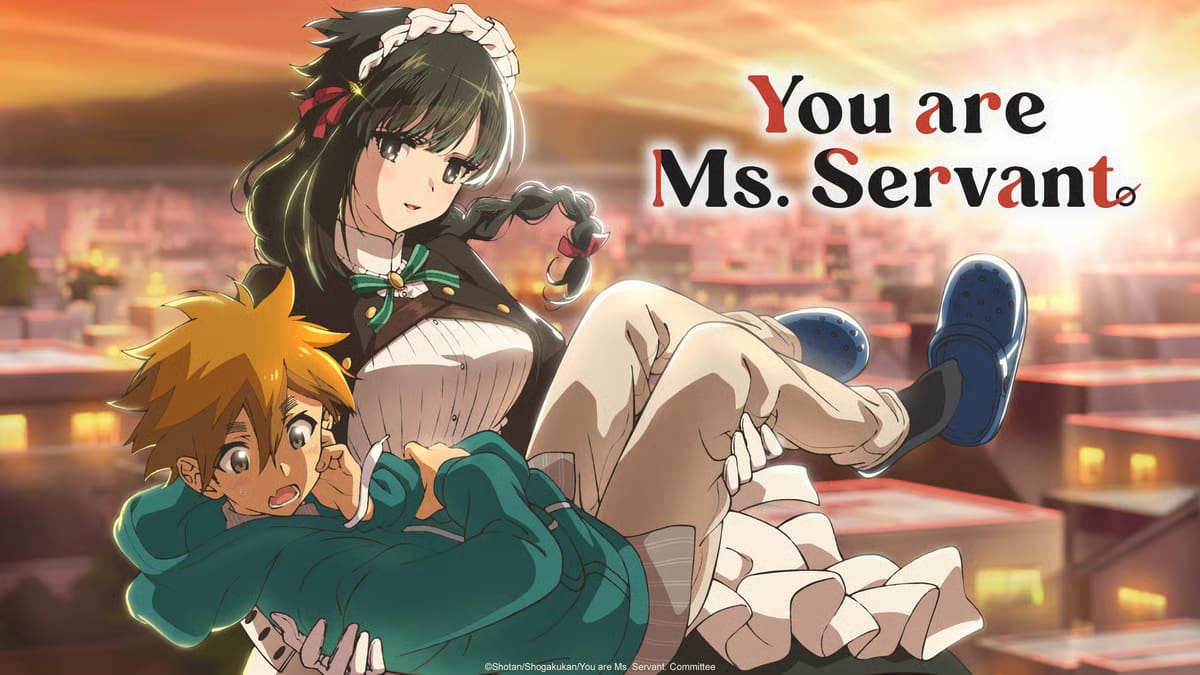
Honestly, if you told me a story about a genetically engineered super-assassin who decides to retire and become a maid for a middle-school boy would be one of the most comfy watches of the season, I’d have called you crazy. But here we are. You Are Ms. Servant episodes (or Kimi wa Meido-sama) have been rolling out, and they’ve managed to dodge almost every annoying trope you’d expect from this premise.
It isn't just about the "fish out of water" gag. It’s deeper.
Yuki, our titular maid, arrives at Hitoyoshi Yokoya’s doorstep with a knife and a resume that basically says "I am very good at killing people." Hitoyoshi, being a normal kid with a decent heart, rejects her at first. Who wouldn't? But then she saves him from a truck, and suddenly, she’s living in his house trying to figure out how to fry an egg without using a tactical maneuver. The pacing is deliberate. It’s slow. Some might say it’s too slow, but that’s the charm.
What's Really Happening in You Are Ms. Servant Episodes
The show, produced by Felix Film, leans heavily into the contrast between Yuki’s violent past and the mundane reality of domestic life. You see it in the way she holds a vacuum cleaner like it’s a sniper rifle.
The first few You Are Ms. Servant episodes focus heavily on the "rehabilitation" of Yuki. She doesn't have a name at first—Yuki is a name Hitoyoshi gives her because of her pale skin and the snowy day they met. It’s a classic trope, sure, but the execution feels earnest. The show spends a lot of time on the silence between them. You’ll notice long stretches where nobody talks. We just watch Yuki struggle with a washing machine or realize that she actually likes chocolate.
It’s these small wins that keep people watching.
The Animation Style and Why It Matters
Let’s talk about the visuals. It isn't Demon Slayer. It doesn't have that high-octane, seizure-inducing sakuga every five minutes. Instead, the art direction uses a muted, almost melancholic color palette. This is intentional. It reflects Yuki’s internal state—she’s a blank slate trying to find color in a world she was never allowed to join.
The character designs by Ayumu Ogawa stay very true to Shotan’s original manga. Yuki’s dead-eyed stare is the highlight. It’s funny, but also kinda tragic when you realize why she looks like that. She’s been a tool her whole life. Seeing her eyes soften over the course of several episodes is the primary hook of the series.
Breaking Down the Episode Progression
The story doesn't just stay in the kitchen. As the You Are Ms. Servant episodes progress, the "outside world" starts leaking in. You can't just quit being an assassin. That’s not how the genre works.
Early on, we get the introduction of Agage, another assassin who represents the life Yuki left behind. This adds a necessary tension. Without it, the show would just be a cooking anime with a weirdly dressed lead. The shift from "how do I make a katsudon" to "how do I protect this household from my former employers" is handled with a surprising amount of grace. It doesn't feel like a jarring genre flip. It feels like a consequence.
- The Arrival: Yuki shows up, Hitoyoshi is terrified, then intrigued.
- The Integration: Yuki learns that salt and sugar look the same but taste very different.
- The Conflict: The past catches up. This is where the action beats actually carry weight because we’ve spent three episodes watching her learn to love a dog.
You’ve got to appreciate the restraint the writers show here. They could have gone full fanservice. They didn't. The relationship between Hitoyoshi and Yuki is protective and sweet, staying away from the creepier elements often found in "maid" sub-genres.
Is It Worth the Binge?
If you're looking for John Wick with a broom, you’re going to be disappointed. This is a slice-of-life anime first. The action is the seasoning, not the main course.
The voice acting deserves a shout-out. Reina Ueda breathes so much life into Yuki. Playing a "kuudere" (cool/expressionless) character is hard because you can easily end up sounding like a robot. Ueda manages to put these tiny cracks in the armor. You hear the hesitation. You hear the growing warmth. It’s subtle work that pays off if you’re actually paying attention.
Why People Are Googling These Episodes Like Crazy
The "reformed villain" or "reformed killer" arc is catnip for anime fans. But usually, those characters stay "cool." Yuki is different because she’s genuinely bad at being a normal person. She’s incompetent in a way that’s relatable to anyone who has ever felt out of place in a new job or a new city.
Also, the dog. We have to talk about the dog.
The introduction of the stray dog, whom they name "Agehachou" (or just Ageha), serves as a mirror for Yuki. Both are strays. Both are dangerous if provoked. Both just want a warm place to sleep. It’s a bit on the nose, but in the context of a 22-minute episode, it works perfectly. It gives Yuki something to care for that isn't her "master," which is a vital step in her becoming an actual person with her own agency.
Misconceptions About the Show
A lot of people think this is a romantic comedy. It’s not. At least, not in the traditional sense.
There’s no "will they/won't they" tension that drives the plot. It’s more of a "will she find herself" story. Hitoyoshi isn't a romantic lead; he’s a catalyst for her humanity. If you go in expecting a high-school romance with blushes and accidental trips, you’ll find the You Are Ms. Servant episodes a bit dry. But if you want a story about healing from trauma through the power of mundane chores, this is your gold mine.
How to Watch and What to Look For
The series is currently streaming on platforms like Crunchyroll, depending on your region. When you sit down to watch, pay attention to the backgrounds. The house is cluttered. It looks lived-in. This is a contrast to the clinical, cold environments we see in Yuki’s flashbacks.
The sound design is also surprisingly sharp. The sound of a knife hitting a cutting board is crisp. The sizzling of oil. These sounds are heightened to show how Yuki perceives the world—every domestic sound is as sharp as a battlefield noise to her.
Key Takeaways for the Viewer
- Don't skip the OP/ED. The opening theme "Apprivoiser" by ASUKA is a banger, but the visuals actually tell a bit of the backstory if you look closely at the frames.
- Watch for the subtle shifts. Yuki’s posture changes slightly every few episodes. She becomes less rigid.
- Manage your expectations. This is a slow burn. It’s a "vibe" show.
Moving Forward With the Series
If you've caught up with the current You Are Ms. Servant episodes, the best move is to check out the manga by Shotan. The anime stays very faithful, but the manga’s art has a certain scratchy, indie feel that the polished anime loses. It’s interesting to see how the "emptiness" of Yuki is portrayed in black and white versus full color.
Keep an eye on the mid-season shift. Usually, around episode 6 or 7, these types of shows either double down on the fluff or take a hard turn into the drama. Given the source material, expect a bit more of the latter as Yuki’s former associates decide she’s too valuable to let go of.
The real value in this series isn't the "maid" gimmick. It’s the reminder that nobody is ever truly stuck in the role the world forced them into. Even if you were literally built to be a weapon, you can still choose to be the person who makes the tea.
To get the most out of the series, watch it in chunks of two or three episodes. The episodic nature of her learning various household tasks can feel repetitive if you watch them weekly, but as a binge, you really feel the cumulative effect of her growth. Pay close attention to the way Hitoyoshi’s sister interacts with Yuki later on—it’s a major turning point for the "family" dynamic the show builds so carefully.



