You’ve heard it. You’ve probably shouted it at the top of your lungs in a room full of people at least once. Whether you were in a small-town church with a single acoustic guitar or a stadium with a full brass section, the moment those opening chords hit, the energy shifts. "Lord, You are good and Your mercy endureth forever."
It’s simple. It’s repetitive. It’s basically the anthem of modern worship music. But why?
Writing about the You Are Good Israel Houghton lyrics isn't just about transcribing a song. It’s about understanding a cultural shift in how people express faith. Before Israel Houghton and New Breed dropped this track on the New Season album back in 2001, gospel and contemporary worship lived in two different houses. Israel basically knocked the wall down between them.
The Story Behind the Simplicity
A lot of people think the best songs have to be complicated. They think you need metaphors and deep, 10-dollar words to make a point. Honestly, Israel Houghton proved that wrong. He took the core of Psalm 136—a Psalm where the phrase "His love endures forever" repeats 26 times—and turned it into a high-octane groove.
The lyrics aren't trying to be clever. They’re trying to be true.
When you look at the You Are Good Israel Houghton lyrics, you realize the song is built on a "call and response" foundation. This isn't just a musical choice; it’s a community choice. The verse repeats the same line: Lord You are good and Your mercy endureth forever. It creates a rhythm that sticks in your brain and doesn't let go.
Breaking Down the Sections
- The Verse: "Lord You are good and Your mercy endureth forever." (Repeated).
- The Pre-Chorus: "People from every nation and tongue, from generation to generation."
- The Chorus: "We worship You, Hallelujah, Hallelujah. We worship You for who You are."
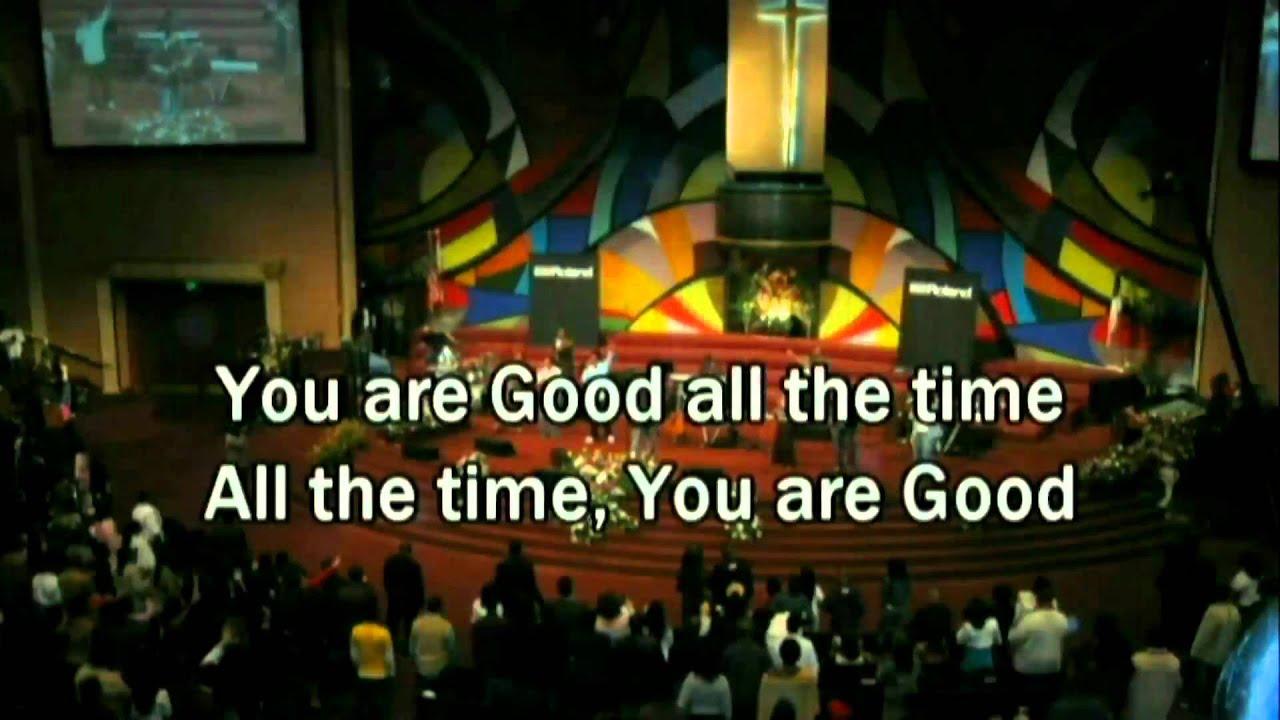
- The Bridge: "You are good! All the time! All the time! You are good!"
It sounds simple, right? But the magic is in the bridge. That "all the time" section turns the song from a performance into a conversation. It’s the part where the leader and the congregation start feeding off each other's energy.
Why the Lyrics Hit Differently
Israel’s background is a huge reason why this song feels so authentic. He’s spoken openly about growing up in a legalistic environment where he felt he had to be perfect to be accepted by God. He once said in an interview that he felt more "afraid of God" than like a "friend of God" for a long time.
Writing a song like "You Are Good" was a way to deprogram that mindset.
When the lyrics say "We worship You for who You are," it’s a radical statement. It’s not "we worship You because I had a good week" or "we worship You because I feel happy." It’s an objective declaration of God’s character. This is why the song works so well in different contexts—it doesn't depend on the listener's mood.
The Cross-Cultural Impact
One thing most people get wrong is thinking this is just a "Gospel" song. Israel & New Breed specifically aimed for a "cross-cultural" sound. You can hear the rock influence in the guitars, the jazz in the vocal runs, and the Latin flair in the percussion.
This diversity is baked into the lyrics too. The line People from every nation and tongue isn't just a nice sentiment; it was the mission statement of the band. In 2001, seeing a multiracial band lead worship with this much intensity was a game-changer. It broke the "segregated Sunday morning" mold that had existed for decades.
Real Talk: Why Is It Still Popular in 2026?
It’s been over 20 years. That’s an eternity in the music industry. Usually, worship songs have a shelf life of about five years before they’re replaced by the next big thing from Hillsong or Maverick City.
Yet, "You Are Good" is still everywhere.
The reason is practical. The song is "musician-proof." You can play it with a full 12-piece band or a single person on a cajon. It scales. Plus, the bridge is essentially a "stadium chant." It uses the same psychological triggers that make sports fans chant at a football game. It builds tension and then releases it in a way that feels incredibly satisfying.
Mastering the "You Are Good" Vibe
If you’re a worship leader trying to use these lyrics, don't just read them. You have to understand the "pocket." The song relies on a syncopated groove. If the band plays it too "straight," it loses the soul.
- Vary the dynamics: Start the first verse almost at a whisper.
- The Bridge is the peak: Don't rush into it. Let the "You are good" chant build until the room feels like it’s going to explode.
- Stay in the "Who You Are": Remind the audience that the song is about character, not circumstances.
Actionable Insights for Your Next Session
If you're looking to dive deeper into the You Are Good Israel Houghton lyrics, don't just look at the page. Listen to the Live From Another Level version. Notice how the lyrics change slightly in the ad-libs.
To really get the most out of this song in a live setting, try these three things:
First, focus on the "Generation to Generation" line. It’s a great moment to acknowledge the different ages in the room. Second, use the bridge as a "teaching moment." You can literally stop the music and have people shout the "All the time" part a cappella. It’s a powerful way to ground the lyrics in reality. Lastly, don't be afraid of the repetition. In a world that’s constantly changing, saying the same true thing for five minutes straight can actually be quite healing.
The legacy of these lyrics isn't found in a trophy case or a Grammy (though Israel has plenty of those). It's found in the fact that on any given Sunday, thousands of people are still using these exact words to find their way back to a sense of peace.
Next Steps: Go back and listen to the original 2001 recording from the New Season album. Compare it to the 2012 Decade version. You'll notice how the "You Are Good" lyrics have evolved from a simple chorus into a full-blown musical journey, proving that some truths really do endure forever.



