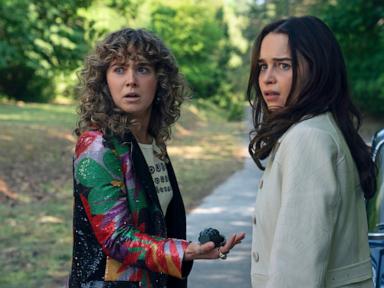
You know that creeping feeling when you’re home by yourself and a floorboard creaks? It’s usually nothing. Just the house settling. But in the 2023 indie film You Are Alone, directed by J-Gareth Maher, that silence becomes the loudest thing in the room. This movie didn't have a massive Marvel-sized budget. It didn't have a global press tour. Instead, it relies on something much scarier: the psychological erosion of a woman who begins to realize her isolation isn't as total as she thought.
Honesty is key here. Most low-budget horror movies fail because they try to do too much with too little. They use bad CGI or over-the-top acting to mask a weak script. You Are Alone takes the opposite route. It’s lean. It’s quiet. It’s incredibly uncomfortable.
What Is You Are Alone Actually About?
The plot follows a woman named Alexis. She’s alone in a house. Sounds simple, right? It is. But Maher uses that simplicity to trap the audience. Unlike many slashers where the threat is a guy in a mask jumping out of a closet, the threat here is existential. It’s about the vulnerability of being a woman living solo. It’s about the way the mind plays tricks on you when you haven’t spoken to another human being in days.
The film leans heavily into the "home invasion" subgenre, but it’s more of a "home infiltration." You aren't watching doors being kicked down. You're watching a shadow move in the corner of a frame that the protagonist doesn't notice, but you do. It’s that dramatic irony that keeps your heart rate spiked.
Why the Minimalism Works
Let’s talk about the sound design. Or the lack of it.
Most horror movies today are obsessed with "jump scares." You know the drill: the music swells, everything goes silent, and then BAM—a loud violin screech and a cat jumps out of a dumpster. It’s cheap. It’s a startle response, not fear. You Are Alone avoids this. The soundscape is filled with ambient noise—the hum of a refrigerator, the wind hitting the glass, the sound of Alexis’s own breathing.
When a noise finally occurs that shouldn’t be there, it feels like a gunshot.
The acting is also remarkably grounded. In a one-person show (which much of this movie is), the lead has to carry every single frame. If they overact, the tension breaks. If they underact, we don't care. The performance here feels lived-in. You see the transition from mundane boredom to slight annoyance, then to unease, and finally to pure, unadulterated terror. It’s a slow burn in the truest sense of the word.
The Psychology of Isolation in Film
There is a long history of "lone protagonist" cinema. Think of Cast Away or Moon. But horror handles isolation differently. In a drama, isolation is a challenge to be overcome. In horror, isolation is a death sentence.
Psychologists often talk about "hypervigilance." This is a state of increased alertness where you're constantly scanning your environment for threats. When you're alone for long periods, your brain can actually enter a state of mild paranoia. You Are Alone captures this perfectly. Alexis starts questioning her own memory. Did I leave that door open? Did I put that glass there? It’s gaslighting, but the house is doing it to her. Or someone in it is.
The Production Reality of Indie Horror
Making a movie like You Are Alone is a nightmare. I’ve talked to indie filmmakers who describe the process as "controlled chaos." When you have a limited budget, you can't afford 50 takes. You can't afford to rebuild a set if it doesn't look right. You have to use the natural light. You have to use the actual creaks of the house you’re filming in.
J-Gareth Maher, the writer and director, clearly understood these limitations and turned them into assets. By keeping the scope small, the stakes feel massive. We live in an era of "elevated horror"—think A24 movies like Hereditary or The Witch. These films focus on grief, trauma, and family dynamics. You Are Alone fits into this vibe, even if it’s on a much smaller scale. It’s not just about a "monster." It’s about the fear of being seen when you think you’re private.
Comparisons to Similar Films
If you liked The Invisible Man (2020) or Hush, this is going to be right up your alley. Hush used the protagonist’s deafness to create tension; You Are Alone uses the protagonist’s social isolation. It’s the digital age version of a ghost story. In an era where we are "connected" 24/7 via our phones, being physically alone feels more alien than ever.
Technical Execution and Direction
The cinematography deserves a shout-out. The camera work is often static. It sits there, watching Alexis. It feels voyeuristic. This is a deliberate choice. By making the camera a "watcher," the director makes the audience complicit in the stalking. You feel like you're the one in the corner of the room.
The lighting is mostly naturalistic. No weird green filters or over-saturated blues that you see in many "straight-to-streaming" horror flicks. It looks like a real home. It looks like your home. That’s why it’s effective. Horror is scariest when it happens in the most boring, familiar places. A kitchen at 2:00 AM. A hallway with a dim bulb. These are the spaces where You Are Alone thrives.
What Most People Get Wrong About the Ending
(No spoilers here, don't worry.)
People often complain that indie horror endings are "ambiguous" or "unsatisfying." They want a neat bow. They want the police to show up or the monster to be unmasked. But You Are Alone understands that the unknown is always scarier than the known.
Once you see the shark in Jaws, it’s just a big mechanical fish. The terror is in the water before you see the fin. This film maintains that tension until the very last second. It leaves you with questions, sure, but they’re the kind of questions that keep you awake. The kind that make you double-check your locks before you go to bed.
Practical Takeaways for Horror Fans
If you're planning on watching You Are Alone, there is a specific way to do it. This isn't a "background movie." You can't be scrolling TikTok while this is on, or you'll miss the subtle shifts in the background that provide all the scares.
- Turn off the lights. Obviously.
- Use headphones. The sound design is 50% of the experience. The directional audio will make you think things are happening in your own house.
- Watch it solo. If you really want to lean into the theme, don't watch it with a group. The communal experience of "scary movies" dilutes the specific type of dread this film is trying to evoke.
The film is a reminder that you don't need a $100 million budget to scare people. You just need a solid understanding of human psychology and a camera. It’s a masterclass in "less is more." In a world of loud, bloated blockbusters, You Are Alone is a quiet, terrifying breath of fresh air.
If you want to support indie cinema, these are the types of projects that need your eyes. They are experimental, risky, and often much more rewarding than the latest franchise sequel. Check it out on streaming platforms that specialize in indie or horror content, like Shudder or even some of the deeper corners of Prime Video.
Once you’ve finished the movie, take a second to sit in the silence of your own room. Listen to the house. Notice the shadows. Then, maybe go check the front door. Just to be sure.
Next Steps for the Viewer:
- Check Local Availability: Search for You Are Alone on your preferred streaming aggregator (like JustWatch) to see where it’s currently playing in your region.
- Explore the Subgenre: If the "solitary horror" vibe worked for you, look into other minimalist films like The Night House or A Ghost Story (the latter is more existential than scary, but fits the mood).
- Support the Director: Keep an eye on J-Gareth Maher’s future projects. Filmmakers who can do this much with a small budget are usually the ones who end up making the next big genre-defining hit.