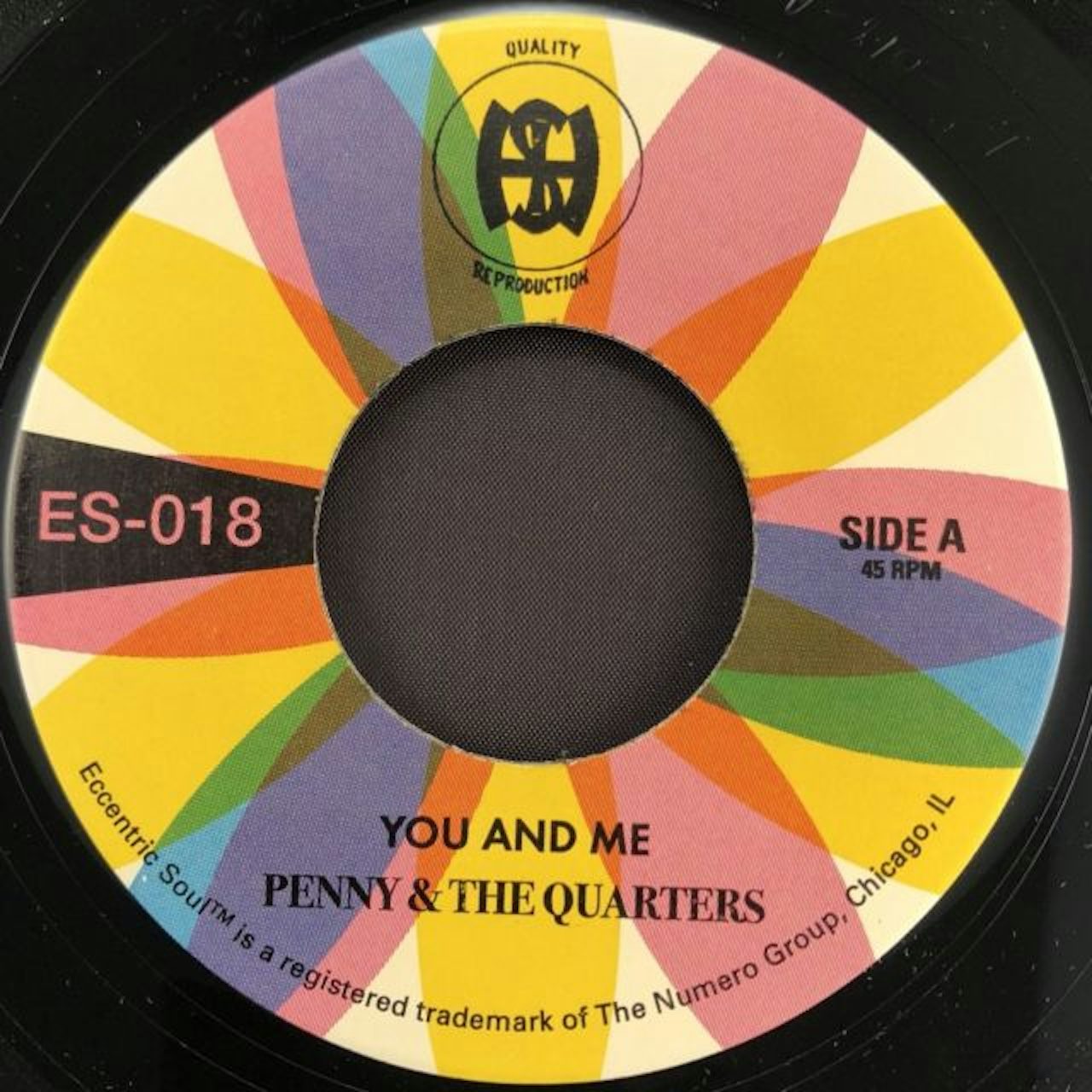
It’s just a demo. Honestly, that’s all it was ever supposed to be.
When people talk about You and Me Penny and the Quarters, they aren't talking about a polished studio album or a chart-topping pop sensation from the sixties. They’re talking about a ghost. For decades, this track sat in a box, unheard and forgotten, until it accidentally became one of the most recognizable soul songs of the 21st century.
Music history is messy. Usually, we know every detail about a band—who played bass, where they recorded, what they ate for lunch. But with Penny and the Quarters, the mystery was the whole point for a long time. It’s a story about found art, the grit of the Columbus, Ohio music scene, and the power of a single, unrefined vocal performance.
The Basement Tape That Changed Everything
The track "You and Me" wasn't "released" in the traditional sense. In the mid-2000s, an eccentric record collector named Blake Gillespie bought a box of tapes at an estate sale in Columbus. These weren't professional masters. They were rehearsal tapes from Eccentric Arts, a small-time studio run by Bill Moss.
Among the hissing static and background noise was this one song. It was raw. You can hear the room. You can hear the lack of expensive equipment. But you can also hear a vocal performance so sincere it stops you in your tracks.
The Quarters were basically a group of teenagers. They weren't seasoned pros. That’s why it works. The guitar is simple—just a few chords strummed with a rhythmic, almost hesitant shuffle. Then there’s the lead singer, Nannie "Penny" Sharpe. Her voice has this incredible, unforced vibrato. It’s the sound of someone singing because they have to, not because they’re trying to sell a million copies.
Why "You and Me" Blew Up Decades Later
If it weren't for a specific movie, this song might have stayed a niche favorite for crate-diggers and soul fanatics. When the 2010 film Blue Valentine, starring Ryan Gosling and Michelle Williams, used "You and Me" as its emotional centerpiece, everything changed.
The song fits the movie’s vibe perfectly. It’s nostalgic but slightly tragic. It sounds like a memory. Suddenly, people were Googling You and Me Penny and the Quarters by the thousands. They wanted to know who these people were.
The problem? Nobody knew.
For a while, the members of the band didn't even know their song was in a movie. They didn't know it was on the soundtrack. They didn't know they were famous. It took a literal manhunt by the record label, Numero Group, to track down the original artists. They eventually found Nannie Sharpe and the "Quarters"—who turned out to be her brothers—living their lives, completely unaware that their teenage rehearsal was now a global indie anthem.
The Sound of Columbus Soul
We talk a lot about Detroit and Memphis when it comes to soul music. Motown and Stax. But Columbus had its own thing going on.
Bill Moss and his Capsoul label were trying to build something real in Ohio. They were working out of small spaces, often using whatever gear they could find. The "Quarters" consisted of Penny and her brothers: Preston, Jay, and Rex Turner.
They weren't a touring powerhouse. They were a family act.
When you listen to "You and Me," you’re hearing the "Capsoul" sound in its most skeletal form. There’s no brass section. No lush string arrangements. No wall of sound. It’s just a girl, her brothers providing backing harmonies that are just a little bit rough around the edges, and a guitar.
What People Get Wrong About the Recording
A common misconception is that this was a "lost hit." It wasn't. It was never a hit. It was never even a single.
In fact, the version we all know was likely a "dry run" to show a producer what they could do. Most soul historians agree the recording happened somewhere between 1970 and 1974. The tape was literally labeled "Penny & The Quarters" with a felt-tip pen.
People often think the lo-fi aesthetic was a choice. Like they were trying to sound "indie" before indie was a thing. Nope. It sounds like that because they were kids in a basement with one or two microphones. The charm is accidental.
The Technical Side of a Soul Mystery
If you're a musician, you've probably tried to cover this song. It sounds easy. It’s not.
The tuning is slightly off-standard, likely because the guitar wasn't tuned to a piano or a digital tuner. It’s "in tune with itself," which gives it that haunting, slightly sharp quality.
The song structure is a basic A-B-A soul ballad. But the magic is in the space.
- The Guitar: It uses a percussive "chucking" style that fills the role of a drum kit.
- The Harmonies: The brothers provide a "doo-wop" foundation that grounds Penny’s lead vocal.
- The Lead Vocal: Nannie Sharpe’s phrasing is ahead of the beat, then behind it. It’s incredibly soulful and impossible to replicate with a metronome.
How to Appreciate Penny and the Quarters Today
In an era of Auto-Tune and $10,000 plugins, "You and Me" stands as a testament to the fact that soul is a feeling, not a frequency.
If you want to dive deeper into this sound, you shouldn't just stop at this one track. You need to look at the entire Numero Group catalog. They are the detectives of the music world. They specialize in finding "dead" labels like Capsoul and bringing them back to life.
Practical Next Steps for Listeners
- Check out "Eccentric Soul: The Capsoul Label." This compilation features the other artists who were recording alongside Penny. You’ll hear what the studio sounded like when they actually had a budget for a full band.
- Listen to the lyrics closely. It’s a song about simplicity. "You and me... and nobody else but you and me." In a world of complex relationships and digital noise, that message hits harder than it did in 1970.
- Support archival labels. Buying a vinyl copy of these compilations ensures that the original artists—many of whom were never paid the first time around—actually see some royalties.
The story of You and Me Penny and the Quarters is a reminder that great art doesn't always happen in a vacuum. Sometimes, it happens in a basement in Ohio, sits in a box for forty years, and then finds you exactly when you need to hear it. It’s not about the "perfect" recording. It’s about the perfect moment.
If you're looking to capture that same vibe in your own music or playlists, look for "orphan soul" tracks—songs from labels that went bankrupt before their best music could be heard. There are thousands of them out there, waiting for their own "Blue Valentine" moment. The history of music isn't just what’s on the radio; it’s what’s hidden in the boxes under the stairs.
Focus on the local scenes. Every city has a "Capsoul." Every city has a "Penny." Finding them is the best part of being a music fan. Stop looking for the polished stuff and start looking for the ghosts. They usually have better stories to tell.
Actionable Insight: If you're a songwriter or producer, try "The Penny Challenge." Record a song using only one microphone and one take. No editing. No pitch correction. If the emotion doesn't carry the song, the song isn't finished yet. The success of You and Me Penny and the Quarters proves that people crave authenticity over perfection every single time.
Deep Dive Resource: For the full historical context of the Columbus scene, look for the documentary The Capsoul Label: The Story of Bill Moss. It provides the gritty details of why these recordings were nearly lost to time and how the Midwestern soul movement differed from the coastal giants.



