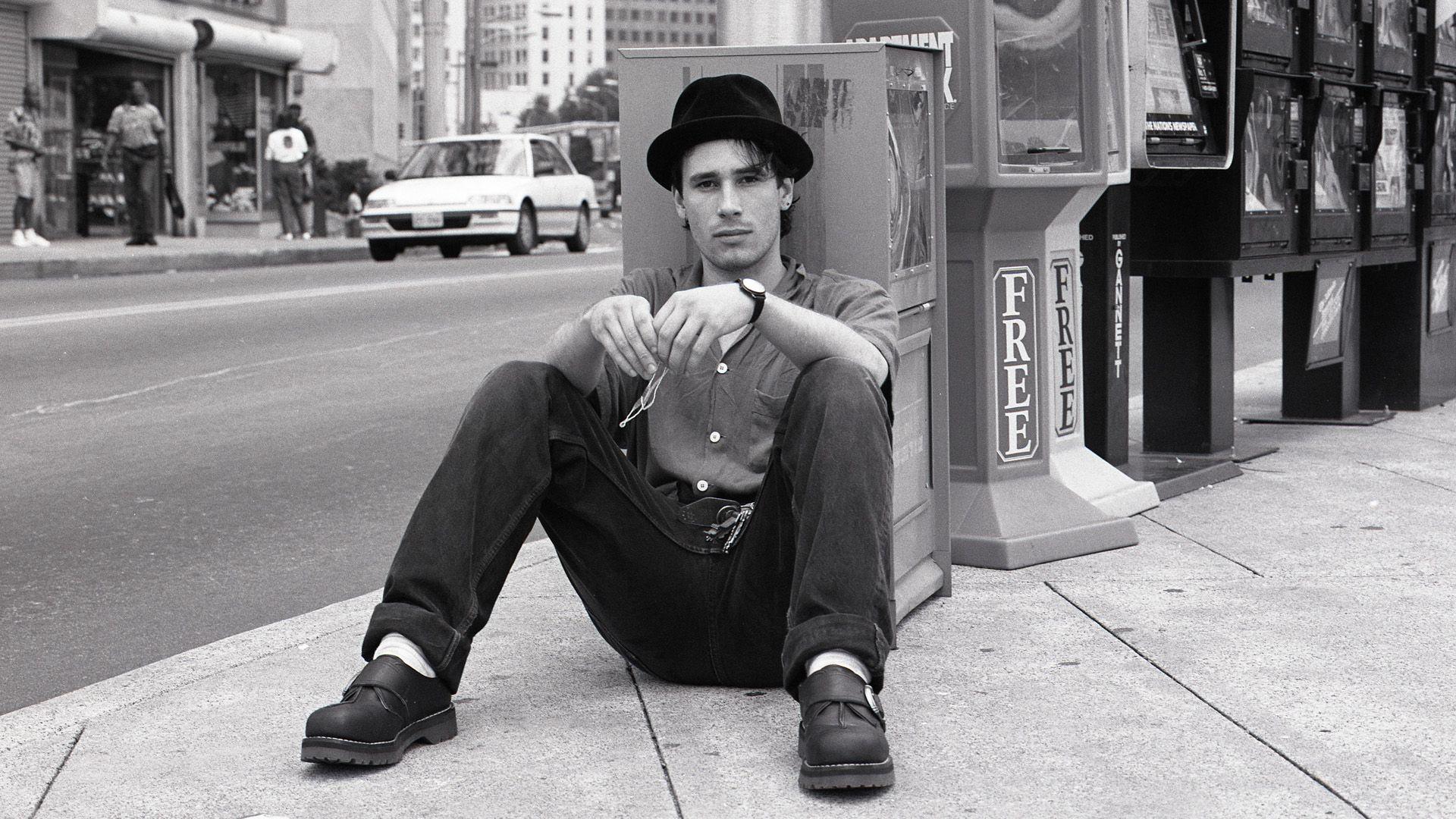
Jeff Buckley didn’t just sing. He haunted.
When You and I Jeff Buckley was released in 2016, it felt like opening a time capsule that had been buried in the floorboards of a Brooklyn apartment since 1993. This isn't a polished studio record. It isn't Grace. It’s something much more uncomfortable and intimate. It is the sound of a young man sitting in Shelter Island Sound studios with an electric guitar, trying to figure out who he was supposed to be before the world decided for him.
Honestly, posthumous releases are usually a cash grab. We’ve all seen it—labels scraping the bottom of the barrel for half-finished vocal takes and slapping on a generic beat. But this collection is different because it captures the "Columbia Education" of Jeff Buckley. Steve Berkowitz, the A&R man who signed him, basically told him to just go in and record everything he knew. The result? A skeletal, shivering map of Buckley's DNA.
The Ghost in the Room: Tracking the 1993 Sessions
Most people forget that before the heavy layering of "Hallelujah" or the rock swagger of "Last Goodbye," Jeff was a guy who did solo gigs at Sin-é. He was a human jukebox of eclectic tastes. The You and I sessions were intended to help his producers understand his range.
There’s no drums. No bass. Just that shimmering, chorused Fender Telecaster and a voice that could shatter glass.
It’s raw. You can hear him breathing. You can hear the pick clicking against the strings. Some tracks are better than the final versions on Grace, simply because they lack the "90s production" sheen that occasionally dates that record. When he covers Bob Dylan's "Just Like a Woman," he isn't just singing a folk song. He’s deconstructing it. He turns it into a slow, agonizing crawl that feels almost voyeuristic to listen to.
Why the Covers Matter More Than the Originals
The centerpiece of You and I isn't actually a Buckley original. It’s "The Boy with the Thorn in His Side" by The Smiths.
Morrissey and Marr wrote a jangly, cynical pop song. Buckley turns it into a prayer. He strips away the irony. It’s a bold move, taking a queer anthem of the 80s and singing it with such naked vulnerability in a 1993 recording booth. It shows his lack of fear. He wasn't trying to be "grunge," which was the dominant currency of the time. He was trying to be Nina Simone. He was trying to be Nusrat Fateh Ali Khan.
- The Sly & The Family Stone cover ("Everyday People"): This one is weird. It’s gritty. It’s got a bluesy, stomping rhythm that reveals Buckley's love for Led Zeppelin-style grooves.
- "Don't Let the Sun Catch You Cryin'": Here, he leans into the jazz crooner persona. It’s a nod to his father, Tim Buckley, though Jeff spent most of his life trying to outrun that shadow.
- "Dream of You and I": This is a meta moment. It’s a spoken-word-meets-guitar-noodle where he explains a dream about a protest. It’s the kind of thing that usually gets edited out, but here, it’s the heartbeat of the album.
The Technical Brilliance of "Grace" (The Early Version)
The version of "Grace" found on this album is a revelation. If you’ve listened to the studio album a thousand times, you know the wall of sound. You know the crashing cymbals.
But here? It’s just the riff.
That riff is a nightmare to play. It’s full of dissonant clusters and shifting time signatures. Hearing him nail it while singing those soaring leaps is a reminder that Buckley wasn't just a "pretty voice." He was a terrifyingly competent guitar player. He used open tunings and jazz chords that most rock kids in the 90s wouldn't touch with a ten-foot pole.
He was obsessive. Berkowitz has mentioned in interviews that Jeff would spend hours just finding the right tone. In You and I, you hear him finding it in real-time. It’s the sound of a musician who is deeply, perhaps fatally, in love with the process of creation rather than the product.
The Problem With Posthumous Legacy
Let’s be real for a second. There is an ethical gray area when we talk about You and I Jeff Buckley.
Did he want these released? Probably not.
Jeff was a perfectionist. He scrapped entire albums. He moved to Memphis to hide from his own fame. To take his practice tapes and sell them to the public feels a bit like reading someone's diary while they're in the shower. Yet, for the fans, these recordings are essential because they humanize a legend. They take the "Angel of the 90s" and turn him back into a kid from California who was really into Led Zeppelin and felt a bit lonely in New York.
What Most People Get Wrong About These Recordings
A lot of critics at the time said You and I was "incomplete."
That’s missing the point entirely.
The incompleteness is the feature, not the bug. In a world of Autotune and quantized drums, hearing someone miss a note or stumble over a lyric is a gift. It’s "human-quality" music in the truest sense. On "I Know It's Over," another Smiths cover, his voice cracks. It’s devastating. You can’t manufacture that kind of emotional resonance in a multi-million dollar production.
He was 26. He had no idea he’d be dead in four years. He was just playing.
How to Listen to "You and I" for the Best Experience
Don't shuffle this on a workout playlist. It’s not meant for that.
- Get decent headphones. The spatial imaging on these tracks is surprisingly good. You can hear the room.
- Listen at night. This is 2:00 AM music.
- Pay attention to the guitar work. Ignore the vocals for one track and just listen to his thumb work on the low strings. It’s percussive and brilliant.
- Compare "Grace" to the final version. Notice what was added, but more importantly, notice what was lost when the drums came in.
The album isn't a masterpiece in the traditional sense. It's a sketchpad. But when the artist is Jeff Buckley, even the scribbles are worth framing. It serves as a bridge between his coffeehouse days and the rock stardom he never quite felt comfortable with.
To truly understand Buckley, you have to hear him when he thinks no one is watching. That’s what this record is. It’s a private moment made public, and while that’s a bit tragic, the music is too beautiful to regret.
Actionable Next Steps for Fans:
To go deeper into the 1993 era of Buckley's career, seek out the Live at Sin-é (Legacy Edition). It pairs perfectly with You and I, offering a live context to these studio experiments. If you are a musician, try learning the "Grace" riff in its original 1993 arrangement—it relies heavily on the open E-string and a specific "sliding" chord shape that defines Buckley's signature "shimmer." Finally, read Mary Guibert’s (his mother) notes on the release to understand the archival process that brought these tapes to light after sitting in a vault for over twenty years.



