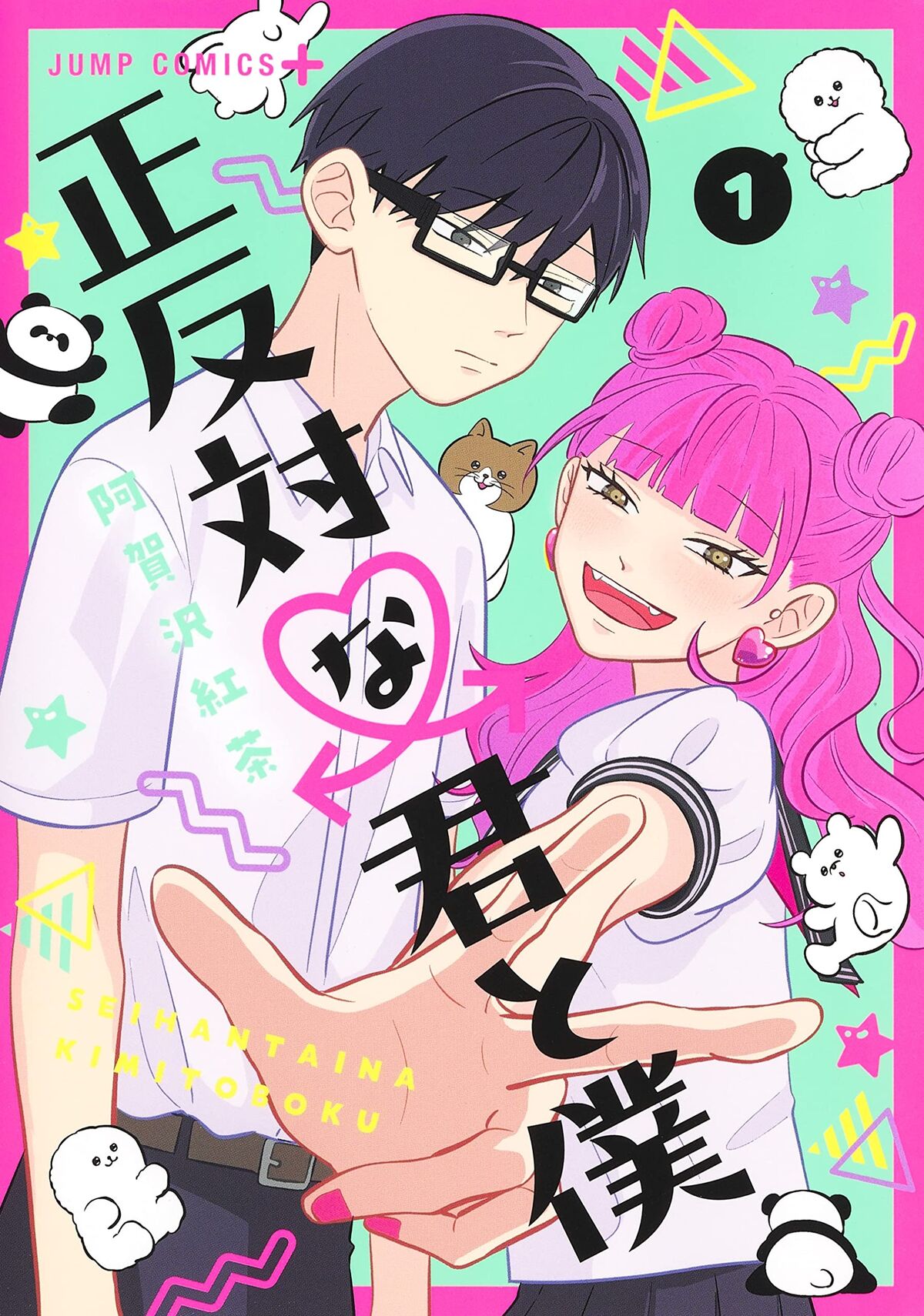
Opposites attract. It’s the oldest trope in the book. Shakespeare did it, Jane Austen lived for it, and every Hallmark movie thrives on it. But Agasawa Kocha’s You and I are Polar Opposites (or Seihantai na Kimi to Boku) somehow makes the "introvert meets extrovert" dynamic feel like it was invented yesterday.
I’ve read a lot of manga. Most of it is full of "will-they-won't-they" tension that drags on for 200 chapters. This isn't that. Honestly, it’s a breath of fresh air.
If you haven’t picked it up on Shonen Jump+ or Manga Plus yet, you’re missing out on a masterclass in emotional intelligence. The story follows Suzuki, an energetic, "gyaru"-adjacent girl who cares way too much about what people think, and Tani, a blunt, quiet, and deeply observant guy who stays firmly in his own lane.
The Reality of the Polar Opposite Dynamic
Most romance stories treat a personality gap like a hurdle to be jumped. In You and I are Polar Opposites, the gap is the landscape they live in.
Suzuki is loud. She’s the life of the party, but it’s a performance. She’s constantly scanning the room to make sure she fits in. Tani is the exact opposite. He doesn’t perform. He’s just Tani. When they start dating—which happens incredibly fast, by the way—the drama doesn't come from a secret rival or a memory loss arc. It comes from the actual, awkward reality of two different brains trying to sync up.
Think about the last time you tried to explain a joke to someone who didn't get it. That’s their life. But instead of it being frustrating, Agasawa Kocha makes it sweet. Tani’s deadpan honesty acts as an anchor for Suzuki’s social anxiety.
Why Tani Isn't Your Average Protagonist
We need to talk about Tani. Usually, the "quiet guy" in manga is either a brooding jerk or a shy cinnamon roll. Tani is neither. He’s just... observant.
He speaks in short, declarative sentences. He doesn't play games. When Suzuki asks if he likes her, he says yes. No blushing for three volumes. No running away. This level of communication is almost revolutionary in the shonen/seinen romance space.
It’s refreshing to see a male lead who isn't defined by his "coolness" but by his consistency. He’s the guy who remembers exactly what you said three weeks ago because he actually listened. In a world of loud influencers and constant noise, Tani is the quiet corner of the room everyone wants to find.
Breaking the "Gyaru" Stereotype
Suzuki could have easily been a caricature. The "gyaru" (Japanese subculture involving flashy fashion and high energy) is often relegated to fan service or comic relief.
But Suzuki is deeply relatable. Her internal monologue is a mess of "Am I being too much?" and "Do they hate me?" It’s a specific kind of social exhaustion that resonates with anyone who has ever felt like they had to keep their energy at 100% just to be liked.
Seeing her slowly realize that she can be "at rest" around Tani is the heart of the series. It’s not about changing her personality. It’s about finding a person who doesn't require the performance.
Secondary Characters That Actually Matter
Usually, the friends in a romance manga are just there to give advice or create a love triangle. You and I are Polar Opposites treats its side cast with a weird amount of respect.
Yamada, Nishi, and Gapacho aren't just background noise. They have their own hang-ups. Yamada, specifically, serves as a great foil because he’s observant in a way that’s different from Tani. He sees the social gears turning. The series spends time exploring their friendships independently of the main couple, which makes the world feel lived-in.
It’s a communal vibe. You aren't just rooting for a couple; you’re rooting for a friend group to survive the weirdness of high school.
The Art Style: Simple but Lethal
Agasawa’s art style is unconventional for a Shonen Jump title. It’s minimalist. The lines are clean, the backgrounds aren't overly cluttered, and the character designs are distinct but simple.
But the facial expressions? They’re gold.
The way Suzuki’s face scrunches when she’s embarrassed or the subtle way Tani’s eyes soften—it’s visual storytelling at its best. You don't need a 40-word speech about love when a single panel of them walking slightly too far apart says everything about their current mood.
Communication as a Plot Device
Most writers use miscommunication to drive a plot. "I saw you with that girl, so now I won't talk to you for a month." It’s exhausting.
In You and I are Polar Opposites, the plot is driven by successful communication. It’s about the "Aha!" moment when you realize why your partner reacted a certain way. It’s a "green flag" manga. If you’re tired of toxic dynamics and "bad boy" tropes, this is the antidote.
Why the Manga Industry is Shifting
The success of this series, alongside titles like Skip and Loafer, suggests a massive shift in what readers want. We’re moving away from high-stakes melodrama and toward "comfy" realism.
People are stressed. The world is chaotic. Coming home to a story where two people just try their best to understand each other is therapeutic. It’s not boring, though. The humor is sharp. It’s self-aware. It pokes fun at romance tropes while simultaneously executing them perfectly.
Actionable Takeaways for Readers and Writers
If you’re a fan of the genre, or even if you usually hate romance, there are a few things to learn from how You and I are Polar Opposites handles its narrative.
- Skip the fluff: You don't need a 50-chapter buildup to a confession. The real story starts after the relationship begins.
- Contrast is king: To make a character pop, don't just give them a quirk. Give them a counterpart who highlights their specific way of seeing the world.
- Focus on the internal: The biggest battles aren't against rivals; they’re against the voices in our own heads telling us we aren't enough.
- Normalize "Normal": There is immense value in depicting healthy, functional relationships that still have room for growth and humor.
If you’re looking to dive into the series, start with the digital chapters on Manga Plus to get a feel for the pacing. It’s a quick read, but one that sticks with you long after you close the tab. Pay attention to how the dialogue feels like a real conversation you’d have at 2:00 AM—messy, honest, and slightly awkward.
To truly appreciate the depth of the "Polar Opposite" dynamic, look at your own social circles. We all have a "Tani" or a "Suzuki" in our lives. Often, the person who seems the most different from us is the one who provides the perspective we’re missing. That’s the real magic of Agasawa’s work. It’s not just a story about two kids in love; it’s a manual on how to be a person in a world full of other people.
Check the latest volume releases through official retailers to support the creator, as the sales for this series have been a key indicator for the industry that "slice of life" romance is still a powerhouse in the global market.
Next Steps for Manga Fans:
- Read the first three chapters on the Manga Plus app to see the pacing shift.
- Compare the character dynamics to Skip and Loafer if you enjoy "low-stress" storytelling.
- Watch for an anime announcement, as the popularity of the series makes a TV adaptation highly likely in the near future.



