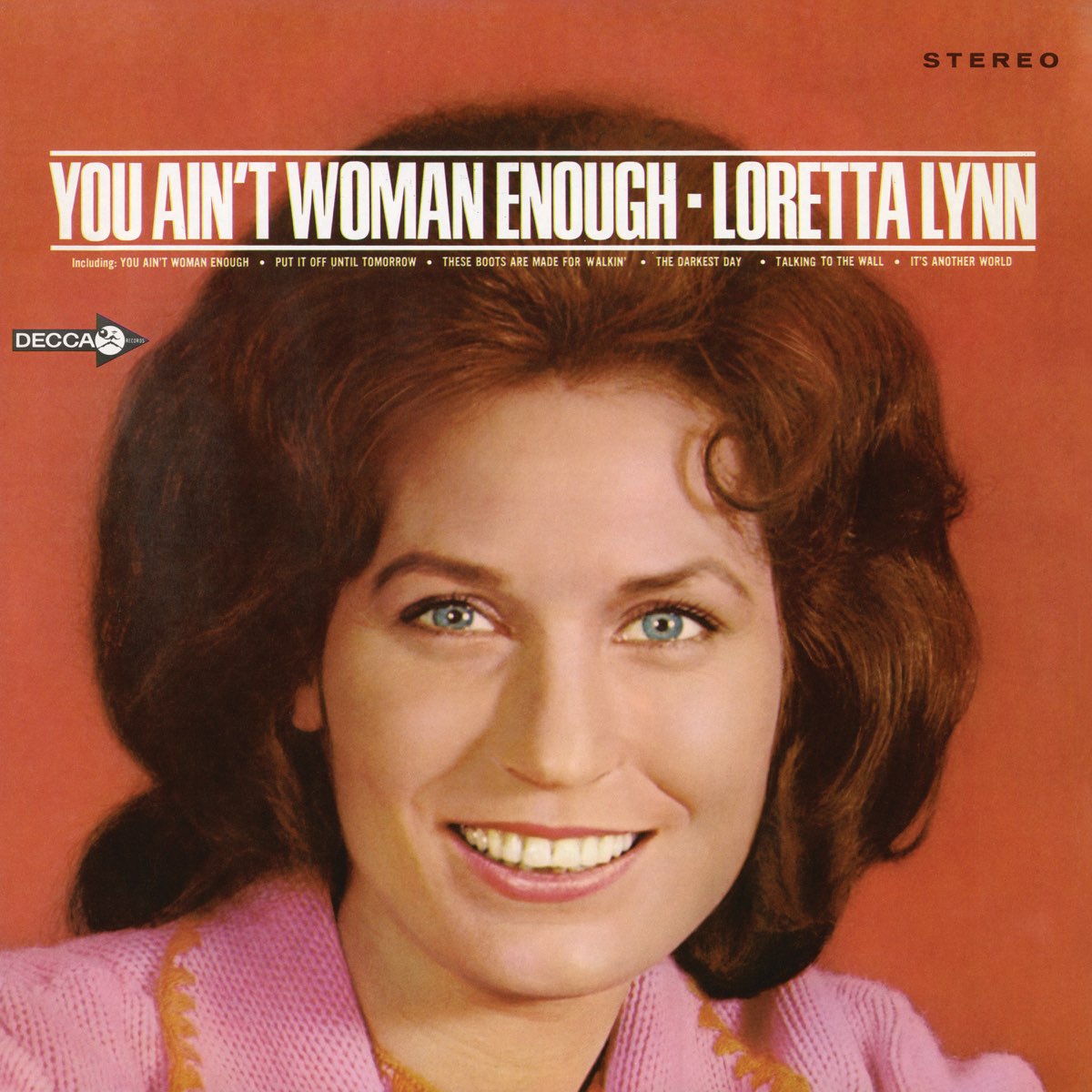
Loretta Lynn didn't play around. In 1966, country music was mostly about women pining for men who treated them like dirt, but then "You Ain't Woman Enough (To Take My Man)" hit the airwaves and basically flipped the script overnight. It wasn’t a polite song. It was a confrontation.
People think of the 1960s as the era of the Beatles or Motown, but in Nashville, the "Coal Miner's Daughter" was busy inventing a brand of rural feminism that didn't need a manifesto. She just needed a microphone. Honestly, the song is less about the man and more about a woman marking her territory with a level of confidence that was, at the time, pretty scandalous.
The Backstory You Probably Didn't Know
Music history is full of polished PR stories, but the origin of You Ain't Woman Enough is wonderfully messy. It wasn’t born in a high-tech studio or a songwriter’s retreat. It happened backstage.
A fan came to Loretta before a show, heartbroken. This woman told Loretta that another girl was trying to steal her husband. Loretta, being the straight-shooter from Butcher Hollow, looked the fan in the eye and said, "Honey, she ain't woman enough to take your man." She didn't just comfort the fan; she wrote the phrase down on a piece of paper and had the song finished before she even went on stage that night.
That’s the magic of it. It’s 100% authentic.
When you listen to the lyrics, there’s no whining. She’s literally telling the "other woman" to go look in the mirror because she’s outclassed. It's savage. It’s the 1966 version of a "diss track." But it worked because Loretta lived it. Her marriage to Oliver "Doolittle" Lynn was famously turbulent, filled with his drinking and philandering. When she sang these words, she wasn't just performing; she was testifying.
Why the Music Industry Was Terrified
Nashville in the mid-sixties was a conservative bubble. The "Nashville Sound" was all about smooth strings and polite lyrics. Then comes Loretta Lynn singing about birth control, double standards, and fighting for your man.
You Ain't Woman Enough broke records. It was the first time a female country artist wrote a #1 hit that she also performed. Think about that for a second. Before Loretta, women were often just the "voice" for male songwriters’ fantasies. She took the pen.
Radio stations were hesitant at first. They thought it was too aggressive. But the fans? They went wild. Women across America heard a voice that finally said what they were thinking behind closed doors. It wasn't about being a "tradwife" or a silent victim. It was about agency.
Breaking Down the Sound
The track itself is a masterclass in honky-tonk production. You've got that iconic steel guitar intro that feels like a warning shot. Loretta’s voice is sharp, clear, and carries that unmistakable Kentucky twang. It’s not "pretty" in a pop sense; it’s grounded.
- The tempo is upbeat, almost bouncy.
- The contrast between the "happy" melody and the "get lost" lyrics creates a tension that keeps the song from feeling like a sad ballad.
- The backing vocals provide a soft cushion that makes Loretta’s lead vocal sound even more authoritative.
It’s actually kinda funny how direct she is. She says, "It’ll be over my dead body." You don't get much more definitive than that.
The Feminist Label Loretta Rejected
If you called Loretta Lynn a feminist back then, she’d probably give you a funny look. She didn't care about politics or movements. She cared about life.
Yet, looking back, You Ain't Woman Enough is a cornerstone of feminist art. It paved the way for Dolly Parton, Reba McEntire, and eventually artists like Miranda Lambert and Carrie Underwood. You can't have "Before He Cheats" without Loretta Lynn telling another woman to back off first.
She wasn't trying to change the world; she was just trying to survive her own world. And in doing so, she gave millions of women the permission to stand up for themselves. It’s a song about self-worth, even if it’s framed as a fight over a guy. The subtext is clear: "I am enough, and you aren't on my level."
Modern Covers and Lasting Impact
Everyone from Paramore’s Hayley Williams to The White Stripes has paid tribute to this track. Jack White, who famously produced Loretta’s comeback album Van Lear Rose in 2004, often cited her songwriting as some of the most "punk rock" stuff ever written.
Why does it still work?
Because the emotion is universal. In a world of over-produced TikTok hits, there’s something refreshing about a song that just tells it like it is. It’s not "curated." It’s raw.
If you're an aspiring songwriter, you should study this track. It doesn't use big words. It doesn't use complex metaphors. It uses "I" and "You" and "Her." It stays in the pocket. It tells a story in under three minutes and leaves no room for confusion.
Real-World Lessons from the Lyrics
- Confidence is the best defense. The singer isn't begging the man to stay. She’s telling the rival why she’s going to fail. That shift in power is everything.
- Specific details matter. Loretta doesn't just say she’s better; she implies a shared history and a depth of character that the "new girl" simply lacks.
- Directness wins. There is zero ambiguity in this song.
Final Thoughts on a Country Classic
You Ain't Woman Enough isn't just a museum piece from the 60s. It’s a living document of a time when a woman from the Appalachian hills decided she was going to be the boss of her own narrative.
Whether you love country music or hate it, you have to respect the craft. Loretta Lynn took a painful, common human experience—infidelity and competition—and turned it into an anthem of strength. She didn't need a PR team. She didn't need a social media strategy. She just needed the truth.
If you're looking to dive deeper into her catalog, don't stop here. Check out "The Pill" or "Rated X." You'll see the same fearless streak that started with a backstage conversation and a scrap of paper in 1966.
Next Steps for Music Lovers:
- Listen to the Original 1966 Recording: Pay close attention to the phrasing in the second verse; Loretta’s timing is impeccable and gives the words their "bite."
- Compare with the 2016 Version: Loretta re-recorded the song for her Full Circle album at the age of 84. The grit in her voice adds a whole new layer of "I've seen it all" wisdom.
- Research the "Nashville Rebels": Look into how Loretta, Waylon Jennings, and Willie Nelson pushed back against the "polished" country sound to keep the genre honest.
- Analyze the Song Structure: If you’re a musician, notice how the song uses a standard AABA structure but breaks the "politeness" of that format with its lyrical aggression.



