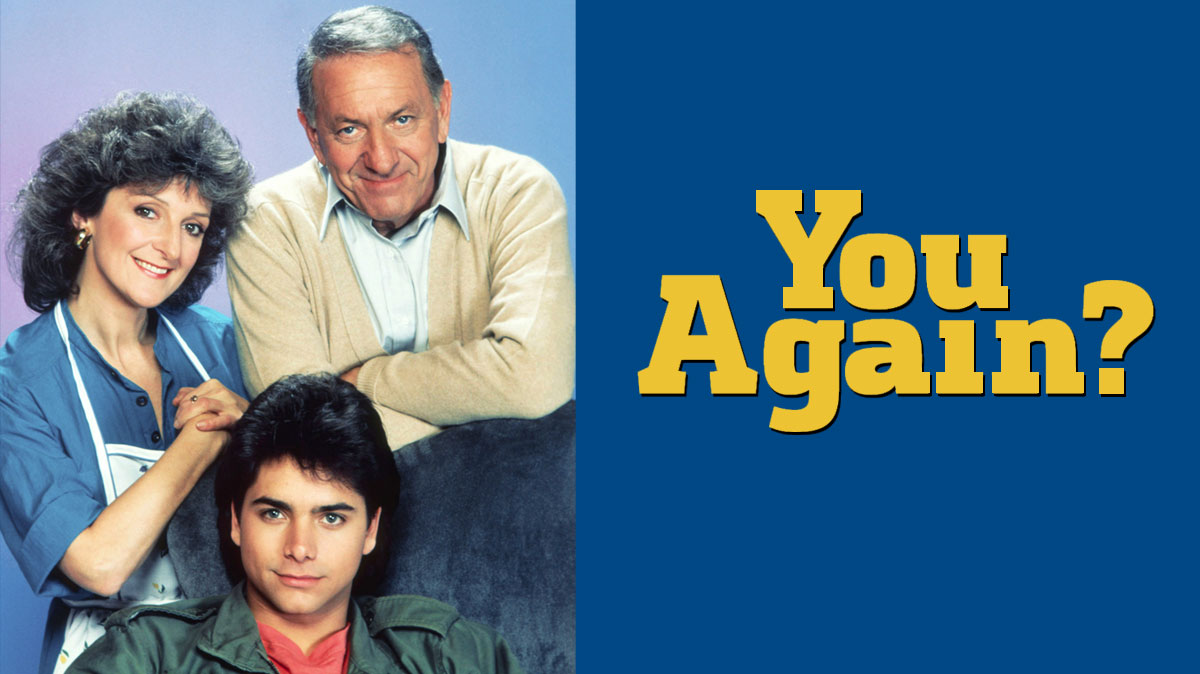
If you were flipping through channels in the mid-80s, you probably saw Jack Klugman’s face more than your own father's. Between The Odd Couple and Quincy, M.E., the man was a television titan. But there’s this weird, often forgotten middle child in his filmography called the You Again TV series. It’s a show that honestly feels like a fever dream of 1986 aesthetics, yet it tackled some pretty heavy family dynamics before "prestige TV" made that cool.
Most people today have zero clue this show existed. That’s a shame. It ran for two seasons on NBC, and while it didn't change the world, it captured a specific kind of Reagan-era anxiety about broken homes and the awkwardness of trying to fix things after the damage is already done.
What the You Again TV Series Was Actually About
The premise is basically the reverse of The Odd Couple. Instead of two grown men who can't stand each other living together, you have Henry Willows (played by Klugman), a grumpy, divorced man living a quiet life in a very brown 1980s apartment. Suddenly, his seventeen-year-old son Matt, played by a very young John Stamos, shows up on his doorstep. They haven't seen each other in seven years.
Seven years. Think about that for a second. That's a massive gap in a kid's life.
The show wasn't just about "wacky roommate" antics. It was about a dad who didn't know how to be a dad anymore and a son who was basically a stranger. John Stamos was just coming off General Hospital and hadn't yet become the "Uncle Jesse" icon of Full House. He was playing this smooth, slightly rebellious kid who drove his rigid father absolutely insane. It was a classic "clash of generations" setup, but Klugman brought a layer of genuine sadness to Henry that you didn't always see in sitcoms back then.
The British Roots You Probably Didn't Know About
Like a lot of American hits—All in the Family or The Office—the You Again TV series wasn't an original US concept. It was based on a British sitcom called Home to Roost. In the UK version, the legendary John Thaw played the father.
There’s always this weird friction when Americans try to adapt British humor. British shows tend to be a bit more cynical and biting. The American version definitely leaned harder into the sentimental "hug it out" moments, but because Klugman was so naturally cantankerous, it never got too sugary. He wouldn't let it.
The Supporting Cast That Made It Work
You can’t talk about this show without mentioning Elizabeth Bennett. She played Enid, Henry’s sarcastic housekeeper. What’s wild is that she actually played the exact same role in the British version. She crossed the Atlantic just to keep playing the same character. That’s basically unheard of in TV history. She provided the dry wit that balanced out Stamos’s teen energy and Klugman’s constant yelling.
Then there was the neighbor, Maggie, played by Barbara Barrie. She was the "will-they-won't-they" love interest for Henry. It added a layer of "grown-up" problems to a show that could have easily just been about Stamos being a heartthrob.
Honestly, the chemistry was there. The ratings? Well, they were okay for a while. It lived in the shadow of The Cosby Show and Cheers, which were absolute monsters in the ratings back in '86. Being an "okay" show in 1986 meant you still had millions of viewers, but it wasn't enough to keep the lights on forever.
Why Nobody Talks About It Now
It’s a licensing nightmare.
That’s usually the reason these mid-tier 80s shows vanish. Music rights, production company mergers, and the fact that it only had 54 episodes make it a tough sell for streaming services like Netflix or Max. It doesn't have enough episodes for traditional syndication "striping" (where a show runs five days a week), so it just sits in a vault somewhere.
Also, John Stamos became so synonymous with Full House that his earlier work just kind of got eclipsed. When people think of Stamos on TV, they think of mullets and "Have mercy!" They don't think of him trading barbs with a cranky Jack Klugman in a beige living room.
Is it actually good?
Look, it’s a multi-cam sitcom from the 80s. There’s a laugh track. The sets look like they were decorated with whatever was left over at a Sears furniture clearance sale. But if you watch it now—and you can find bootleg clips on YouTube if you look hard enough—it’s surprisingly sharp.
Klugman was a master of the slow-burn frustration. He didn't just play "angry"; he played "tired." Henry Willows was a man who had built a wall around himself to deal with his divorce, and watching his son kick that wall down one brick at a time is actually pretty decent storytelling.
It’s also a fascinating time capsule. You see the transition of TV comedy. It was moving away from the gritty, socially-conscious 70s shows and toward the glossy, family-centric 90s era. The You Again TV series sits right on the fence between those two worlds.
Critical Reception and the "Klugman Factor"
Critics at the time were... mixed. Some felt Klugman was just doing "Oscar Madison" again but as a dad. Others saw the nuance. The New York Times basically said it was a standard sitcom elevated by its lead actors.
And that’s the thing. Jack Klugman could read a grocery list and make it compelling. He had this gravelly voice and this way of pointing his finger that made you feel like you were actually in trouble. When he and Stamos went head-to-head, it felt like a real argument between a father and son who don't know how to talk to each other.
What We Can Learn From the Show Today
We live in an era of reboots. Everything old is new again. While I don't think anyone is clamoring for a You Again revival, the themes are more relevant than ever.
- Estrangement is real. The show didn't shy away from the fact that Henry and Matt were strangers. It takes time to rebuild a relationship.
- Humor is a defense mechanism. Both characters used jokes to avoid talking about how much it hurt that they were apart for seven years.
- The "Enid" archetype. Every show needs a character who calls the protagonist out on their nonsense.
If you're a fan of TV history, or if you just want to see John Stamos before he was a household name, the You Again TV series is worth a deep dive. It’s a reminder that even "minor" shows had a lot of heart and some incredible talent behind them.
Finding the Episodes
Since it’s not on the major streamers, your best bet is looking for the DVD sets that were released years ago. They pop up on eBay or in the bargain bins of old media stores. Sometimes, retro cable channels like Antenna TV or MeTV will run it in a "lost classics" marathon.
The image quality will be grainy. The fashion will be questionable. The hair will be... large. But the heart of the show—the struggle of a father trying to do better the second time around—still lands.
Actionable Insights for Retro TV Fans
If you're looking to explore the You Again TV series or similar "lost" sitcoms of the 80s, here’s how to do it without losing your mind:
- Check Archive.org: This is a goldmine for shows that have fallen into copyright limbo. You can often find full episodes uploaded by fans who recorded them on VHS back in the day.
- Compare the Versions: If you can find the British original, Home to Roost, watch an episode of that and then the US pilot. It’s a masterclass in how different cultures approach the same joke.
- Follow the Actors: If you like Klugman here, go back and watch The Odd Couple. If you like Stamos, watch his short-lived show Grandfathered—it’s actually a spiritual successor to this show, where he plays the dad/grandpa instead of the kid.
- Support Physical Media: This show is a prime example of why DVDs still matter. When the streaming rights are too messy, the disc is the only way to ensure the show doesn't vanish forever.
The You Again TV series isn't going to win any new Emmys in 2026, but as a piece of television history, it’s a fascinating look at two stars at very different points in their careers, trying to make sense of a changing world.



