You’re walking down a riverbank that looks exactly like Bruges.
Red-brick Flemish facades with stepped gables reflect in the water. There’s a statue of Grace Kelly and Prince Rainier of Monaco nearby. Turn your head slightly, and you’re staring at a replica of the Moscow Kremlin’s Spasskaya Tower. Keep walking, and you’ll hit a Gothic castle that looks like it was ripped straight out of a Bavarian forest, only to realize it's actually the Republican Puppet Theater.
This isn't a glitch in the matrix. It's Yoshkar-Ola, the capital of the Mari El Republic.
Most people have never heard of it. Honestly, even many Russians think it’s just a quiet provincial spot tucked away in the forest between Nizhny Novgorod and Kazan. But over the last two decades, this place has transformed into what can only be described as an architectural fever dream. It’s weird, it’s polarizing, and it’s arguably the most surreal city in the Russian Federation.
The Man Behind the "Russian Bruges"
How did a city in the middle of the Volga region end up looking like a European theme park?
Basically, it comes down to one man: Leonid Markelov. He was the head of the Mari El Republic from 2001 to 2017. Markelov had a very specific, very expensive obsession with Renaissance and Gothic architecture. He decided that the city center—which was mostly decaying Soviet blocks and empty space—needed a total overhaul.
He didn't want modern glass skyscrapers. He wanted Venice. He wanted Amsterdam. He wanted Florence.
The result is the Bruges Embankment. It’s a long stretch of the Malaya Kokshaga River lined with buildings that mimic Northern European styles. If you post a photo from the right angle, your friends will genuinely think you’re in Belgium. But here’s the kicker: these "medieval" houses aren't museums or luxury hotels. They house government ministries, local tax offices, and schools.
Yoshkar-Ola is the "Red City" with a Secret
The name itself is a bit of a linguistic puzzle.
In the local Mari language, "Yoshkar" means red, and "Ola" means city. So, it's the Red City. Historically, "red" often meant "beautiful" in old Russian contexts, much like Red Square in Moscow. But while the architecture feels brand new, the roots of this place go back to 1584.
Back then, it was a military fortress called Tsaryovokokshaysk. Ivan the Terrible’s successors established it to keep an eye on the local tribes after the fall of the Kazan Khanate.
But if you visit today, you’re not really going for the 16th-century ruins. You’re going for the Tsarevokokshaysky Kremlin. Don't let the name fool you. It’s actually the newest Kremlin in Russia, completed in 2009 on the site of the old fortress. It’s small, tidy, and feels a bit like a movie set.
Why the locals love a cat
You can’t talk about Yoshkar-Ola without mentioning the Yoshkin Cat.
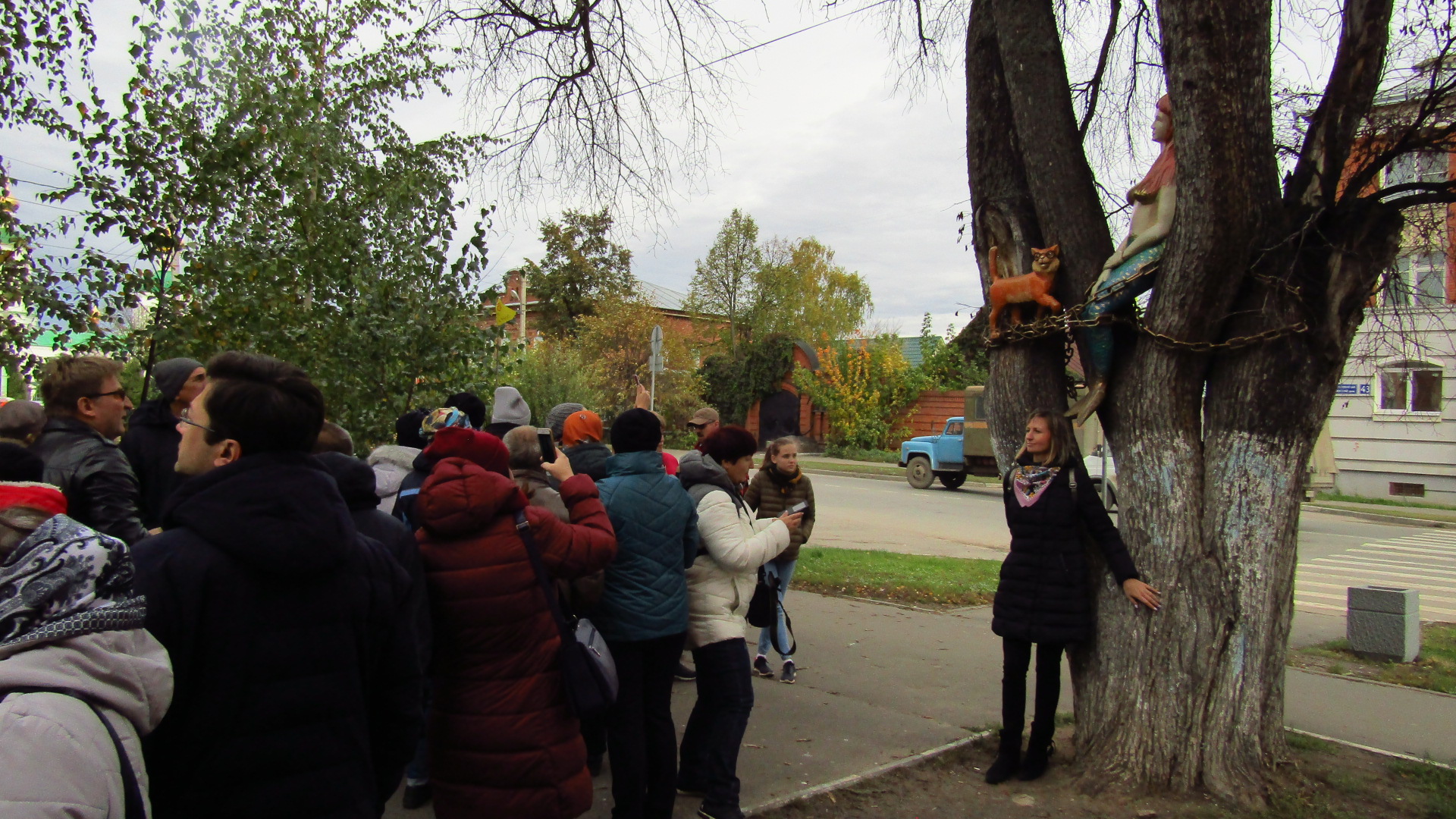
It’s a bronze statue of a cat lounging on a bench near the Mari State University. In Russian, "Yoshkin kot" is a popular slang exclamation, sort of like saying "good grief" or "holy cow." It’s a play on words because "Yosh" sounds like the start of the city's name.
People wait in line to rub the cat's nose for good luck. It’s probably the most photographed spot in the city. If you’re there, you’ve gotta do it. It’s a law or something.
The Last Pagans of Europe
Behind the flashy European facades lies something much deeper and, honestly, much more fascinating. The Mari people are often called the "last pagans of Europe."
While most of Russia converted to Christianity centuries ago, a significant portion of the Mari population kept their ancient beliefs. They worship in sacred groves—forest clearings where they make offerings to the gods of nature.
- The Religion: It’s called Chimari. They believe in a supreme god, Kugu Jumo, but also in the spirits of the trees, water, and earth.
- The Groves: There are hundreds of these protected "Kusoto" (sacred groves) across the republic. You can’t just walk in and have a picnic; these are active places of worship.
- The Food: You have to try podkogol. They’re basically Mari dumplings, usually filled with meat, cheese, or even groats. They’re heartier than your standard pierogi.
This mix of ancient forest mysticism and "Disneyland" architecture is what makes Yoshkar-Ola so confusingly brilliant. You can spend the morning looking at a replica of an Italian piazza and the afternoon learning about animistic rituals that haven't changed in a thousand years.
Is it worth the trip?
Look, if you’re looking for authentic 12th-century Russian history, go to Suzdal. If you want a massive metropolis, go to Moscow.
Yoshkar-Ola is for the traveler who likes the "weird stuff." It’s for people who appreciate the audacity of a city trying to reinvent itself through sheer architectural willpower.
What you actually need to see:
- Patriarch’s Square: Every three hours, a mechanical clock shows the "12 Apostles" moving across a balcony. It’s a whole show with music. It’s kitschy, sure, but the engineering is impressive.
- Obolensky-Nogotkov Square: This is where you’ll find the National Art Gallery. The building looks like a Venetian palace. There’s another clock here where a donkey carrying an icon emerges.
- The Annunciation Cathedral: It’s a massive, colorful church that looks like a mashup of St. Basil’s in Moscow and the Church of the Savior on Spilled Blood in St. Petersburg.
- Republican Puppet Theater: Even if you don’t have kids, see it. It looks like Neuschwanstein Castle and is arguably the most "extra" building in the city.
How to get there and survive
Most people take the overnight train from Moscow. It’s about a 14-hour ride. You go to sleep in the capital and wake up in a place that feels like it’s trying to be five different countries at once.
Pro tip: Don’t just stay in the city center. Hire a driver or hop on a bus to the countryside. The Mari El Republic is famous for its lakes. Lake Yalchik and Lake Sea Eye (Morskoy Glaz) are stunning, though Sea Eye has famously struggled with water levels recently—check local reports before you go for the "gram."
Honestly, Yoshkar-Ola is a lesson in identity. It’s a city that decided it didn't want to be "just another provincial town." Whether you think the architecture is a masterpiece or a disaster, you can't deny it has character.
Your Next Steps
If you’re planning a visit, start by checking the train schedules from Moscow Kazansky station; the "Mari El" branded train is usually the most comfortable option. Book a hotel near the Bruges Embankment so you can see the buildings lit up at night—that’s when the "European" illusion is at its strongest. Once you're on the ground, head straight to the Tourist Information Center near the Kremlin to grab a map of the statues, because there are dozens of quirky bronze monuments hidden in plain sight.