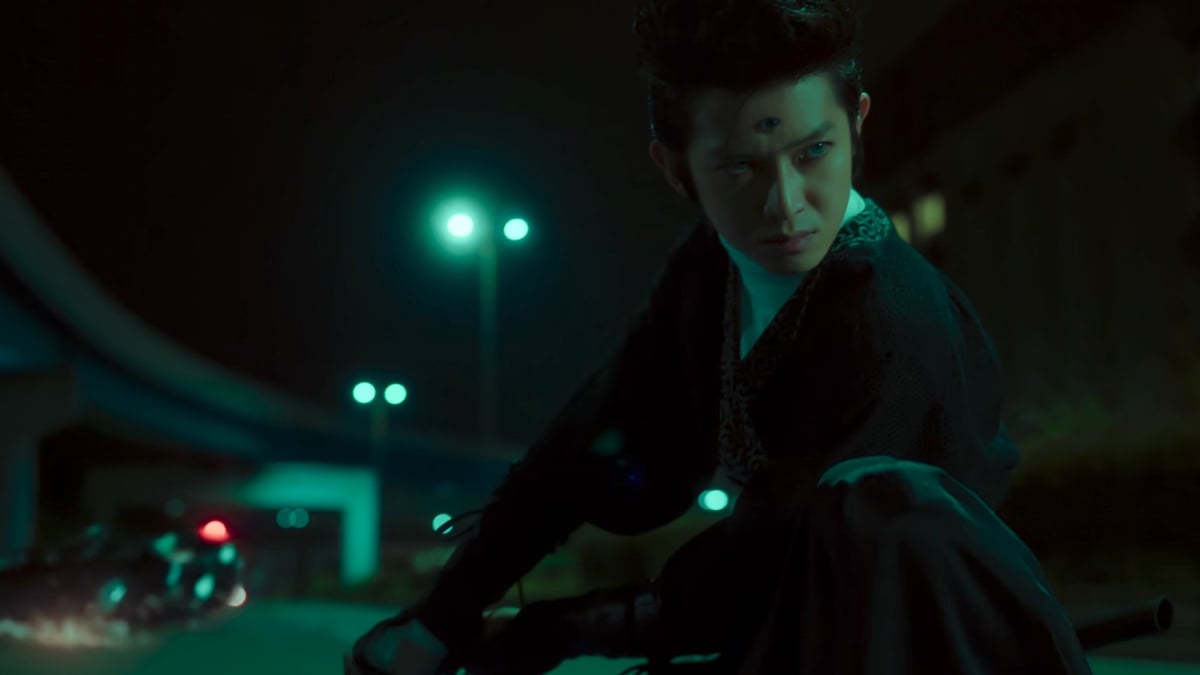
You know that feeling when you're watching a modern anime like Jujutsu Kaisen or Hunter x Hunter and something just feels... familiar? It’s not a coincidence. Most of what we love about modern supernatural battles was basically invented by one guy sitting in a cluttered room in the early 90s. Yoshihiro Togashi, the legendary Yu Yu Hakusho author, is a bit of an enigma. He’s the type of creator who would rather let a franchise rest for decades than produce something he doesn't believe in.
People always talk about the "Big Three" of Shonen Jump, but before Naruto or Luffy were even a glimmer in anyone's eye, Yusuke Urameshi was out here headbutting demons and breaking the rules of what a "hero" was supposed to be. Togashi didn't just write a manga; he dismantled the genre while he was building it.
Honestly, it’s kind of wild.
He’s famous for his hiatuses now, but back in the day? The man was a machine. But that speed came at a cost that still affects him—and the industry—today.
The Rough Start and the Spirit Detective
Before he was the world-famous Yu Yu Hakusho author, Yoshihiro Togashi was just another aspiring mangaka trying to find his footing. He actually won the Hop Step Award for new artists, which is a big deal in the Shonen Jump world. His early work like Ten de Showaru Cupid was... fine. It was a romantic comedy with some supernatural elements, but it didn't scream "generational talent" yet.
Then came 1990.
Yu Yu Hakusho started as a series of episodic ghost stories. Think Ghostbusters but with a Japanese delinquent in a green jumpsuit. Yusuke dies in the first chapter. That was a bold move back then! Most authors spend ten chapters building a world; Togashi just killed his protagonist on page one and told the audience to keep up.
The shift from "Spirit Detective" mysteries to high-stakes battle manga happened because that's what the fans—and the editors—wanted. But Togashi did it differently. He didn't just give characters bigger energy blasts. He gave them complex psychological hang-ups. He made the villains, like Younger Toguro and Shinobu Sensui, people you actually kind of understood. Sometimes you even felt bad for them.
Why Togashi Is the "Author's Author"
Ask any professional mangaka who they look up to, and Togashi’s name is going to come up. Gege Akutami (Jujutsu Kaisen) and Masashi Kishimoto (Naruto) have both been vocal about his influence. Why? Because the Yu Yu Hakusho author mastered the art of the "Hard Magic" system long before it was a buzzword in Western fantasy.
In the Dark Tournament arc, every fight is a puzzle. It’s not just about who punches harder. It’s about who understands the rules of the "Territory" or the specific limitations of a "Spirit Ribbon." Togashi hates boring fights. He loves strategy. He loves making his characters suffer through impossible choices.
Take the Chapter Black saga. It’s arguably one of the most cynical, dark, and brilliant arcs in the history of the medium. It explores the idea that humans might actually be worse than the demons they fear. For a magazine aimed at middle school boys, this was heavy stuff. It was also the point where Togashi began to feel the immense pressure of the weekly grind.
The Pain Behind the Panels
You’ve probably seen the memes about "Hiatus x Hiatus." It’s a joke among fans of his later work, Hunter x Hunter, but the roots of those breaks go back to his time as the Yu Yu Hakusho author.
Weekly manga production is brutal. We are talking 18 to 20 pages a week, every week, with maybe two weeks off a year. Togashi is a perfectionist who, for a long time, refused to use assistants for the "important" parts of his art. He wanted every line to be his.
By the end of Yu Yu Hakusho, he was physically and mentally spent. He has been very open in his later years—especially in recent exhibition notes and tweets—about his debilitating back pain. At times, he has had to draw while lying flat on his back because sitting in a chair was unbearable.
When people ask why he doesn't just hire someone to draw for him, they miss the point of who he is as an artist. To Togashi, the act of drawing is the act of storytelling. He can't separate them. This is why the end of Yu Yu Hakusho feels so rushed to some; he was basically running on fumes and just wanted to finish it on his own terms before he completely broke down.
The Marriage That Rocked the Anime World
In 1999, the Yu Yu Hakusho author married Naoko Takeuchi. If that name sounds familiar, it should. She’s the creator of Sailor Moon.
Think about that power dynamic for a second.
It’s essentially the royal wedding of the manga world. They are two of the most successful creators in history. There are even rumors and fan theories that Takeuchi has helped him with his work during his most difficult physical periods, though that’s mostly speculation. What we do know is that they share a deep understanding of the industry's pressures.
Having that kind of support system allowed Togashi to move into his next phase with Level E and then Hunter x Hunter, where he pushed the boundaries of the medium even further. He stopped playing by the rules of Shonen Jump and started making the magazine play by his.
What Most People Get Wrong About the Ending
There’s a common narrative that Togashi "hated" Yu Yu Hakusho by the end. That’s not quite right. Honestly, it’s more that he hated the system.
The final arc, the Three Kings saga, skips a lot of the big fights fans expected. People wanted another Dark Tournament. Instead, Togashi gave them a political drama and a tournament that ended off-screen for several major characters. It felt like a subversion.
He was essentially saying: "The fighting isn't the point. The characters' growth is the point."
Yusuke finding a place where he belongs—not as a weapon for Spirit World, but as a person—was the real conclusion. If you go back and read it now, the ending is actually quite beautiful. It’s quiet. It’s human. It’s exactly the opposite of the explosive, planet-destroying endings we usually see.
Legacy and the Modern Landscape
Even in 2026, the fingerprints of the Yu Yu Hakusho author are everywhere. You see it in the way Chainsaw Man handles subverting expectations. You see it in the complex power systems of World Trigger.
Togashi proved that you could be a "shonen" writer while still exploring philosophy, nihilism, and complex morality. He proved that the "hero" doesn't have to be a good person—he just has to be a real person.
The fact that he continues to work on Hunter x Hunter today, even at a glacial pace, is a testament to his love for the craft. He doesn't need the money. He's been set for life since the mid-90s. He does it because he has stories that he needs to get out of his head and onto the paper.
Actionable Insights for Fans and Aspiring Creators
If you're looking to dive deeper into the world of Togashi or if you're a creator yourself, there are a few things to take away from his career:
- Study the "Dark Tournament" for Pacing: It is widely considered the gold standard for tournament arcs. Notice how Togashi introduces stakes for every single fight, not just the protagonist's.
- Prioritize Health: Togashi’s career is a cautionary tale about the "grind" culture of the 90s. If you’re a creative, take the breaks you need before your body forces you to.
- Subvert When Necessary: Don't be afraid to change your story's genre if the characters lead you there. Yu Yu Hakusho became a legend precisely because it evolved from a generic ghost story into something much grittier.
- Read "Level E": If you want to see Togashi at his most experimental and weird, check out this shorter series he did between his two big hits. It shows his range beyond just "battle manga."
Yoshihiro Togashi remains a pillar of the industry because he never treated his audience like they were too young to understand complex themes. He respected the readers enough to challenge them. Whether he's posting a cryptic picture of a tree on Twitter or finishing a chapter after a three-year break, the world watches. Because when the Yu Yu Hakusho author has something to say, it’s usually worth the wait.
The best way to honor that legacy is to engage with the work critically. Don't just watch the fights. Look at the dialogue. Look at the way he uses negative space in his panels. There's a masterclass in every volume.



