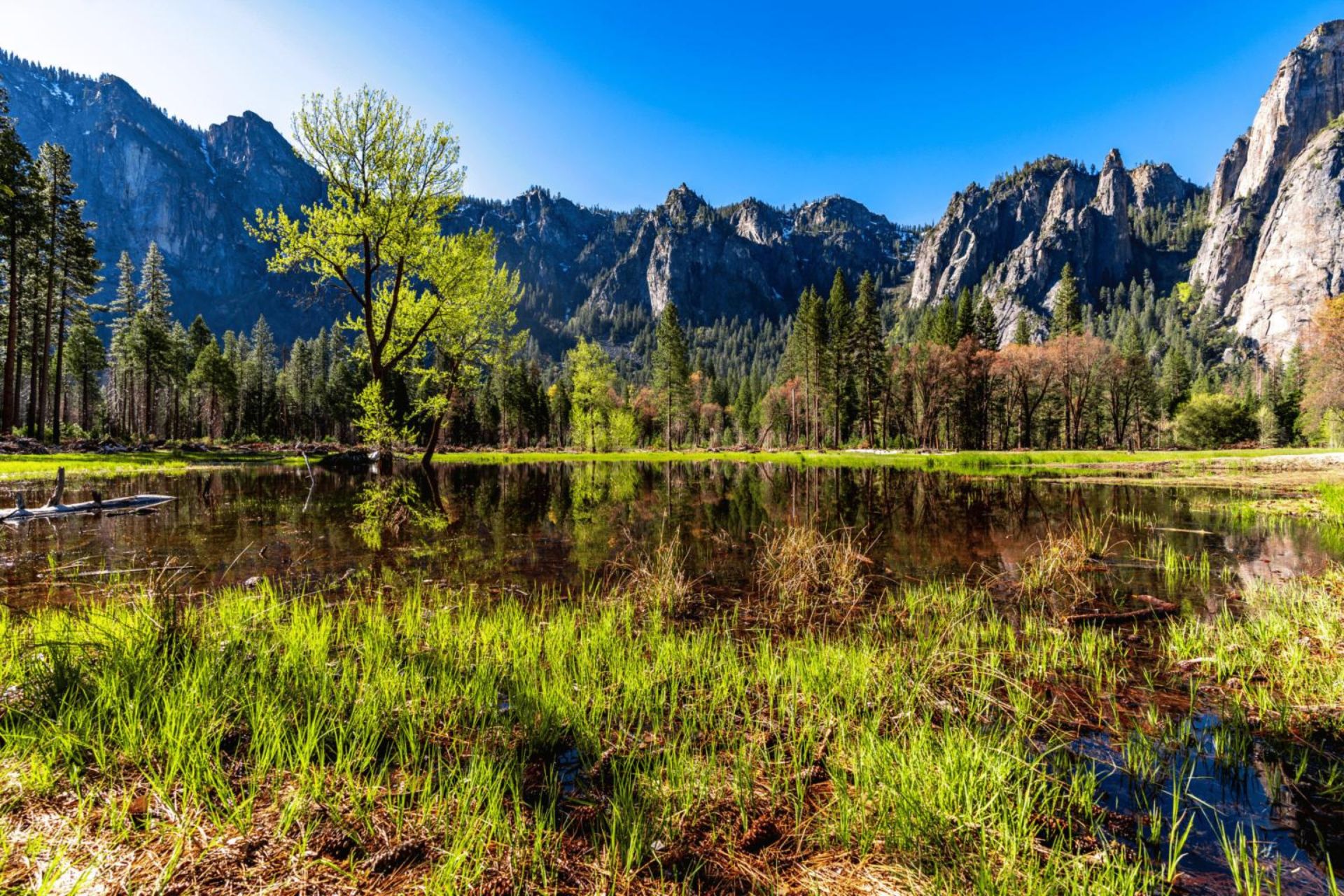
You’re standing at Tunnel View. The granite monolith of El Capitan looms to your left, Bridalveil Fall wisps through the air on your right, and Half Dome sits dead center like some ancient, stone god. It looks exactly like the postcard. Then you turn around and realize you’re standing shoulder-to-shoulder with forty other people holding selfie sticks, and you’ve been circling the parking lot for forty-five minutes. Honestly, it’s a mess.
Yosemite is one of the most beautiful places on Earth, but if you treat it like a casual weekend at the beach, you’re going to have a bad time. This Yosemite National Park travel guide isn't here to tell you that the trees are tall and the air is fresh. You know that. I want to talk about how you actually survive the crowds, get the permits, and see the stuff that isn't just the "greatest hits" reel everyone posts on Instagram.
The Reservation Reality Check
Let's get the boring, stressful stuff out of the way first. You can’t just roll up to the gate anymore. Well, sometimes you can, but it’s a gamble. For 2024 and 2025, the National Park Service (NPS) has been toggling a "Peak Hours Plus" reservation system. Basically, if you’re arriving between 5:00 AM and 4:00 PM on weekends or holidays during the peak summer months, you need a permit. Just to drive in.
Check the official NPS site before you even pack a bag. If you don't have a reservation, your only options are entering before 5:00 AM—which is actually awesome because the light at sunrise is incredible—or coming in after 4:00 PM when the shadows are getting long.
If you’re staying inside the park at the Ahwahnee or Wawona, or you’ve scored a campsite at Upper Pines, your lodging serves as your entry permit. But those campsites? They sell out in seconds. Not minutes. Seconds. You need to be on Recreation.gov at 7:00 AM PT exactly five months in advance. It’s like trying to buy tickets for a Taylor Swift concert, but with more dirt and fewer sequins.
Timing is Everything (And Most People Get it Wrong)
Most people visit in July. It’s hot. It’s crowded. The waterfalls are often just a trickle by then.
If you want the "real" Yosemite experience, you go in late May or early June. This is when the snowmelt from the high Sierra is booming. Yosemite Falls will literally shake the ground. You’ll get wet just standing on the bridge. It’s loud, it’s chaotic, and it’s spectacular.
Winter is the sleeper hit. Yeah, Tioga Road and Glacier Point Road will be closed because of the snow, but the Valley stays open. Seeing El Capitan dusted in white while the mist hangs low over the Merced River is a religious experience. Plus, no crowds. You can actually hear the wind in the pines instead of someone’s car alarm.
Fall is kind of weird. The dogwoods turn a bright, burning red, and the maples go yellow. It’s beautiful, but the water is mostly gone. Mirror Lake becomes "Mirror Meadow." If you’re a climber or a hardcore hiker, October is your goldmine. The air is crisp, the grip on the rock is perfect, and the bugs have finally died off.
What about the Firefall?
Every February, people lose their minds over Horsetail Fall. Under very specific conditions—clear sky, enough snowmelt, the sun hitting at the exact right angle—the waterfall glows orange and looks like it's made of lava.
It’s cool. It really is.
But it’s also a circus. You have to park miles away and hike in the cold just to stand in a designated "viewing area" with thousands of other photographers. If that’s your thing, go for it. But don't expect a quiet moment of reflection. Expect a lot of tripods hitting you in the shins.
The Valley vs. The High Country
The Valley is where 90% of people spend 90% of their time. It’s only seven square miles. That’s why it feels like a theme park.
The Valley Floor
You’ve got to do the Mist Trail. It’s non-negotiable. You’ll climb the stone stairs past Vernal Fall and Nevada Fall. Your quads will burn. You will get soaked. You will love it.
- Pro tip: Take the John Muir Trail (JMT) on the way down. It’s longer but way easier on the knees, and the views of the back of Half Dome are better anyway.
Then there’s El Capitan Meadow. Don't just drive past. Pull over, lay in the grass, and use binoculars to find the tiny specks on the wall. Those are climbers. They’re sleeping in portaledges hanging off a 3,000-foot cliff. It puts your morning emails into perspective.
Getting Out of the Valley
If you want to escape the madness, head up Tioga Road (Highway 120). This is the High Sierra. It’s high altitude, alpine lakes, and massive domes of polished granite.
Tuolumne Meadows feels like a different planet. It’s wide open and quiet. Hike up Lembert Dome for a 360-degree view that’ll make your head spin. Or go to Tenaya Lake. The water is freezing—seriously, it’ll take your breath away—but swimming there on a hot August day is the best thing you’ll ever do.
The Half Dome Obsession
Everyone wants to hike Half Dome. I get it. The cables are iconic. But let’s be real: it’s a 14 to 16-mile round trip with nearly 5,000 feet of elevation gain. It’s brutal.
You need a permit for the sub-dome and the cables. They use a lottery system. If you don't win, don't try to sneak up. Rangers sit at the base and check IDs.
Is it worth it? Maybe. But Clouds Rest is actually higher, doesn't require a permit, and gives you a view down onto Half Dome. Honestly, I think the view from Clouds Rest is superior. You can see the entire valley laid out like a map.
Where to Actually Stay
If you aren't camping, you’re staying in a lodge or outside the park.
- The Ahwahnee: It’s expensive. It’s historic. The dining room looks like something out of The Shining (literally, it inspired the set). Even if you don't stay there, go grab a drink by the massive fireplace.
- Yosemite Valley Lodge: Best for families. It’s basic, but you’re right across from Yosemite Falls.
- Curry Village: You’re in "tent cabins." It’s basically a canvas tent on a wooden platform. You’ll hear your neighbors snoring. You’ll have to put everything that smells (toothpaste, deodorant, snacks) in a bear locker. It’s the "true" Yosemite experience for people who don't want to pitch a tent.
- Outside the Park: El Portal is the closest. Mariposa and Groveland are cute towns but be prepared for a 45-to-60-minute drive just to get to the park entrance.
Bears, Bugs, and Basic Manners
Let's talk about the bears. Yosemite has black bears (even the brown ones are black bears). They aren't grizzlies. They don't want to eat you; they want your leftover turkey sandwich.
If a bear gets "habituated" to human food, the rangers often have to kill it because it becomes a safety risk. Don't be the reason a bear dies. Use the bear lockers. Don't leave a gum wrapper in your car. I’ve seen bears peel car doors open like sardine cans because someone left a bag of beef jerky on the seat.
And please, for the love of everything holy, stay on the trails. The meadows are fragile ecosystems. When you trample the grass for a photo, you’re killing the plants that keep the whole valley healthy.
What Most People Get Wrong
People think Yosemite is a "drive-through" park. It isn't. If you stay in your car, you’re seeing maybe 5% of the magic. You have to get out. You have to sweat a little.
Another misconception is that the "best" views are the famous ones. Some of my favorite spots in the park aren't on any "top 10" list. There are quiet corners along the Merced River near Sentinel Beach where you can sit for an hour and not see a soul. There are groves of Giant Sequoias at Tuolumne Grove that are just as impressive as Mariposa Grove but way less crowded.
Essential Gear You’ll Actually Use
- A real map. Cell service in the park is garbage. Download offline maps on Google, but carry a paper one.
- A water filter. If you're hiking long distances, don't carry six liters of water. Carry a Katadyn BeFree or a Sawyer Squeeze and fill up at the creeks (above the falls, obviously).
- Layers. It can be 85°F in the Valley and 50°F at Glacier Point. The Sierra Nevada makes its own weather.
- Sturdy boots. I see people trying to hike the Mist Trail in flip-flops every year. Don't be that person. You'll slip, you'll break an ankle, and SAR (Search and Rescue) will have a very annoying afternoon.
Planning Your Logistics
If you're flying in, Fresno (FAT) is the closest airport. It’s about two hours away. San Francisco (SFO) and Sacramento (SMF) are about 3.5 to 4 hours.
If you're driving an EV, there are chargers in the Valley, but they’re in high demand. Plan accordingly. Gas inside the park is also wildly expensive—fill up in Oakhurst or Mariposa before you head up the hill.
Actionable Steps for Your Trip
To make this Yosemite National Park travel guide work for you, follow this specific timeline:
- 6 Months Out: Decide your dates and mark your calendar for the campsite/lodging release.
- 5 Months Out: Be on Recreation.gov at 7:00 AM sharp to book your spot.
- 3 Months Out: If you didn't get a site, check for cancellations daily. They happen more than you’d think.
- 1 Month Out: Check the NPS website for the current reservation requirements (Peak Hours Plus).
- 1 Week Out: Check the "Current Conditions" page on the NPS site. This tells you about rockfalls, road closures, or prescribed burns that might make the air smoky.
- The Day Of: Arrive before 6:00 AM. Seriously. You’ll get a parking spot, you’ll see the sunrise hit the granite, and you’ll have three hours of peace before the tour buses arrive.
Yosemite isn't just a park; it's a massive, living piece of tectonic history. It's crowded because it's worth it. Just be smarter than the average tourist, pack your trash, and remember that you're a guest in the home of the bears and the ancient trees. Treat it with a bit of respect, and it'll give you back a lot more than just a few good photos.
Pack your boots and get moving. The granite is waiting.