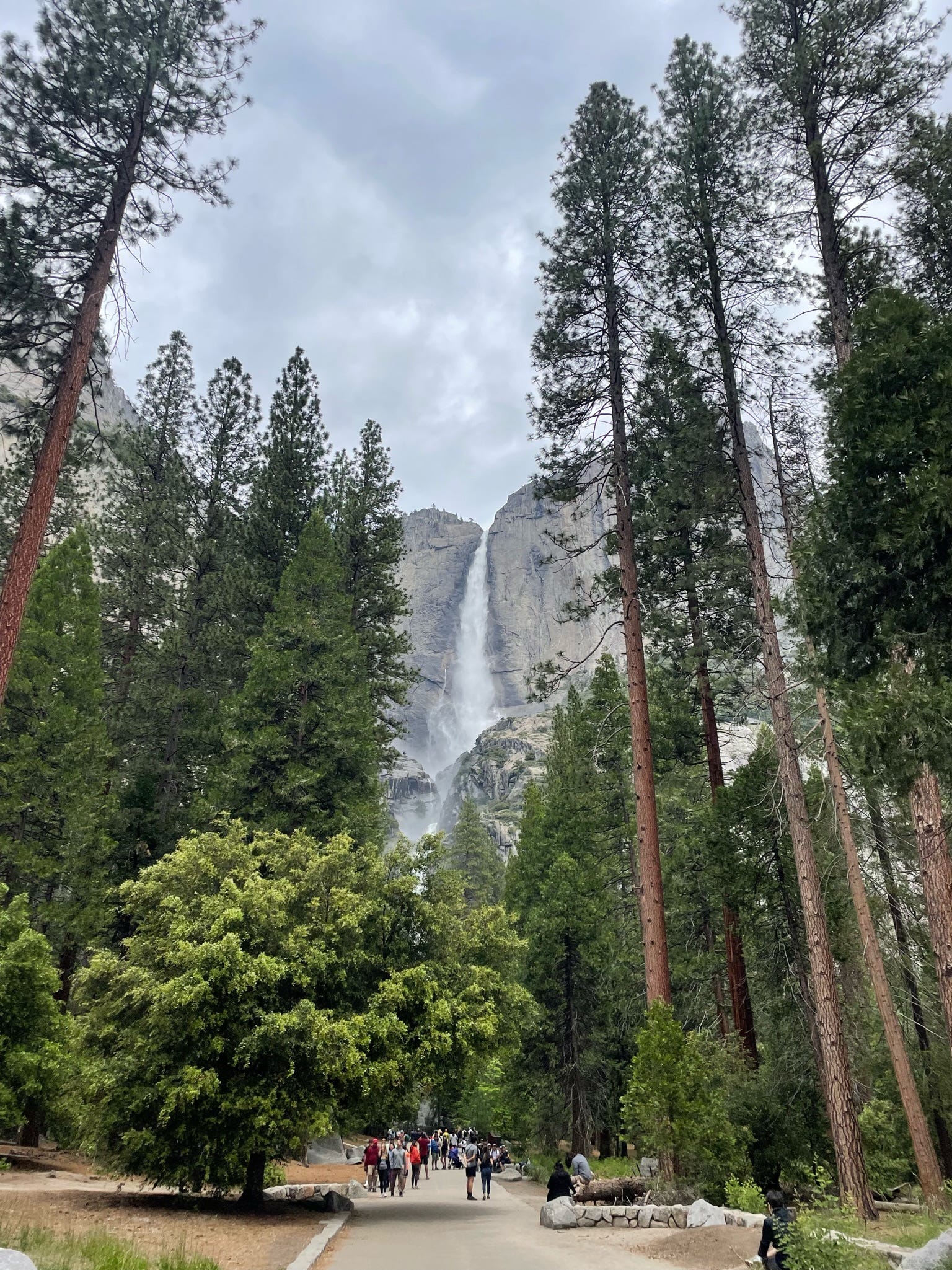
You’re standing at the Tunnel View lookout. The mist from Bridalveil Fall is hitting your face, and El Capitan looks so massive it actually feels fake, like a matte painting in an old movie. You turn to your friend to say something about how incredible the valley is, but you hesitate. Is it "Yo-se-might"? Or maybe "Yo-sem-it"?
Honestly, it happens to the best of us. Also making news lately: The Illusion of Paradise and the Anatomy of a Postcard Brawl.
Getting the yosemite national park pronunciation right is basically a rite of passage for any traveler heading into the Sierra Nevada. It’s one of those words that looks absolutely nothing like it sounds if you’re just reading the letters on a map. If you say "Yo-se-might," locals will probably give you a polite, slightly pained smile. If you say it right, you blend in. Simple as that.
It’s Not "Mighty"—The Break Down
Let’s just kill the suspense. It is yo-SEM-it-ee. Additional information on this are covered by Condé Nast Traveler.
Think of it like four distinct beats. Yo. Sem. It. Ee. The stress—the part you really lean into—is that second syllable, "SEM." If you’re a fan of old cartoons, you might remember Yosemite Sam. He’s loud, he’s got a giant mustache, and he is the perfect mnemonic device. He doesn't call himself "Yo-se-might Sam." He says his name exactly how the park is pronounced.
Why is it so confusing? English is a mess, mostly. We see that "ite" at the end and our brains immediately go to words like kite, bite, or finite. But Yosemite isn't an English word in its origin, which is why those rules don't apply.
Where the Name Actually Comes From
You can’t really talk about how to say the name without talking about why we call it that in the first place. This is where things get a bit messy and, frankly, kind of dark. Most people assume "Yosemite" was the name of the tribe living in the valley. That’s partly true, but not in the way you’d think.
The Ahwahneechee people lived there for thousands of years. They called the valley "Ahwahnee," which roughly translates to "gaping mouth."
The name "Yosemite" actually came from the Mariposa Battalion in 1851. These were guys—mostly miners and volunteers—who were sent into the mountains to drive the indigenous people out during the Mariposa War. When they asked surrounding tribes who lived in the valley, the answer they got sounded like Yohhe'meti or Yosuma’ti.
Here’s the kicker: In the Miwok language, that word actually meant "they are killers."
The surrounding tribes were basically warning the settlers that the people in the valley were fierce warriors. The settlers took that warning, butchered the pronunciation into "Yosemite," and decided it was a great name for a park. It’s one of those weird historical ironies. We’ve spent over a hundred years trying to pronounce a word that was originally meant as a warning about the people who actually belonged there.
Common Mistakes You’ll Hear at the Gate
If you hang out at the Lower Yosemite Fall trailhead long enough, you’ll hear some creative interpretations.
- The "Mite" Mistake: This is the big one. People see "ite" and treat it like a mineral. Like granite or quartz. It’s logical, but wrong.
- The Three-Syllable Squish: Some people try to turn it into "Yo-sem-ite" (three syllables), cutting off that final "ee" sound.
- The "Jose" Twist: Occasionally, international travelers who speak Spanish might see the "Y" and "J" and try "Jo-se-mite." It’s rare, but it happens.
The final "e" is the secret sauce. Without that "ee" sound at the end, you’re just talking about a very large rock instead of a National Park.
Why Does Pronunciation Matter So Much?
Does the mountain care if you say its name wrong? Obviously not. El Capitan has been sitting there for millions of years; it’s indifferent to your vowels.
But for travelers, getting the yosemite national park pronunciation correct is about respect. Respect for the history of the land and respect for the people who manage it. When you talk to a Park Ranger—and you should, they are incredible resources—using the right name opens doors. It shows you’ve done your homework. It shows you aren't just there to snap a selfie and leave trash on the trail.
Plus, there is nothing more awkward than trying to buy a souvenir sweatshirt and mispronouncing the word printed on the chest in giant letters.
Beyond the Park Name: Other Tongue-Twisters
Yosemite is just the beginning. Once you get inside the gates, the Sierra Nevada is full of names that will trip you up.
Tuolumne Meadows
This is the big one. If you head up Tioga Road, you’ll hit Tuolumne. Most people see those vowels and just give up. It’s pronounced Too-all-um-me. Think "To all of me." The "n" is silent, and that final "e" is doing the same work it does in Yosemite. It’s a high-altitude wonderland that looks like a painting, and it’s worth learning how to say it so you can tell people to go there.
Wawona
Compared to the others, this one is a breeze. Wah-wo-nah. It’s the site of the historic Big Trees Lodge. It sounds a bit like a sigh of relief, which is fitting because it’s usually much quieter than the valley floor.
Ahwahnee
The famous hotel. The original name of the valley. Pronounce it Ah-wah-nee. No hidden tricks here, just three clear syllables.
Real-World Tips for Mastering the Sound
If you’re still struggling, try this. Say "Yo." Then say "Sem" like the first half of "semester." Then say "it." Then say "ee" like the letter E.
Yo-Sem-It-Ee.
Say it five times fast while looking at a picture of Half Dome. It’ll stick.
Interestingly, if you look at historical documents from the mid-1800s, the spelling was all over the place. You’ll find "Yo-Semite," "Yosemiti," and even "Yo-Hamite." The fact that we landed on the current spelling and pronunciation is almost a fluke of cartography.
Linguists often point to Yosemite as a classic example of a "loanword" that got mangled through multiple languages—from Northern Paiute to Miwok to English—before settling into its current form. It’s a linguistic fossil.
How to Prepare for Your Visit
Once you've nailed the name, you actually have to get there. And let’s be real, the pronunciation is the easiest part of a Yosemite trip these days.
In 2026, the park is busier than ever. You need to be thinking about your entry reservations months in advance if you’re planning a summer trip. The National Park Service (NPS) has been tweaking their "Peak Hours Plus" system to manage the crowds, so check the official site before you drive three hours only to get turned around at the kiosk.
Also, don't just stay in the valley. Everyone goes to the valley. It's crowded. It’s loud. It’s beautiful, sure, but the high country—where you’ll find that Tuolumne Meadows we talked about—is where the real magic happens. The air is thinner, the crowds are thinner, and the granite is even more blindingly white.
Final Practical Steps
- Practice the name out loud. Do it now. Yo-SEM-it-ee.
- Download the NPS App. Cell service in the park is basically non-existent once you leave the village. Download the maps for offline use before you leave home.
- Check the Tioga Road status. If you’re visiting in late spring or early summer, this road might still be buried under ten feet of snow. If it’s closed, you aren't getting to the high country.
- Pronounce it with confidence. Even if you stumble, the worst that happens is someone corrects you. Take it in stride.
The goal isn't just to sound like a local; it's to appreciate the depth of the place. Every name in that park—from the "killer" origins of Yosemite to the "gaping mouth" of Ahwahnee—tells a story about what this land was before it was a postcard. When you say the name right, you’re honoring those stories.
Now get out there, pack your bear canister, and enjoy the view. You’ve got the name down. The rest is just hiking.