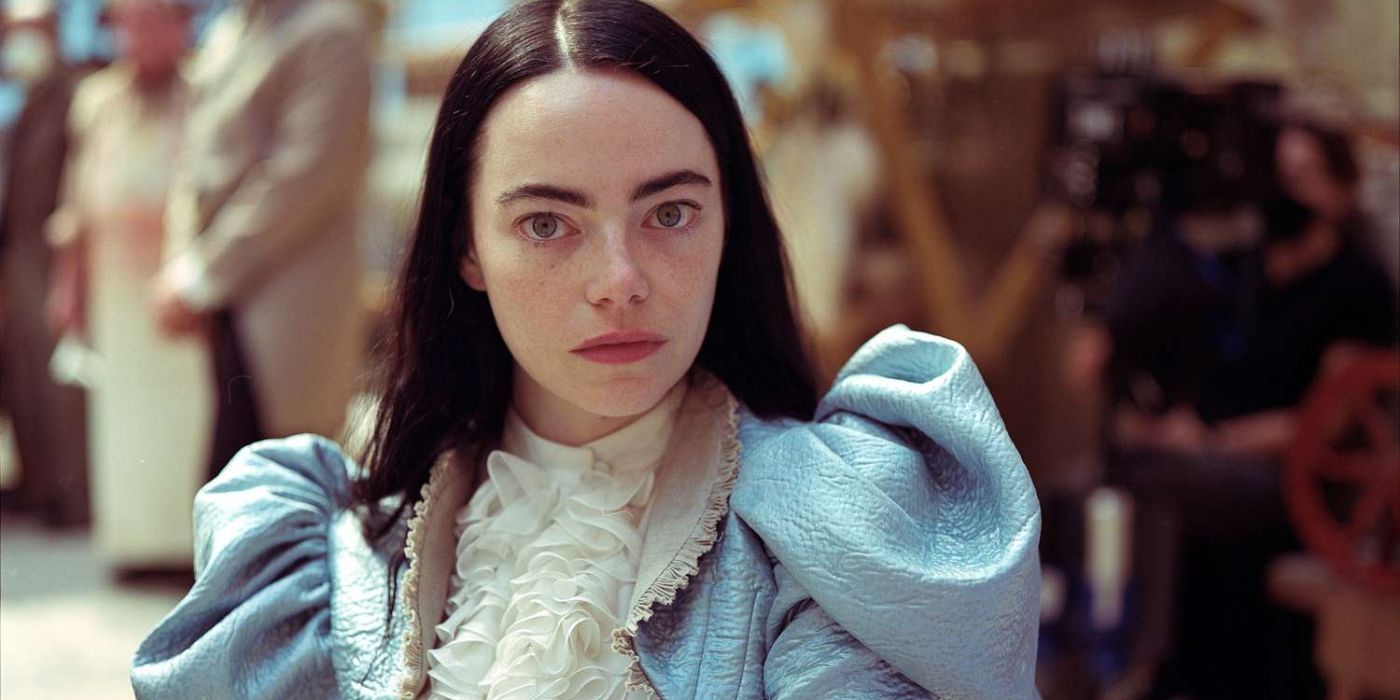
You’ve probably seen the dance. That jerky, uncoordinated, strangely hypnotic sequence where Emma Stone and Mark Ruffalo flail around a dance floor in Lisbon. It’s weird. It’s uncomfortable. It’s also exactly why Yorgos Lanthimos, the director of Poor Things, has become the most influential filmmaker of the 2020s. He doesn't care if you're comfortable. Honestly, he’s probably happier if you aren't.
Lanthimos is a Greek director who started out making experimental films in Athens during a time when the Greek film industry was basically non-existent. People call his style "The Greek Weird Wave." It’s a label he doesn't necessarily love, but it fits. His movies feel like they were made by an alien trying to explain human emotions after reading a textbook but never actually meeting a person. With Poor Things, he took that alien perspective and applied it to a $35 million Victorian steampunk fantasy. The result was eleven Oscar nominations and a permanent shift in how we think about "prestige" cinema.
The Weird Path to Poor Things
Before he was the director of Poor Things, Lanthimos was a guy making low-budget features like Kinetta and Dogtooth. If you haven't seen Dogtooth, prepare yourself. It’s about a father who keeps his adult children prisoner in a compound, telling them that a "dogtooth" falling out is the only sign they are ready to leave. It’s bleak. It’s hilarious in a "should I be laughing at this?" kind of way. This is where he refined his signature style: deadpan delivery, stiff movements, and a total refusal to explain the rules of his world.
He moved to English-language films with The Lobster. You know the premise: get a partner in 45 days or get turned into an animal. Most directors would turn that into a rom-com or a dystopian thriller. Lanthimos turned it into a dry, agonizingly awkward meditation on why we feel pressured to be in relationships. Then came The Killing of a Sacred Deer, which felt like a Stanley Kubrick horror movie on sedatives. By the time he got to The Favourite, he was working with bigger stars like Olivia Colman and Rachel Weisz. That was the bridge. That was the moment Hollywood realized that "weird" could actually be "profitable."
Poor Things is the culmination of this entire journey. It’s his biggest world yet. It’s colorful, whereas his old stuff was muted. It’s hopeful, whereas his old stuff was nihilistic. But the DNA is the same. It’s still about how society tries to control our bodies and our language.
Why Bella Baxter Needed This Specific Vision
You can't talk about the director of Poor Things without talking about his obsession with control. In most movies, actors try to be "natural." Lanthimos hates natural. He tells his actors not to think about their character's backstories. He doesn't want them to "feel" the scene. He wants them to do the movement.
For the role of Bella Baxter—a woman with a child’s brain implanted into an adult body—this approach was a stroke of genius. Emma Stone has talked about how Lanthimos gave her very specific physical cues. It wasn't about "acting" like a child; it was about the physical reality of a body that hasn't learned how to walk properly yet.
The Fish-Eye Lens and the "God" View
One of the most polarizing things Lanthimos did in Poor Things was the use of the 6mm fish-eye lens. It’s wide. It’s distorted. It makes the edges of the frame look like you're looking through a peephole or a glass bowl.
- It creates a sense of voyeurism. We are watching Bella’s development like a science experiment.
- It emphasizes the artificiality. Lanthimos isn't trying to trick you into thinking this is real life. He’s showing you a constructed world, built on soundstages in Budapest.
- It mimics the "God" perspective. Since the character of Godwin Baxter (played by Willem Dafoe) is literally a creator figure, the camera often feels like his watchful, distorted eye.
He’s basically playing with the audience’s depth perception. Sometimes the world looks massive and terrifying; other times, it looks like a tiny, claustrophobic dollhouse.
Breaking the Rules of Period Pieces
Most period dramas are obsessed with being "accurate." They want the right lace, the right forks, the right accents. The director of Poor Things threw all of that out the window. He created a "neo-Victorian" world. You have horse-drawn carriages alongside flying steam-taxis. The costumes by Holly Waddington use materials like latex and plastic that didn't exist in the 1880s.
This isn't just because it looks cool. It’s because Bella Baxter is a creature who shouldn't exist, so she needs to live in a world that shouldn't exist. Lanthimos uses "anachronism" to keep the audience off balance. If the world felt like a standard BBC drama, the radical nature of Bella's sexual and intellectual awakening wouldn't hit as hard. It would feel like a history lesson. Instead, it feels like a punk rock opera.
The Collaboration with Tony McNamara
We have to give credit to the writing. Tony McNamara, who also worked with Lanthimos on The Favourite, wrote the screenplay based on Alasdair Gray’s novel. McNamara’s dialogue is sharp, vulgar, and incredibly fast. When you combine that writing with the director of Poor Things and his penchant for slow, deliberate framing, you get a weird friction. It’s like a fast car driving through thick mud. It’s a rhythmic experience that you don't find in standard Marvel movies or even most indie dramas.
The "Lanthimos" Effect on Actors
Why do huge stars like Mark Ruffalo or Emma Stone want to work with a guy who makes them look ridiculous? Ruffalo’s performance as Duncan Wedderburn is probably the most "un-Ruffalo" thing he’s ever done. He’s pathetic. He wails. He throws tantrums. He gets humiliated.
Lanthimos creates a safe space for actors to be "bad." In the traditional sense, anyway. He lets them overact. He lets them be ugly. In an industry where everyone is obsessed with looking "cool" or "heroic," Lanthimos offers a chance to be a total freak.
- Trust: Actors have to trust that the weirdness serves a purpose.
- Physicality: Rehearsals often involve games and physical exercises rather than reading the script. They might spend hours crawling on the floor or playing tag to get comfortable with each other’s bodies.
- No "Method": He hates the "Method" approach. Don't live in a cave to play a caveman. Just show up and hit your marks.
This "anti-acting" style is why the performances in his movies feel so fresh. They don't feel like they’ve been focus-grouped to death.
Dealing with the Controversies
Let's be real: Poor Things isn't for everyone. The director of Poor Things has faced a lot of criticism regarding the amount of graphic nudity and the "Frankenstein" premise of the film. Some critics argue that the male gaze is still present, despite the film being a story of female empowerment.
Lanthimos’s response is usually a shrug. He’s not a director who likes to explain his themes. He believes that if you're offended, that’s a valid reaction. If you're turned on, that’s a valid reaction. If you're bored... well, he’d probably prefer you were offended. He pushes boundaries because he thinks cinema has become too polite. He’s trying to reclaim the "grotesque" as a form of art.
What’s Next? The Kinds of Kindness Factor
If you thought he’d go mainstream after the success of Poor Things, you’re wrong. His follow-up, Kinds of Kindness, is an anthology film that is even weirder and more "niche" than his Oscar-winner. He’s reunited with Emma Stone and Willem Dafoe, but the tone is much closer to his earlier, darker Greek work.
This tells us something important about him. He isn't using Hollywood; he’s making Hollywood adapt to him. He’s one of the few directors left who gets a decent budget to make whatever strange fever dream is currently in his head.
How to Understand a Lanthimos Movie
If you’re new to his work or you’re trying to figure out why Poor Things stuck in your brain, keep these three things in mind:
- Language is a Cage: Notice how characters speak. It’s usually very formal or very literal. Lanthimos loves showing how the words we use limit our ability to actually connect.
- Animals are Symbols: From the lobster to the "dogtooth" to the hybrid animals in Poor Things, he uses animals to remind us that humans are just hairless primates with fancy clothes.
- Humor is Pain: If a scene feels incredibly sad or violent, look for the joke. Usually, it’s there, hidden in the absurdity of the situation.
Actionable Takeaways for Cinephiles
If you want to dive deeper into the world of the director of Poor Things, don't just stop at his latest hit. The real magic is seeing how he evolved.
- Watch in Order: Start with The Lobster, go back to Dogtooth, then jump forward to The Favourite. Seeing the progression from "zero budget" to "unlimited budget" is fascinating.
- Focus on the Sound: Pay attention to the sound design. In Poor Things, the music by Jerskin Fendrix is intentionally "out of tune." It reflects Bella’s internal state.
- Look at the Framing: Notice how often he leaves huge amounts of "dead space" above a character's head. It makes them look small and insignificant.
- Ignore the "Message": Stop trying to find the "point" or the "moral" of the story. Lanthimos doesn't make fables. He makes experiences. Just sit with the discomfort and see how it makes you feel.
Yorgos Lanthimos has proven that you don't have to play by the rules to win. You can be weird, you can be uncompromising, and you can make movies that feel like a slap in the face—and people will still line up to see them. He is the director we need right now because he reminds us that movies should be more than just "content." They should be a little bit dangerous.
To truly appreciate his craft, watch for the way he uses the camera to alienate the viewer from the familiar. It is this specific technique that separates him from his contemporaries. By stripping away the comfort of standard cinematic language, he forces the audience to engage with the raw, often ugly, truths of human behavior. This is the hallmark of his genius and the reason his filmography will be studied for decades.



