It is a weirdly persistent myth. You tell someone you’re moving to the fourth-largest city in the state, and they look at you like you’ve just announced a permanent relocation to the moon. They assume that getting from Yonkers New York to Manhattan requires a packed lunch, a passport, and a prayer.
Honestly? It’s faster than getting to Midtown from deep Brooklyn or parts of Queens.
I’ve sat on the Metro-North more times than I can count, watching the Hudson River go by while people in the Bronx are still waiting for a stalled 4 train. The geography of it is just confusing to outsiders. You're technically in Westchester County, but you're also about five feet away from the 242nd Street subway station. This proximity creates a bizarre transportation paradox where you have three distinct ways to get into the city, and picking the wrong one at 8:00 AM can ruin your entire Tuesday.
The Metro-North Reality Check
If you’re serious about the trip from Yonkers New York to Manhattan, the Hudson Line is your best friend. Period. There is no debate here.
There are actually several stops in Yonkers—Ludlow, Yonkers (the main downtown station), Glenwood, and Greystone. If you catch an express train from the main Yonkers station, you are standing in Grand Central Terminal in roughly 30 minutes. Think about that. That is less time than it takes to watch a sitcom episode.
The Greystone station is probably the most beautiful place to wait for a train in the entire tri-state area. You’re right on the water. The Untermyer Gardens are hovering right above you. But here is the thing people miss: the price. A peak one-way ticket is significantly more expensive than a subway swipe. For the 2025-2026 season, you're looking at over $10 for a single peak trip. If you do that twice a day, every day, your bank account starts to feel the pinch.
Is it worth it?
Most people say yes because of the "sanity tax." You get a seat. There is air conditioning that actually works. You can pretend you're a high-powered executive in a 90s movie while you look at the Palisades cliffs across the river. But if the Metro-North has a mechanical issue, which happens more often than the MTA likes to admit, you are basically stranded unless you want to shell out $60 for an Uber.
Driving is a Trap (Mostly)
Driving from Yonkers New York to Manhattan is a gamble that rarely pays off.
You have options. You have the Saw Mill River Parkway, which turns into the Henry Hudson Parkway. You have the New York State Thruway (I-87), which becomes the Major Deegan. Both are legendary for their ability to turn a 25-minute drive into a two-hour existential crisis.
The Henry Hudson Bridge toll is another factor. Even with E-ZPass, those charges add up. And let's be real: once you get over the bridge, where are you going to put the car? Unless your office provides a parking spot or you’re okay with paying $50 a day at a garage near Columbus Circle, driving is a massive headache.
However, there is a loophole.
If you’re traveling at 11:00 PM on a Sunday, the drive is glorious. You can zip from Getty Square to the Upper West Side in 20 minutes flat. But during the morning rush? The merge where the Saw Mill meets the Henry Hudson near the Bronx-Westchester border is a bottleneck designed by someone who clearly hates commuters.
The Bee-Line and Subway Connection
Then there’s the "budget" way.
A lot of people living in South Yonkers don't even bother with the train stations. They hop on a Bee-Line bus—usually the 1, 2, or 4—and ride it down to the 242nd Street station in the Bronx. That’s the end of the 1 line.
It’s cheap. It’s one fare. But it is a grind.
You’re looking at a solid hour, maybe 75 minutes, to get to Lower Manhattan. You have to deal with the 1 train making every single local stop through the West Side. It’s grueling, but it’s the most authentic way to experience the transition from Westchester's hilly suburbs to the density of the Bronx and eventually the chaos of Manhattan.
Why the "Sixth Borough" Label is Actually Fair
People call Yonkers the sixth borough, and while that usually annoys the locals, it makes sense when you look at the logistics.
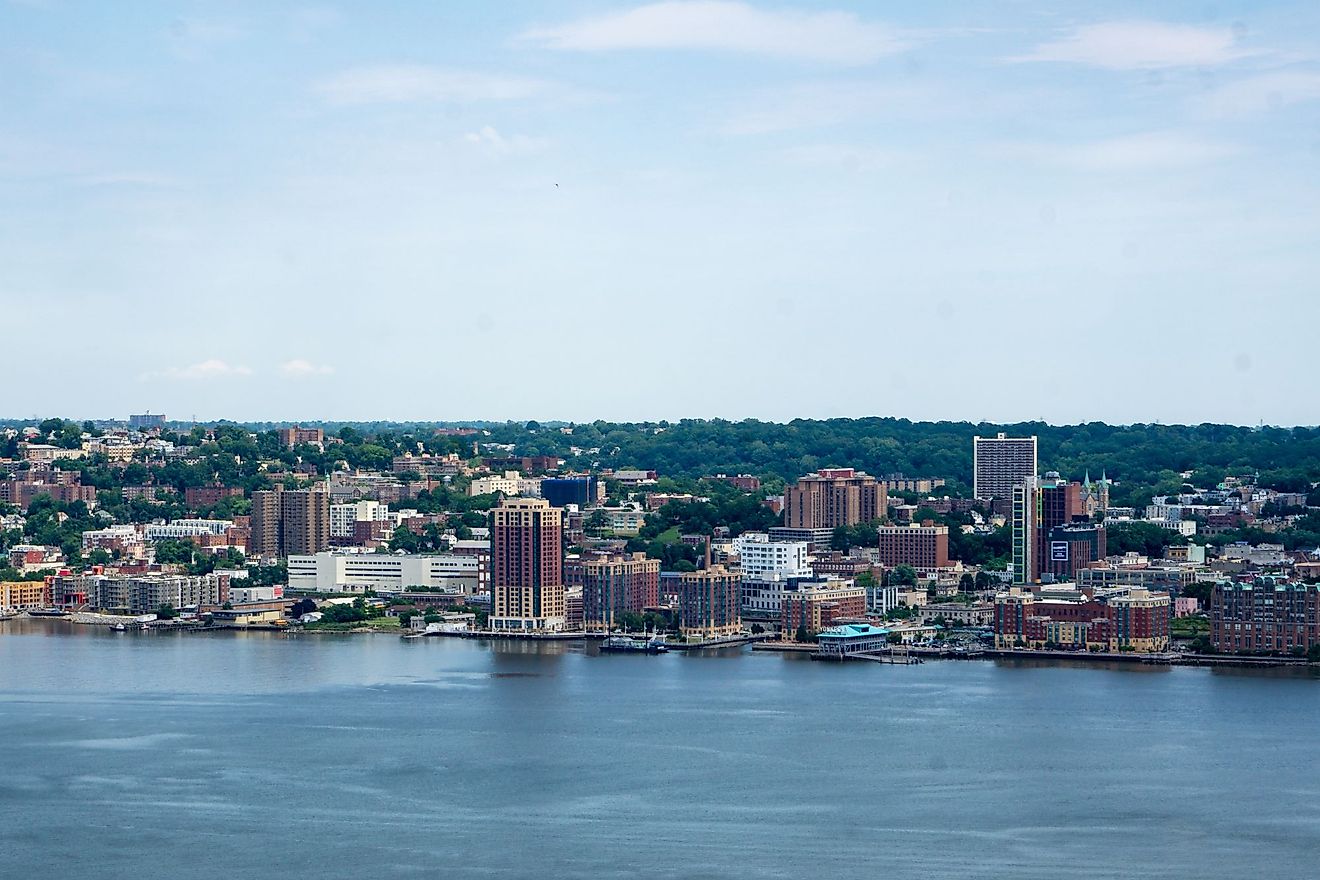
The city is currently seeing a massive surge in development along the waterfront. Huge luxury apartment complexes are popping up where old carpet mills and power plants used to sit. The developers are banking entirely on the Yonkers New York to Manhattan commute staying efficient.
They are selling a lifestyle to people who have been priced out of the West Village but still want to be able to get to a Broadway show without it feeling like an expedition.
The interesting thing is the demographic shift. It’s not just young professionals anymore. You’re seeing older New Yorkers who want more space but refuse to move to a "true" suburb where you have to drive to get a gallon of milk. In Yonkers, especially in the downtown area, you can still walk to the pharmacy and the train.
Hidden Costs and Travel Logistics
Let's get into the weeds.
If you are planning to move or visit, you need to account for the "zone" system. Metro-North isn't a flat fare. Yonkers is in Zone 3. If you accidentally buy a ticket for a Bronx station (Zone 2), the conductor will find you. They always find you.
And then there’s the "last mile" problem.
Yonkers is incredibly hilly. It’s basically built on the side of a giant cliff. If you live a mile away from the Greystone station, that mile is a vertical hike. Many people end up paying for a monthly parking permit at the station, which has a waiting list that can last years in some neighborhoods.
Quick Cheat Sheet for the Commute
- The Fastest: Metro-North Express (28-32 minutes to Grand Central).
- The Cheapest: Bee-Line Bus to the 1, 4, or A train ($2.90 + bus fare, or free transfer with OMNY/MetroCard).
- The Most Stressful: Driving the Major Deegan at 8:30 AM (Infinite time).
- The "Secret" Route: The BxM3 express bus. It’s a coach bus that runs from Getty Square directly into Manhattan. It’s about $7, you get a cushioned seat, and it stops at various points along Madison Avenue. It’s the hidden gem of the Yonkers New York to Manhattan route.
The Cultural Gap
Crossing the line from Yonkers New York to Manhattan isn't just about miles.
It’s a vibe shift. Yonkers still feels like a gritty, industrial city that’s trying to find its new identity. It has world-class art at the Hudson River Museum and incredible food in the Park Hill section. But then you get on that train, and thirty minutes later, you’re in the middle of the global financial capital.
The nuance that most travel guides miss is the "reverse commute."
A lot of people are actually traveling from Manhattan to Yonkers now. Why? Because the film industry has taken over. Lionsgate opened a massive studio right next to the Yonkers train station. On any given morning, you’ll see actors and tech crews pouring off the northbound trains. This is changing the flow of the city. It's no longer just a bedroom community for people working on Wall Street.
Logistics Most People Miss
The Metro-North doesn't run forever.
If you’re out in Manhattan and you miss the last train—usually around 1:30 AM or 2:00 AM depending on the day—you are in for a very expensive Uber ride. Unlike the NYC subway, the commuter rail sleeps.
Also, the "Quiet Car" is not a suggestion. If you hop on the 7:45 AM train and start taking a loud Zoom call, the regulars will stare you down with a ferocity usually reserved for tax auditors. Respect the silence.
Actionable Steps for the Trip
If you're making the trip from Yonkers New York to Manhattan for the first time, don't just wing it.
- Download the TrainTime App. This is non-negotiable. It shows you exactly where the train is in real-time, how crowded each car is (literally, it shows you a little map of seat availability), and lets you buy tickets on your phone. Never buy a ticket on the train; they charge a massive "on-board" penalty fee that’s basically a tax for being unprepared.
- Check the Ludlow vs. Yonkers schedule. Sometimes the express skips Ludlow. If you’re standing on the Ludlow platform watching an express fly by at 60 mph, you’re going to have a bad morning.
- Try the Express Bus (BxM3) at least once. If you work on the East Side, it might actually drop you closer to your office than Grand Central will, and you won't have to navigate the chaos of the terminal.
- Position yourself on the train. If you’re going to Grand Central, sit in the front of the train. It’ll put you closer to the exit ramps and save you five minutes of walking through the platform crowds.
- Look out the window on the left side (southbound). The view of the Cloisters and the Little Red Lighthouse under the George Washington Bridge is one of the best sights in New York, and it costs nothing extra.
The commute is the heartbeat of this relationship. Without the easy access to Manhattan, Yonkers is just another struggling post-industrial town. With it, it’s one of the most strategic places to live in the entire Northeast. Just don't tell too many people, or the 8:02 express is going to get even more crowded.
Be sure to account for seasonal changes as well. In the winter, the Hudson Line can face delays due to "slip-slide" conditions caused by fallen leaves or ice on the tracks. Always have a backup plan involving the 242nd Street subway station if you have a morning meeting you absolutely cannot miss. Keep an eye on the MTA's social media feeds for immediate service changes, as they are often updated faster than the physical station boards. For those traveling for leisure, remember that off-peak tickets are significantly cheaper and valid all weekend, making a Saturday trip into the city much more affordable than a Monday morning grind.
The reality is that Yonkers New York to Manhattan is one of the most reliable commutes in the region if you know the systems. It’s about learning the rhythm of the Hudson Line and knowing when to ditch the car in favor of the rails. Once you master the timing, the distance between the suburbs and the skyscraper heart of the world basically disappears.