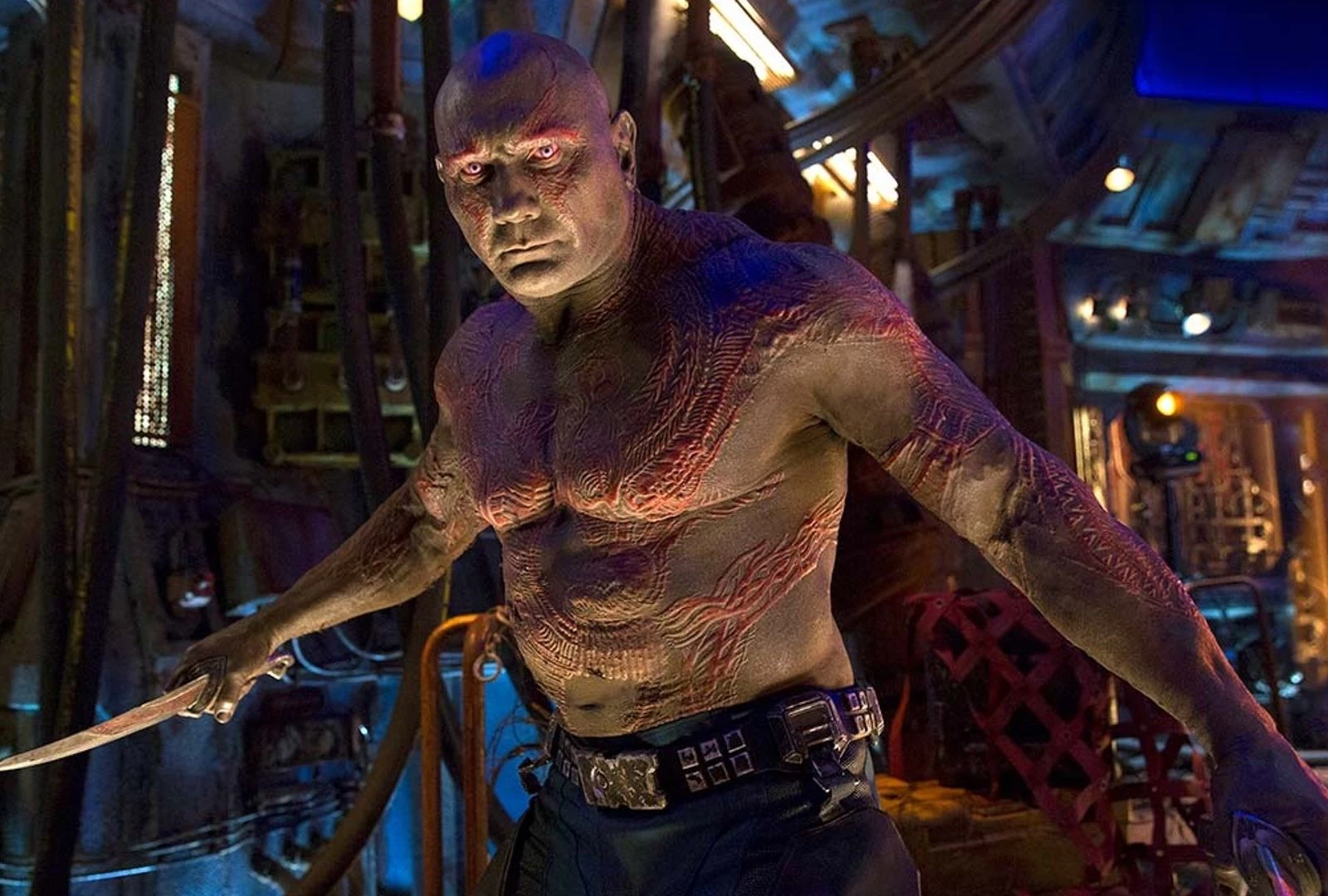
He’s blue. He has a glowing red fin on his head. He controls a deadly arrow with nothing but a whistle. If you’ve spent any time on the internet lately, you’ve probably seen people searching for "the blue guy from Guardians of the Galaxy" because they can’t quite remember his name or they’re trying to explain that one specific, tear-jerking scene to a friend. His name is Yondu Udonta. Played by the ruggedly charismatic Michael Rooker, Yondu isn't just some secondary alien henchman. He is the emotional backbone of the entire Guardians trilogy.
It’s funny how James Gunn took a relatively obscure character from the 1969 Marvel comics and turned him into a cultural icon. In the original comics, Yondu was a primitive hunter from Centauri IV, a noble soul with a massive bow. The movie version? He’s a space pirate. A Ravager. A guy who kidnapped a young Peter Quill from Earth and decided—somewhat impulsively—not to deliver him to his celestial father.
That decision changed everything.
Who Is the Blue Guy in Guardians of the Galaxy?
Basically, Yondu is a complex anti-hero. He starts the first film as a clear antagonist. He’s chasing Star-Lord (Chris Pratt) across the galaxy because Peter stole a mysterious orb from him. You see him threatening to eat Peter. You see him leading a group of roughneck Ravagers who seem one step away from mutiny. But there’s a flicker of something else there.
When you look at the Centaurian physiology in the MCU, it's pretty straightforward. They have blue skin and a natural aptitude for certain technologies. Yondu’s Yaka Arrow is the standout. It’s a piece of tech keyed to his whistle, reacting to the pitch and intensity of the sound. It’s honestly one of the most creative weapons in the Marvel Cinematic Universe because it’s so elegant yet terrifyingly efficient. One whistle and an entire room of enemies drops dead.
The Mary Poppins Moment
We have to talk about the "Mary Poppins" line. It’s the moment that solidified Yondu as a fan favorite. In Guardians of the Galaxy Vol. 2, as Yondu is floating down from a crashing ship using his arrow like a makeshift umbrella, Peter tells him he looks like Mary Poppins. Yondu, having no idea who that is, asks if he’s cool. Peter says yes.
"I'm Mary Poppins, y'all!"
It’s hilarious. It’s iconic. But beneath the joke, it’s a moment of pure acceptance. For a guy who spent his whole life being cast out—first sold into slavery as a child, then exiled from the Ravager high command—being called "cool" by his surrogate son meant the world.
Why Yondu Isn't Just Another Alien
Most people forget that Yondu’s story is actually a tragedy. He was a battle-hardened criminal who made a massive mistake that cost him his honor. He broke the Ravager code by trafficking children for Ego, the Living Planet. Even though he stopped doing it once he realized what Ego was doing to those kids, the damage was done. Stakar Ogord (Sylvester Stallone) exiled him.
That’s why he kept Peter. It wasn't just because Peter was skinny and could fit into small places to steal things. It was a form of penance. He saved Peter from a certain death at the hands of Ego, but he didn't know how to be a "dad." So, he became a tough-love mentor. He told Peter he'd eat him if he didn't do his chores. He kept him on a short leash.
It’s messy. It’s a toxic father-son dynamic that eventually evolves into something sacrificial.
Honestly, the "blue guy" represents the theme of "found family" better than almost anyone else in the franchise. He isn't Peter's father, but as he famously says in his final moments, he was Peter's "daddy." There's a huge difference there. One is biological; the other is about who actually showed up.
The Power of the Yaka Arrow
If you're wondering how the arrow actually works, it’s not just magic. It’s a Centaurian mineral that is incredibly sensitive to sound frequencies. In the first movie, Yondu has a small, low-profile fin. After his crew mutinies in the sequel, Groot helps him find a much larger, prototype fin. This new fin allows for much more precise control.
The scene where Yondu, Rocket, and Groot escape the Ravager ship while "Come a Little Bit Closer" plays is a masterclass in action filmmaking. The arrow zips through the hallways, trailing a streak of red light, taking out dozens of traitors in seconds. It’s beautiful and gruesome at the same time.
The Redemption of a Ravager
Yondu’s death is widely considered one of the saddest moments in the MCU. He gives Peter the only remaining aero-rig and space suit, choosing to die in the vacuum of space so Peter can live.
The funeral scene at the end of Vol. 2 is where the "blue guy" gets his due. When the other Ravager factions show up—the ones who had turned their backs on him—to give him a traditional Ravager farewell, it’s a signal that he was redeemed. The "Colors of Ogord" lighting up the sky is a visual representation of forgiveness.
Did You Know?
- Michael Rooker actually fell asleep multiple times during the funeral scene because he had to lie still for so long.
- The makeup process took about three hours every single morning. It involved layers of blue paint and specialized prosthetics to get that weathered, leathery alien look.
- James Gunn originally didn't plan on killing Yondu, but he realized the story demanded it for Peter's growth.
Other Blue Characters You Might Be Thinking Of
Sometimes, when people search for "Guardians of the Galaxy blue guy," they aren't actually looking for Yondu. The MCU is surprisingly full of blue-skinned characters.
Nebula She’s the most obvious alternative. Played by Karen Gillan, Nebula is Thanos’ daughter and Gamora’s sister. She’s more of a cyan/robotic blue and is covered in cybernetic enhancements. While Yondu is a Ravager, Nebula eventually becomes a full-fledged member of the Guardians.
The Sakaaran Soldiers In the first movie, Ronan the Accuser uses Sakaaran mercenaries. They wear masks, but their skin is often a dark, bug-like blue or grey. They aren't really "characters" so much as they are cannon fodder.
The Kree Characters like Ronan the Accuser are Kree. They are a powerful, militaristic race with bright blue skin. While Yondu’s blue is more "earthy" and textured, the Kree usually have a more uniform, royal blue appearance.
How to Spot the Difference
If the character is whistling and being a bit of a space cowboy, it’s Yondu. If the character is angry, has a robot arm, and is obsessed with killing their father, it’s Nebula. If the character is shouting about "purity" and wielding a giant hammer, it’s Ronan.
Yondu stands out because of his teeth—they're yellowed and gross—and his southern-fried accent. Michael Rooker brought a very specific "space redneck" energy to the role that makes him feel more grounded and human than the other aliens.
Impact on the Guardians Franchise
Even though he died in the second film, Yondu’s presence is felt throughout Guardians of the Galaxy Vol. 3. Peter is still grieving him. Kraglin (Sean Gunn) is struggling to master the Yaka Arrow, seeing Yondu’s ghost as a guide.
The legacy of the "blue guy" is really about the fact that your past doesn't have to define your future. Yondu was a child trafficker. He was a thief. He was a jerk. But in the end, he was a hero. He proved that you can make the right choice when it matters most, even if you’ve spent decades making the wrong ones.
How to Appreciate Yondu’s Character Arc Today:
- Re-watch the "Come a Little Bit Closer" sequence: Pay attention to the choreography of the arrow. It’s a perfect blend of CGI and practical reaction shots.
- Listen to the lyrics of "Father and Son" by Cat Stevens: This is the song that plays during his funeral. It perfectly encapsulates the tension and eventual love between Yondu and Peter.
- Check out the "The Guardians of the Galaxy Holiday Special": There’s a great animated flashback that gives more context to Yondu’s early relationship with Peter and why he actually kept him.
- Look for the subtle acting: Watch Michael Rooker’s eyes in the scene where he’s talking to Rocket about being "professional assholes." He realizes they are exactly the same—broken people pushing others away so they don't get hurt.
The "blue guy" might have started as a background character in a weird sci-fi movie, but he ended up being the heart of a billion-dollar franchise. Whether you call him Yondu, Mary Poppins, or just the guy with the whistle, there’s no denying he’s one of the best-written characters in modern superhero cinema.
To truly understand the depth of his character, go back and watch the first film with the knowledge of how he dies in the second. Every threat he makes toward Peter feels different. You realize he’s not threatening him; he’s protecting him from the rest of the Ravagers. It’s a total shift in perspective.
Next time you see a clip of that red arrow flying, you'll know exactly who's behind it. Not just a blue alien, but a father who did his best with what he had.
Actionable Insights for Fans
- For Cosplayers: If you're looking to replicate the Yondu look, focus on the "weathering" of the blue skin. Use alcohol-based paints like DuraCoat for a long-lasting finish that doesn't smudge. The fin is best attached using Pros-Aide or a similar medical-grade adhesive.
- For Collectors: The Yondu Funko Pop (especially the one with the arrow) and the Marvel Legends figures are highly sought after since the character is no longer active in the MCU.
- For Lore Seekers: Read the Yondu (2019) comic miniseries by Lonnie Nadler and Zac Thompson. It bridges the gap between the classic comic version and the MCU version, featuring both incarnations of the character.
- For Movie Buffs: Watch Michael Rooker's performance in Henry: Portrait of a Serial Killer to see the incredible range he has, then compare it to the warmth he brings to Yondu. It’ll make you appreciate the "blue guy" even more.



