If you’re staring at your calendar trying to figure out what day is Yom Kippur 2024, you aren't alone. Seriously. The way the Jewish calendar works is enough to make anyone's head spin. Unlike the standard Gregorian calendar we use for work and school, the Hebrew calendar is lunisolar. This basically means it’s constantly shifting in relation to our "normal" dates.
In 2024, the Day of Atonement—the holiest day of the year for Jewish people—didn't fall on a single day. It started on a Friday night, October 11, and wrapped up on Saturday evening, October 12.
Wait, Friday night? Yeah. Jewish holidays always start at sunset. It’s not like New Year’s Eve where the clock strikes midnight and suddenly it’s a new day. In the Jewish tradition, the "day" begins when the sun goes down. So, for 2024, the fast and the solemnity kicked off just as the sun dipped below the horizon on October 11.
Why the Day of Atonement Shifts Every Year
Ever wonder why Hanukkah sometimes hits during Thanksgiving and other times it's basically Christmas? It’s the same logic for Yom Kippur. The Hebrew calendar is based on the moon cycles. A lunar year is about 354 days, which is roughly 11 days shorter than the solar year.
If the Jewish community didn’t account for that, Yom Kippur would eventually drift into the middle of summer. Imagine fasting for 25 hours with no water in 100-degree heat. No thanks. To prevent that, they add a "leap month" seven times every 19 years.
Honestly, it’s a mathematical masterpiece.
The Specifics for 2024
For the year 2024, the holiday aligned with the secular month of October. Specifically:
- Erev Yom Kippur (The Eve): Friday, October 11.
- Yom Kippur Day: Saturday, October 12.
Because it fell on a Saturday this time, it was also Shabbat. In the Jewish world, they call this "Shabbat Shabbaton"—the Sabbath of Sabbaths. It’s basically the "final boss" of holy days. Even the strict rules of the weekly Saturday Sabbath are leveled up.
What Actually Happens During Those 25 Hours?
Most people know about the fasting. But it's way more intense than just skipping lunch. Observant Jews don’t eat or drink anything for roughly 25 hours. Not even water.
But there are other "afflictions" too. Traditionally, you aren't supposed to wash your body, wear leather shoes (which were considered a luxury in ancient times), or even use lotions. It’s about stripping away the physical comforts of being a human to focus entirely on the soul.
You’ll see a lot of people wearing all white. It’s not just a fashion choice. White symbolizes purity and reminds people of the "kittels" (shrouds) used in burial, which is a pretty heavy way to focus the mind on life and death.
The Five Prayers
Most Jewish holidays have four prayer services. Yom Kippur? It has five.
- Kol Nidrei: This is the big one on Friday night. It’s a hauntingly beautiful Aramaic prayer that technically annuls vows made under duress.
- Shacharit: The morning service.
- Musaf: The additional service.
- Mincha: The afternoon service, which usually involves reading the story of Jonah and the Whale.
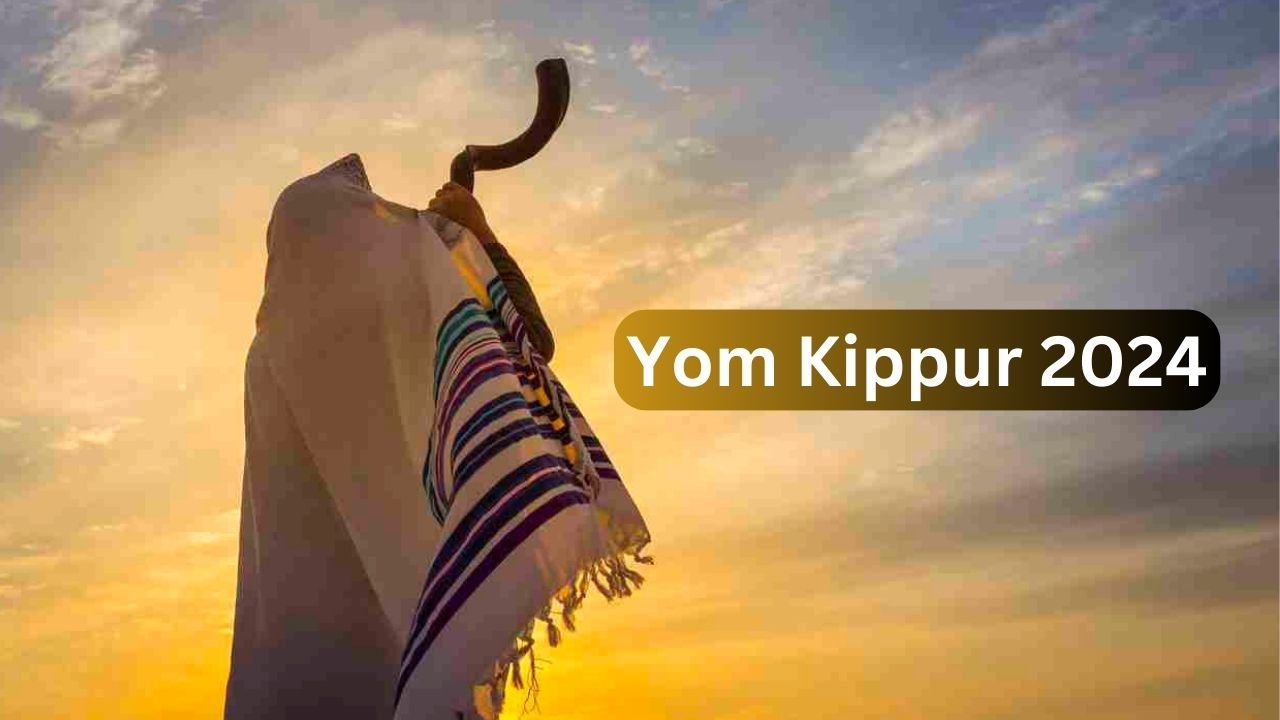
- Ne'ilah: The "closing of the gates." This is the final hour where everyone is exhausted, hungry, and praying with everything they’ve got before the shofar (ram's horn) blows.
Handling the Fast Without Losing Your Mind
If you were planning to observe the fast or just curious how people do it, there’s a strategy involved. You can't just eat a giant burger at 5:00 PM on Friday and hope for the best.
Actually, salt is the enemy. If you eat a super salty "pre-fast" meal, you’re going to be parched by 10:00 PM. Experts like those at ReformJudaism.org and veteran rabbis usually suggest "carb-loading" with complex grains like oatmeal or brown rice. And water. So much water. Start hydrating 48 hours before the sun goes down.
A Global Standstill
In Israel, Yom Kippur is wild to witness. The entire country literally stops. No cars on the highways. No flights at the airport. No TV broadcasts. It’s the one day a year where children can ride their bikes in the middle of the busiest freeways in Tel Aviv because there is zero traffic.
It’s a collective silence that you don't really find anywhere else in the modern world.
Moving Forward: Actionable Insights for the High Holidays
Whether you’re looking back at the 2024 dates for record-keeping or preparing for future years, keep these points in mind:
- Check the Sunset: Don’t just look at the date on the calendar. Use a tool like Hebcal or Chabad.org to find the exact sunset time for your specific zip code. A five-minute difference matters when you're waiting for that first sip of water.
- The "Easy Fast" Greeting: If you want to be polite, don't say "Happy Yom Kippur." It's a somber day of repenting for mistakes. Instead, say "G'mar Chatima Tova," which basically means "May you be sealed in the Book of Life for a good year." Or just "Have a meaningful fast."
- The Break-Fast Strategy: When the shofar finally blows on Saturday night, don't dive into a steak. Your stomach has been dormant for a day. Most people start with orange juice, a piece of bagel, or some light fruit to wake the system up slowly.
The significance of what day is Yom Kippur 2024 isn't just about the numbers on a grid; it’s about the 25-hour window where millions of people hit the "pause" button on their lives to ask for forgiveness and try to be a little bit better in the year ahead.
To prepare for future observances, start by tracking the Hebrew date 10 Tishrei on a specialized Jewish calendar app. This ensures you are never surprised by the shifting dates of the lunar cycle. Additionally, if you plan to fast, begin tapering off caffeine three days prior to the holiday to avoid the "caffeine withdrawal headache" that often plagues the afternoon of the fast.