It’s the day the world stops for millions of Jewish Americans. Yom Kippur 2024 in the USA wasn't just another calendar entry; it was a heavy, complicated moment for a community grappling with a year of intense grief and societal tension. If you stepped outside in neighborhoods like Brooklyn’s Midwood or parts of Los Angeles’ Fairfax District between the sunset of October 11 and the nightfall of October 12, the silence was almost physical. No cars. No joggers. Just the sound of walking shoes hitting the pavement.
Most people call it the Day of Atonement. Honestly, that’s a bit of a simplification. It’s more like a collective spiritual "hard reset." In 2024, the stakes felt higher.
Understanding the Timing of Yom Kippur 2024 USA
The Hebrew calendar is a lunar-solar hybrid, which is why your iPhone calendar seems to ping you at a different time every year. For 2024, the holiday began on the evening of Friday, October 11. Because it fell on Shabbat—the Jewish Sabbath—the day took on an extra layer of "holiness." In Jewish tradition, when Yom Kippur and Shabbat collide, it’s often referred to as Shabbat Shabbaton, or the "Sabbath of Sabbaths."
It’s intense.
You aren't just fasting; you’re navigating the restrictive rules of the weekly Sabbath alongside the five specific prohibitions of Yom Kippur. No eating or drinking (yes, even water), no bathing, no oils or lotions, no leather shoes, and no physical intimacy.
In major hubs across the USA, from Chicago to Miami, synagogues saw record turnouts. A lot of people who typically describe themselves as "culturally Jewish" or "not that religious" showed up anyway. Why? Because the trauma of the previous year made the need for community space feel urgent.
The Five Prayers and the Fast
Most people think of the fast as the main event. It isn't. The fast is just the vessel. The real work happens in the liturgy. There are five prayer services throughout the day: Kol Nidre (the night before), Shacharit (morning), Musaf (additional), Mincha (afternoon), and Ne'ilah (the closing of the gates).
During Mincha, congregations read the Book of Jonah. It's a weird story if you think about it. A guy gets swallowed by a fish because he tries to run away from his responsibilities. The message is pretty blunt: You can't outrun your own conscience. In 2024, that message resonated with a lot of people dealing with the complexities of modern political and social life.
Why 2024 Specifically Felt So Tense
We have to talk about the elephant in the room. Yom Kippur 2024 USA arrived almost exactly one year after the October 7 attacks in Israel. The emotional weight was staggering.
For many American Jews, the past year has been a blur of rising antisemitism, heated campus protests, and deep internal communal divides over the war in Gaza. Walking into a synagogue this year meant passing through increased security cordons. Many temples in cities like New York and Washington D.C. worked closely with local law enforcement and organizations like the Secure Community Network (SCN) to ensure people felt safe enough to pray.
It wasn't just about ritual. It was about survival and identity.
There’s a specific prayer called Yizkor. It’s the memorial service for the dead. Usually, it’s a quiet, personal moment where you remember your parents or grandparents. This year, the Yizkor services across the USA were noticeably longer and louder. People weren't just mourning their own kin; they were mourning the collective loss of the year.
The Myth of the "Perfect" Fast
Let’s get real about the health side of this. Fasting for 25 hours is brutal. Medical experts, including those from the Chicago Board of Rabbis, always emphasize that if you are sick, pregnant, or have a condition like diabetes, you are actually forbidden from fasting. In Judaism, preserving life (Pikuach Nefesh) always trumps ritual law.
But for those who did fast, the experience in 2024 was a lesson in physical discipline. It’s meant to make you feel like an angel—detached from physical needs—but by hour 22, most people just feel like a very cranky human who really wants a bagel.
The Rituals You Might Have Missed
While the synagogue is the focal point, a lot of the heavy lifting happens at home. The Seudah Mafseket is the final meal eaten before the fast begins. It’s usually bland. You don’t want anything too salty because that makes the fast ten times worse.
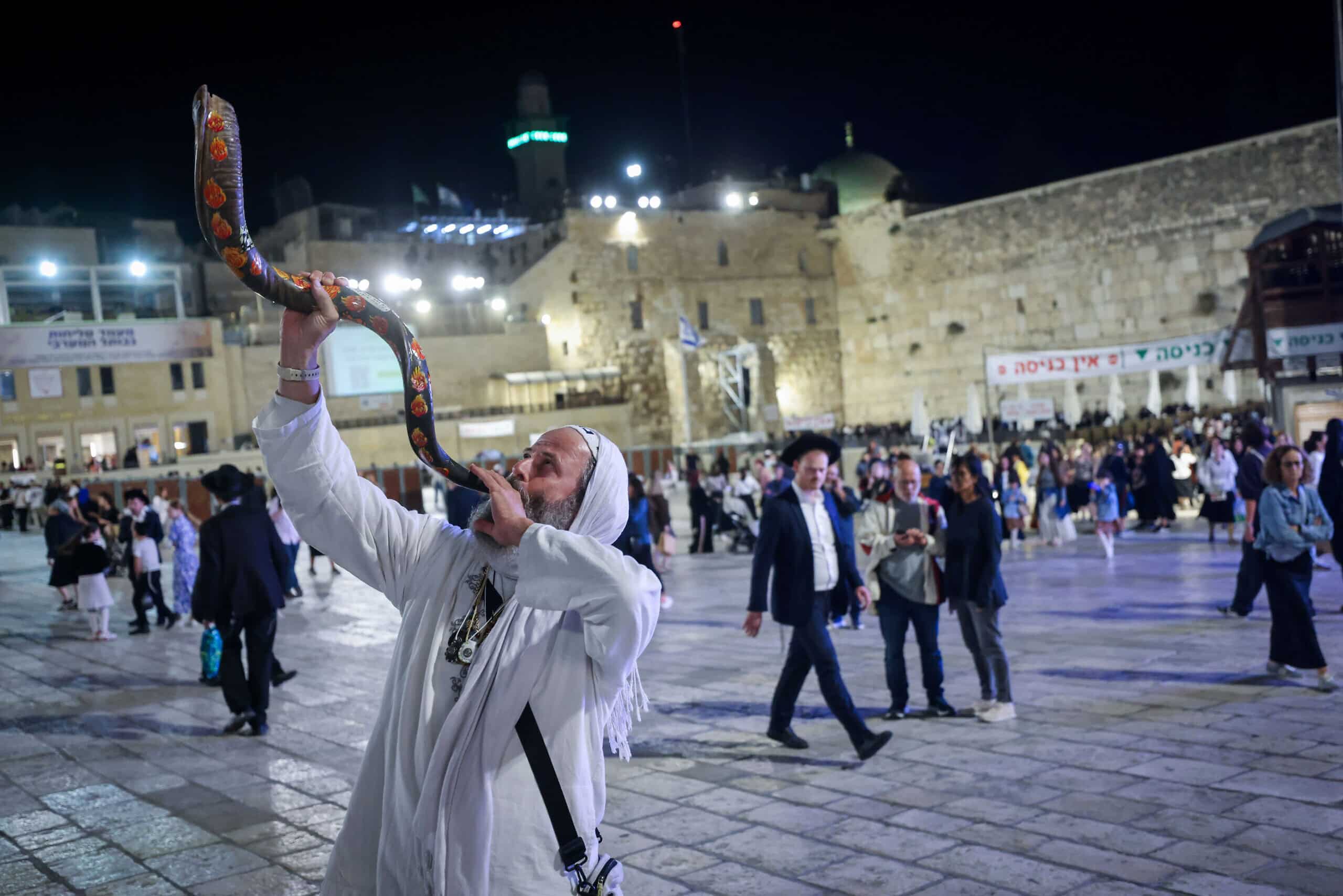
- White Clothing: You’ll notice people wearing white. This isn't just a fashion choice. It represents purity, but it’s also a reminder of mortality, as the white robes (called kittels) resemble burial shrouds.
- Non-Leather Shoes: This is why you see people in formal suits wearing bright neon Crocs or cheap canvas Keds. Leather was historically a luxury; on Yom Kippur, you’re supposed to be humble.
- The Final Blast: The holiday ends with one long, piercing blast of the Shofar (ram’s horn). That sound—the Tekiah Gedolah—is the signal that the "gates of heaven" have closed and the fast is over.
Breaking the Fast: An American Tradition
In the USA, "Break Fast" is its own sub-culture. It’s almost always the same menu: bagels, lox, cream cheese, noodle kugel, and maybe some whitefish salad.
In 2024, the "Break Fast" gatherings served as a much-needed release valve. After 25 hours of introspection and "afflicting the soul," the simple act of eating a piece of babka with friends felt like a radical act of joy.
Moving Forward: Actionable Steps After the Atonement
The whole point of Yom Kippur isn't to feel bad for 25 hours and then go back to being a jerk on Monday. It’s about Teshuvah, which literally translates to "return." It’s about returning to your best self.
If you’re looking to carry the momentum of Yom Kippur 2024 into the rest of the year, here are the real-world moves that actually matter:
1. Settle the Debts of the Heart In Jewish law, Yom Kippur only atones for sins between you and God. It does not cover sins between you and another person. If you owe someone an apology, the holiday was just the starting gun. Go make the phone call. Send the text. Be specific about what you did wrong. "I'm sorry if you felt that way" doesn't count.
2. Audit Your Charity (Tzedakah) The liturgy says that "repentance, prayer, and charity" can temper a difficult decree. Look at your spending from the last year. If you spent $200 on streaming services but only $20 on causes you care about, rebalance the books.
3. Maintain the Digital Fast One of the most profound parts of Yom Kippur for many Americans in 2024 was the 25-hour break from social media. The "outrage cycle" was silenced. Try to implement a "mini-Yom Kippur" once a week—no phone for 12 hours. It does wonders for the nervous system.
4. Check in on Your Community Given the tension of 2024, many people are feeling isolated. Reach out to someone who might be struggling with their identity or their place in the world right now. Sometimes, a "thinking of you" message is the most meaningful way to practice the empathy the holiday demands.
Yom Kippur 2024 in the USA wasn't just a day of fasting; it was a profound reflection of a community trying to find its footing in a fractured world. The gates may have closed at the end of the holiday, but the work of actually changing is just beginning.



