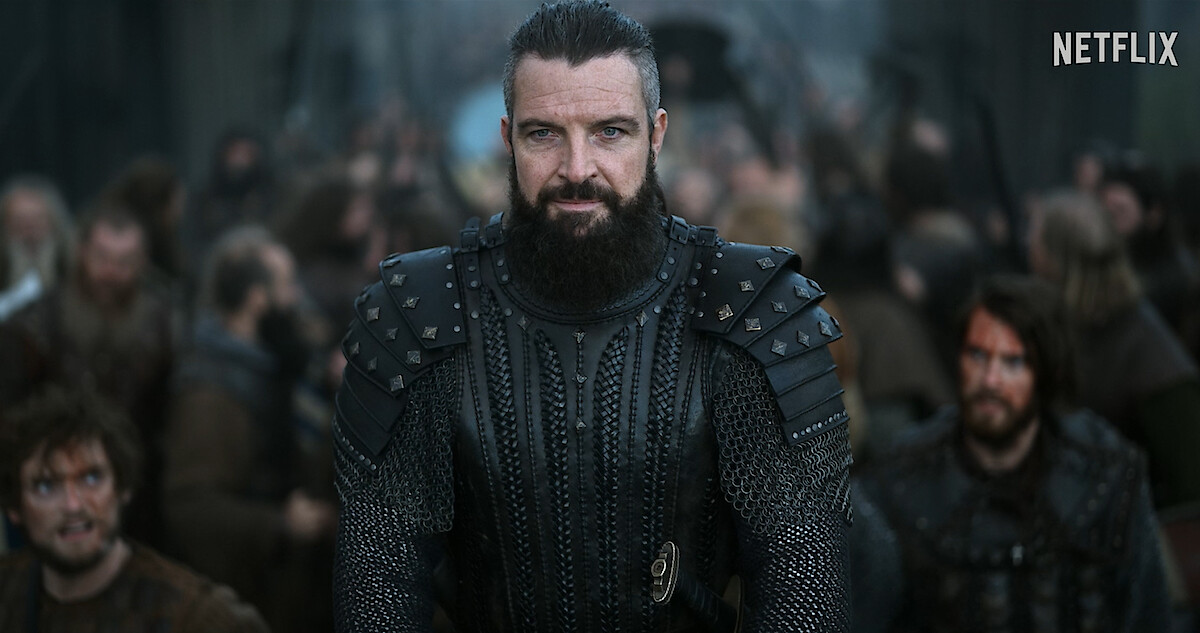
Ragnar Lothbrok is tired. You can see it in his eyes throughout Vikings season 4 episode 4, titled "Yol." It isn't just the physical toll of the failed Paris siege or the infection rotting his body. It’s a spiritual exhaustion. Honestly, by this point in the series, the weight of kingship has turned the vibrant explorer we met in season one into something much more cynical and drug-dependent. This episode is a weird, trippy, and deeply uncomfortable pivot point for the entire show. It isn't about massive shield walls or the roar of the North Sea. It’s about the quiet, often ugly transformations happening behind closed doors in Kattegat and Paris.
The Dragon in the Room: Ragnar and Yidu
Most people remember Vikings season 4 episode 4 for one thing: the medicine. Ragnar's relationship with Yidu, the slave captured in Paris, is one of the most polarizing subplots in the series. Some fans hated it. They felt it dragged the pace down. But if you look closer, Yidu represents the only thing Ragnar has left—curiosity. He's bored of his wives, his sons, and his people. He’s a man who has seen everything his world has to offer, and now he’s looking for an escape.
Yidu provides that escape through "medicine," which history and context suggest is a form of opium. The scenes in the private pavilion are hazy and surreal. When Ragnar swallows those red petals, the show's cinematography shifts. It’s bright, saturated, and frantic. We see him lose his edge. It’s painful to watch a legendary warrior basically turn into a junkie because he can't handle the reality of his own legend. This isn't just "flavor text" for the episode; it’s the beginning of the end for Ragnar’s mental clarity. He starts hallucinating. He sees a massive serpent in the water—a classic Norse omen of Jörmungandr and the coming of Ragnarok. It’s heavy-handed, maybe, but it works because Travis Fimmel sells the absolute desperation of a man who just wants to feel nothing.
Rollo’s Transformation and the Betrayal That Stuck
Meanwhile, across the channel in Frankia, Rollo is having a very different kind of identity crisis. If Vikings season 4 episode 4 shows Ragnar falling apart, it shows Rollo finally putting himself together, even if it means spitting on his heritage. The scene where he cuts his hair is iconic. It’s a total rejection of his Viking soul. He looks ridiculous in Frankish noble clothes at first—stiff, uncomfortable, like a bear forced into a waistcoat.
But here’s the thing about Rollo in "Yol": he’s actually trying. He learns the language. He endures the mockery of the court. Princess Gisla treats him like a literal animal until he shows he’s willing to change. It’s a fascinating contrast. While Ragnar is retreating into a drug-induced haze, Rollo is evolving into a Duke. He’s choosing a legacy over a family. It’s ruthless. You have to respect the hustle, even if you hate him for betraying Kattegat. The political maneuvering in Paris adds a layer of sophistication that the earlier seasons lacked. It isn't just about who can swing an axe; it's about who can navigate a dinner table without getting poisoned or disgraced.
The Bjorn Ironside Evolution
Bjorn is out in the wilderness. He’s hunting. Or rather, he’s being hunted. The Berserker sent by Kalf and Erlendur to kill him is a terrifying presence, but Bjorn is a different beast now. This episode proves he doesn't need his father’s shadow anymore. The fight in the snow is brutal. It’s raw. No music, just the sound of crunching ice and heavy breathing. When Bjorn uses the fishing line to trap the assassin, it’s a callback to the ingenuity we usually associate with Ragnar.
He's becoming the man his father used to be.
This is the "Yule" festival, after all. Yule is a time of transition, the winter solstice where the days start getting longer again. For Bjorn, the "light" is his own independence. He returns to Kattegat not as a son, but as a rival power. The way he walks into the Great Hall—scarred, bloodied, and carrying the secrets of those who tried to kill him—shifts the power dynamic of the entire series.
Bjorn's Kill and the Moral Grey Area
Let’s talk about that Berserker for a second. In Vikings season 4 episode 4, the fight isn't some choreographed Hollywood dance. It’s a mess. Bjorn gets hurt. He’s cold. He’s exhausted. When he finally wins, he doesn't just kill the guy; he dismantles him. It’s a grim reminder that while the show is dramatized, the world of the Vikings was fundamentally violent. There was no room for mercy for a man who tried to ambush you in the woods.
This subplot also exposes the weakness of Kalf. Kalf is a "new" kind of Viking—political, sneaky, and ultimately outmatched by the raw strength of the Lothbrok lineage. Watching Bjorn return to claim Torvi right in front of Kalf is one of the most satisfying "alpha" moves in the show's history. It’s the moment Bjorn truly becomes Ironside.
The Strange Domesticity of Floki and Helga
Floki is in a dark place. Literally. After being punished for Athelstan’s murder, he’s a broken man. But in "Yol," we see a flicker of the old Floki. He visits the Seer. The Seer licks his hand—a total reversal of the usual dynamic—and tells him he has been waiting for him for a long time. It’s cryptic. It’s weird. It’s classic Michael Hirst.
What does it mean? It suggests that Floki isn't just a builder; he’s something more. Some fans speculate he’s a vessel for the gods, maybe even a manifestation of Loki himself. Whether you buy into the supernatural stuff or not, the performance by Gustaf Skarsgård in this episode is top-tier. He’s twitchy and terrified, yet somehow still arrogant. His relationship with Helga is the only thing keeping him tethered to humanity. She’s the saint of the show, honestly. How she stays with him after everything is a mystery greater than the gods themselves.
Why "Yol" Matters for the Long Game
If you're rewatching the series, Vikings season 4 episode 4 acts as a giant "Proceed with Caution" sign. The show is shifting away from the simple raids of England. It’s getting bigger, messier, and much more psychological. We see the introduction of King Harald Finehair, played by Peter Franzén. He arrives in Kattegat with a goal: to become King of all Norway.
Think about that.
Ragnar is the King of Kattegat, but Harald wants the whole thing. The arrival of Harald is the first real sign that Ragnar’s time is running out. Harald represents the future—a unified, more organized Viking nation—while Ragnar represents the old way of individual glory and wandering curiosity. The tension in the Great Hall when Harald admits his ambitions is palpable. Ragnar just sits there, high on Yidu’s medicine, barely caring that a man is sitting at his table planning to take his crown. It’s tragic. It’s a masterclass in slow-burn storytelling.
Critical Takeaways from Episode 4
- Ragnar's Decline: His addiction to Yidu's "medicine" marks his withdrawal from leadership.
- Rollo's Betrayal: Cutting his hair symbolizes a permanent break from his Viking roots.
- Bjorn's Ascent: Surviving the Berserker attack cements him as a primary protagonist capable of carrying the show.
- The Harald Factor: The introduction of King Harald sets the stage for the internal Norwegian power struggles.
- The Seer's Prophecy: Floki's interaction with the Seer hints at a destiny far beyond a simple shipbuilder.
Actionable Insights for Fans and Rewatchers
If you're diving back into this era of the show, pay attention to the sound design in the Kattegat scenes. The constant drumming during the Yule celebrations isn't just background noise. It’s rhythmic, like a heartbeat, and it speeds up as the tension between the characters rises. It creates a sense of impending doom that mirrors Ragnar's own internal chaos.
Also, look at the colors. The Frankia scenes are dominated by blues, golds, and whites—civilized but cold. Kattegat is all browns, greys, and fire-orange. The visual language of Vikings season 4 episode 4 tells you everything you need to know about the clash of cultures. Rollo is moving into the light, even if it's a fake, polished light. Ragnar is sinking into the shadows.
To get the most out of this episode, watch it back-to-back with the season 1 finale. The contrast in the characters is staggering. You’ll see exactly how much the pursuit of power has eroded these men. Ragnar once wanted to farm; now he wants to disappear. Rollo once wanted respect; now he’s sold his soul to get it. It’s a grim, beautiful transition that defines why Vikings remains one of the best historical dramas ever made.
Keep an eye on the background characters during the Yule feast. You can see the shift in loyalty. The warriors aren't looking at Ragnar with awe anymore. They’re looking at him with confusion and a bit of pity. That’s how empires fall—not with a bang, but with a King who can't stay awake at his own table.
Go back and watch the scene where Bjorn returns. Notice how he doesn't look for his father’s approval. He looks for his father’s eyes and finds them vacant. That moment tells you more about the future of the show than any dialogue ever could. It’s the passing of the torch, whether Ragnar is ready for it or not.
The next step for any serious fan is to track the "medicine" subplot through the next three episodes. It’s a direct line to Ragnar’s eventual fate. Watch how his physical appearance degrades—the skin under his eyes, the shaking hands. It’s a grueling bit of acting that pays off in the most heartbreaking way possible later in the season.
Don't just watch for the fights. Watch for the silence. In "Yol," the silence is where the real story happens.



