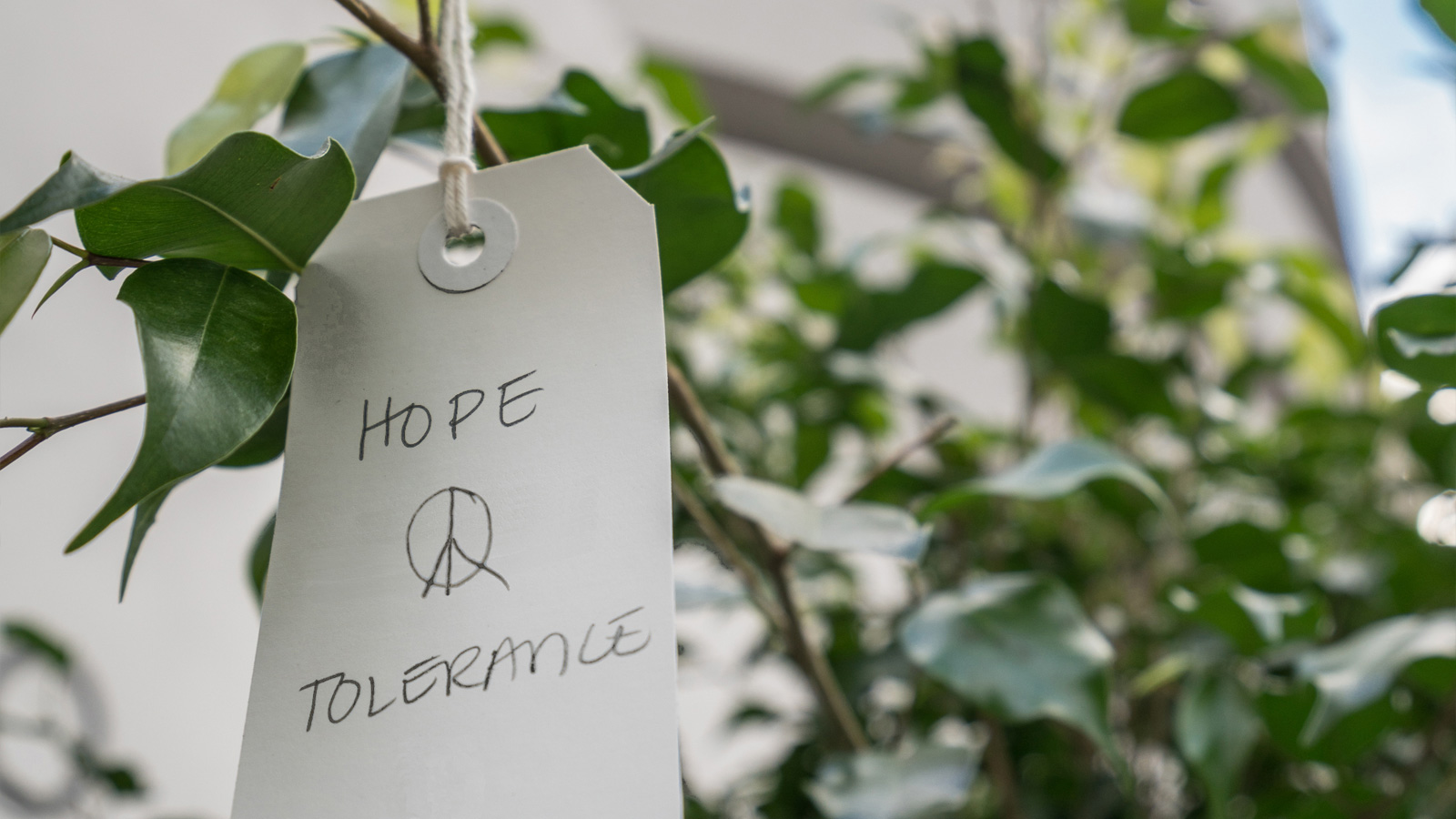
Walk into a quiet corner of the Museum of Modern Art or a sun-drenched courtyard in London, and you might see it. A tree. Not just any tree, but one heavy with thousands of fluttering white paper tags, like strange, rectangular fruit. This is the Yoko Ono Wishing Tree, a conceptual art piece that has been traveling the globe since 1996. It’s simple. It’s tactile. Honestly, in a world that feels increasingly digital and cynical, it’s a bit of a miracle that it still works.
But it does work.
People wait in line just to scribble a few words on a piece of paper and tie it to a branch. You’ll see wishes for world peace right next to a child’s plea for a new puppy or someone’s quiet hope that their mother gets better. There’s something deeply human about the physical act of tying a knot. Yoko Ono, an artist who has spent decades being misunderstood by the mainstream, tapped into a universal frequency with this one. It’s not just "art" in the stuffy, don't-touch-the-canvas sense. It’s a collective diary.
The Secret History of the Wishing Tree
To understand why the Yoko Ono Wishing Tree exists, you have to go back to her childhood in Japan. This isn't just some random hippie idea she had in the nineties. It’s rooted in the tradition of omikuji. If you’ve ever visited a Shinto shrine, you’ve seen this. People receive random fortunes, and if the fortune is bad, they tie the paper to a pine tree or a metal wire so the bad luck doesn't follow them home.
Ono took that religious structure and flipped it.
Instead of leaving behind bad luck, she asks us to plant good intentions. She first launched the project in 1996, and since then, she has collected over a million wishes. A million. Think about the logistics of that for a second. These aren't just thrown away when the exhibit ends. Every single tag is harvested, boxed up, and sent to the Imagine Peace Tower in Reykjavík, Iceland. They are literally buried at the base of a monument dedicated to John Lennon.
It’s a massive, ongoing conversation between the public and an artist who survived the intense scrutiny of the 20th century. While most people associate her solely with the Beatles’ breakup—a tired, inaccurate narrative—Ono was a pioneer of the Fluxus movement. She was doing interactive art before it was cool. The Yoko Ono Wishing Tree is the culmination of her belief that the viewer completes the artwork. Without your wish, the tree is just a tree.
Why We Still Care About a Tree in 2026
You’d think that by now, we’d be over it. We have apps for "manifesting." We have Twitter (or X, or whatever it's called this week) to scream our desires into the void. Yet, the physical presence of the tree matters.
There is a specific weight to a Yoko Ono Wishing Tree installation. Whether it's a Mediterranean Olive tree, a Japanese Maple, or a local Birch, the species usually reflects the environment it's in. This localized touch makes the art feel like it belongs to the community. When the Hirshhorn Museum in DC hosted the Wish Tree for Washington, the lines were out the door. People weren't there for a selfie—though they took those too—they were there for the ritual.
- The Anonymity Factor: You don't have to sign your name. You can be honest.
- The Vulnerability: Reading other people's wishes is an emotional rollercoaster. You'll see "I wish I could tell him I'm sorry" and "I wish for a cheeseburger" within three inches of each other.
- The Connection: You realize your private longing is actually quite common.
It’s kind of funny, actually. Ono has always been criticized for being "too simple" or "naive." But in an era of complex algorithms, simplicity is a superpower. She isn't asking you to buy an NFT. She’s asking you to use a golf pencil.
The Logistics of a Million Wishes
Let's talk about the "Imagine Peace Tower" for a minute because that's where the Yoko Ono Wishing Tree tags actually live out their retirement. Located on Viðey Island, the tower is a beam of light that shoots into the sky. Beneath it, the wishes are stored in capsules.
Ono has stated that she doesn't read them.
That’s a crucial detail. The art isn't about her consuming your secrets; it’s about the energy of the wish being released. It’s almost like a secular prayer. Critics sometimes argue that this is just "slacktivism"—that wishing for peace doesn't actually stop wars. Ono’s counter-argument has always been consistent: "A dream you dream alone is only a dream. A dream you dream together is reality."
It’s easy to roll your eyes at that if you’re feeling grumpy. But stand in front of a tree draped in 5,000 hand-written notes, and it's hard not to feel something. The sheer volume of human hope is physically heavy.
Common Misconceptions About the Project
People often get a few things wrong about these installations. First, it’s not just one tree. There have been versions in New York, Tokyo, Venice, Paris, and Dublin. Second, Yoko doesn't always choose the tree herself; the museum curators usually pick a species that will thrive in that specific climate during the exhibition run.
Third, and this is the big one: the wishes aren't burned.
Many people assume it’s a "burning ceremony" type of deal. Nope. They are kept forever. They are treated as historical artifacts of human desire. If you wrote a wish on a tag in 1998 in Finland, that piece of paper is likely sitting in a capsule in Iceland right now.
How to Interact With a Wishing Tree
If you find yourself at an exhibit featuring a Yoko Ono Wishing Tree, there are actually some "rules," though they are more like poetic instructions. Yoko is big on instructions.
- Make a wish.
- Write it down on a piece of paper.
- Fold it and tie it to a branch of the Wishing Tree.
- Ask your friends to do the same.
- Keep wishing until the branches are covered in wishes.
That’s it. Don't overthink it. Don't try to be profound for the sake of the person standing behind you. The most powerful wishes are usually the ones that come from a place of raw need or simple joy.
The Environmental and Cultural Impact
There is a legitimate conversation to be had about the environmental footprint of shipping thousands of paper tags to Iceland. However, Ono’s team has worked to ensure the process is as sustainable as possible, using recycled paper and carbon-offsetting the logistics.
Culturally, the Yoko Ono Wishing Tree has become a bridge. It bridges the gap between the avant-garde art world and the general public. You don't need a PhD in Art History to "get" it. You just need to have wanted something you didn't have. It’s an equalizer. A billionaire and a high school student both have to use the same cheap string to tie their tag to the branch.
Actionable Steps for the Inspired
You don't actually have to wait for a museum to host an official installation to engage with this philosophy. While the official Yoko Ono Wishing Tree is a specific, copyrighted art project, the spirit of it is something you can integrate into your life or community.
- Visit the Imagine Peace website: You can actually submit a wish online if you can't get to a physical tree. These are also "sent" to the tower in Iceland.
- Study the "Instruction Paintings": If you like the vibe of the Wishing Tree, look up Ono's book Grapefruit. It’s full of these little prompts that challenge how you see the world.
- Create a community ritual: While you shouldn't call it a "Yoko Ono Wishing Tree" (respect the artist's IP!), setting up a space for people to leave intentions—like a "gratitude wall" at a local café—uses the same psychological benefits of externalizing hope.
- Check local listings: Major galleries like the Tate or MoMA often rotate her work into their sculpture gardens. It’s worth a pilgrimage.
The Yoko Ono Wishing Tree isn't going anywhere. As long as humans have things they want to change about themselves or the world, there will be a need for a branch to hang those hopes on. It’s a quiet, persistent protest against despair. And honestly? We need that more than ever.
Next time you see a tree with white tags, don't just walk past. Grab a pencil. Think about what you really want. Tie it tight. It might not change the world overnight, but it adds your voice to a million others who refuse to stop asking for something better.



