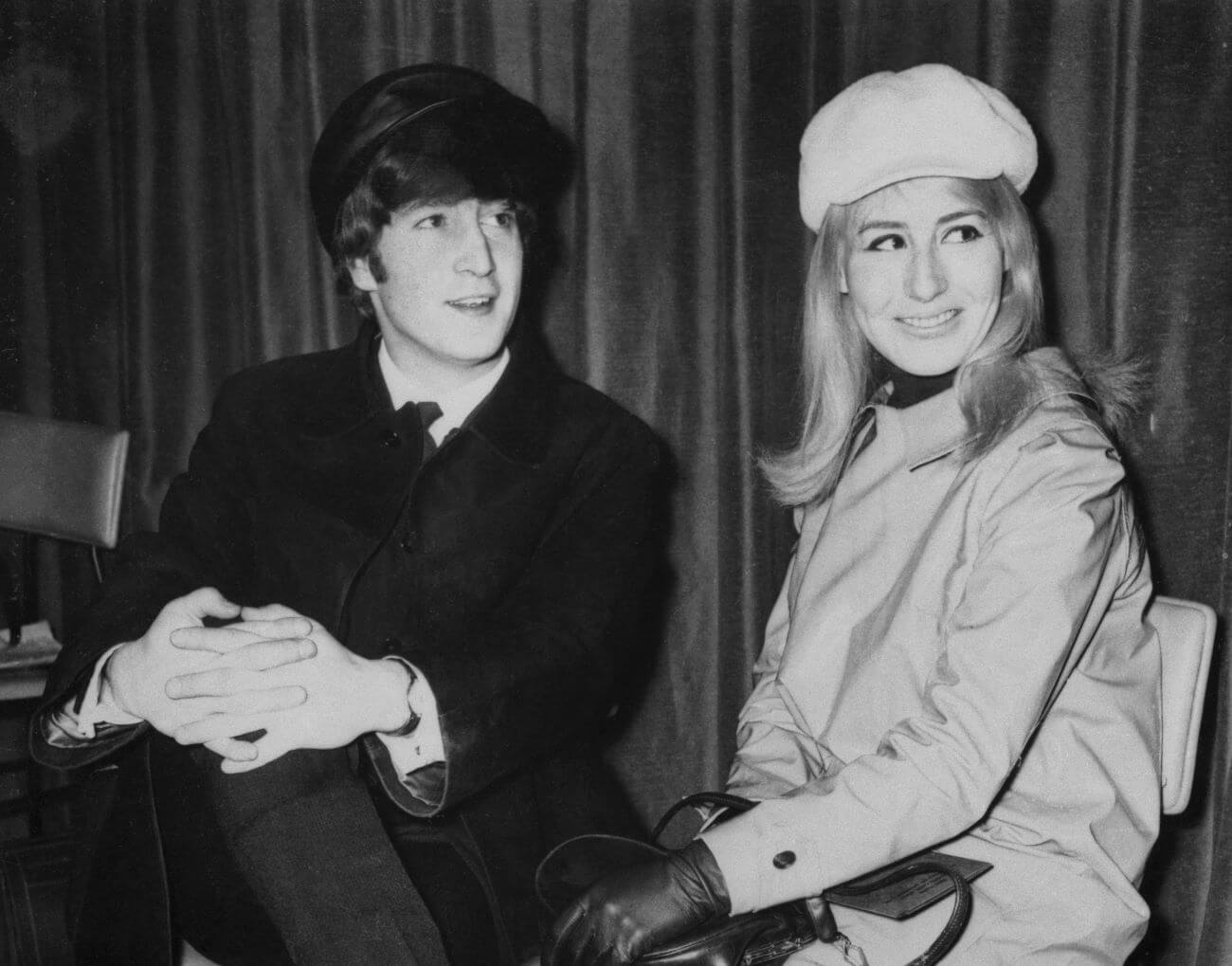
She’s probably the most misunderstood woman in music history. Honestly, if you ask a casual fan about the wife of John Lennon, they usually jump straight to the "she broke up the Beatles" narrative without even blinking. It’s a trope. It’s lazy. And mostly, it’s just not true. Yoko Ono didn't walk into Abbey Road Studios and snap a band in half like a dry twig.
The reality is way more messy. It’s about four guys who grew up, grew apart, and found themselves suffocated by their own fame. By the time Yoko showed up, the cracks were already wide enough to fit a bus through. But she became the easy target—the avant-garde outsider who "distracted" John.
The Myth of the Great Disrupter
People love a villain. For decades, the story was that Yoko sat on an amp in the studio and whispered in John's ear until he hated Paul. But look at the Get Back footage. You see her there, sure. She’s knitting. She’s reading a newspaper. She’s just... present.
The tension in those rooms? That was years of George Harrison feeling ignored. That was Paul McCartney trying to be the drill sergeant because nobody else would lead. That was the death of Brian Epstein leaving them rudderless. John Lennon was bored. He was looking for a way out of the "moptop" cage, and Yoko Ono happened to be the person who showed him a door.
She wasn't some groupie. Yoko was an established artist in the Fluxus movement long before she met John at the Indica Gallery in 1966. She was doing things with "Cut Piece" and "Grapefruit" that challenged the very idea of what art could be. John was fascinated by her brain, not just her presence.
Before Yoko: Cynthia Lennon and the Lost Years
We can't talk about the wife of John Lennon without mentioning Cynthia. She was the "quiet" one. The art school sweetheart who stayed home in Weybridge while the world went mad for her husband.
Cynthia represented the old John. The Liverpool John. The John who wore the leather jacket and tried to fit into the conventional middle-class dream even though he was a rebel at heart. Their marriage was a casualty of the 1960s. When John and Yoko connected, it wasn't just a physical affair; it was a total intellectual hijacking. John went from a man who lived a double life to a man who wanted to live his life as a public art piece.
You have to feel for Cynthia. She was pushed aside in a way that was undeniably brutal. But to paint Yoko as the "homewrecker" ignores the fact that John was already drifting. He was tripping on LSD and looking for a cosmic connection that his suburban life couldn't provide.
The Heroin, the Bed-Ins, and the Politics
Things got weird fast. The "Bed-In for Peace" in Amsterdam and Montreal wasn't just a quirky photo op. It was a massive pivot. John stopped being a "Beatle" and started being an activist.
This is where the public really turned. They wanted "I Want to Hold Your Hand," and instead, they got a naked couple on an album cover (Two Virgins) and experimental noise tracks. The press was vicious. The racism and misogyny directed at Yoko in the late 60s and early 70s was staggering. People called her "Dragon Lady." They mocked her voice. They treated her like a parasite.
The truth? John was obsessed with her. He legally changed his name to John Winston Ono Lennon. He said, "It's just me and Yoko against the world." It was codependency on a global scale. They even fell into heroin use together during the late 60s, a dark period that fueled the paranoia and isolation surrounding the band's final days.
The Lost Weekend: Not What It Sounds Like
Everyone talks about the "Lost Weekend." It sounds like a bender. It was actually an 18-month period where John lived in Los Angeles with May Pang.
And here’s the kicker: Yoko orchestrated it.
She saw the marriage was straining. She literally picked out May Pang, their assistant, and told John it was okay to go. It’s one of the strangest power moves in rock history. During this time, John was productive—he made Walls and Bridges, he hung out with Harry Nilsson and David Bowie, and he eventually realized he wanted to go back to Yoko.
When he returned to New York, the dynamic changed. They had Sean. John became the "house husband." He baked bread. He stayed out of the spotlight for five years while Yoko handled the business empire. She was the one negotiating the real estate deals and managing the millions. She wasn't just the wife of John Lennon; she was the CEO of Lennon Ltd.
December 1980 and the Aftermath
Then the world stopped.
The murder of John Lennon outside the Dakota didn't just end a life; it froze Yoko in a permanent state of "widow." For the last 45 years, she has been the curator of his flame. It’s a heavy burden. Every time she releases a box set or authorizes a documentary, the "money-grubbing" accusations fly.
But what is she supposed to do? She’s the protector of the legacy. She kept the Imagine Peace Tower lit in Iceland. She kept his message of pacifism alive when it would have been easier to retreat into silence.
Why the Hate Still Lingers
Some people will never forgive her for being there when the music stopped. They see her as the symbol of the end of their childhood. But if you look at the letters, the tapes, and the testimonies from people who were actually there, you see a woman who gave a very tortured man the permission to be himself.
John Lennon was a complicated, often angry, and deeply insecure person. Yoko was his mirror. She challenged him to be better, even if the process of getting there was loud and confusing for the rest of us.
Actionable Takeaways for the Curious Fan
If you want to actually understand this history beyond the headlines, you've got to dig into the primary sources. Stop reading the tabloid summaries and look at the work itself.
- Listen to "Plastic Ono Band" (The Album): This is John at his most raw. It’s the direct result of Janov’s Primal Scream therapy, which he did with Yoko. You can hear the influence of her avant-garde vocal style in his screams.
- Watch the "Get Back" Documentary (The 2021 Peter Jackson version): Seriously. See for yourself how she interacts with the band. She’s not "meddling." She’s just a partner who refuses to be left in the waiting room.
- Read "Grapefruit": This is Yoko’s book of instructions. It predates her relationship with John. It’ll give you a sense of her own creative identity before she was swallowed by the Lennon mythos.
- Acknowledge the Bias: When you read old articles about her, look for the coded language. The 1970s press was incredibly hostile toward non-Western women. Recognizing that bias is the first step to seeing the real Yoko.
The story isn't about a band breaking up. It’s about a man who found a partner he valued more than his job. Whether you like the music they made together or not, you have to respect the conviction. Yoko Ono didn't take John Lennon away from the world; she gave him the strength to leave a situation that was killing him.
Check out the official Lennon estate archives if you want to see the sheer volume of art they produced. It’s more than just songs; it’s a massive collection of films, writings, and conceptual pieces that define an era. Understanding Yoko is the only way to truly understand the second half of John's life.



