Honestly, people still get weird about it. If you mention a Yoko Ono John Lennon album in a crowded room, half the people will roll their eyes and the other half will start a twenty-minute lecture on avant-garde art. It’s been decades. Yet, the friction is still there.
Most folks think their collaboration started and ended with her "breaking up the Beatles." That’s a tired narrative. It’s also factually lazy. Before the world ever heard Double Fantasy, the duo had already dumped a bucket of "Unfinished Music" onto the public, mostly consisting of bird sounds, feedback, and literal heartbeats. They weren't trying to make pop. They were trying to dismantle the idea of what an "album" even was.
The "Brown Bag" Era: Two Virgins and the Shock Factor
In May 1968, while John’s first wife, Cynthia, was on holiday in Greece, John and Yoko stayed up all night in his home studio at Kenwood. They weren't recording a chart-topper. They were playing with tape loops and vocal distortions. By dawn, they had Unfinished Music No. 1: Two Virgins.
The music? It's tough.
It is thirty minutes of what critic William Ruhlmann famously called "naked" sound. If you're looking for a melody, you're in the wrong place. But the music wasn't the biggest scandal. It was the cover.
John and Yoko stood completely naked for the front and back photos. EMI, the parent company of Apple Records, refused to distribute it. They basically treated it like hazardous waste. Eventually, it had to be sold in a plain brown paper wrapper to keep it on the shelves. John’s logic was simple: "We're all naked really."
The public didn't agree. In New Jersey, police actually impounded 30,000 copies of the record, deeming it obscene. It was a mess. But for John, it was the ultimate "divorce" from his squeaky-clean Beatle persona. He was done being a moptop.
Life with the Lions and the Sound of Grief
If Two Virgins was a flirtation, Unfinished Music No. 2: Life with the Lions (1969) was a tragedy. The cover shows Yoko in a hospital bed at Queen Charlotte’s Hospital after suffering a miscarriage. John is on the floor beside her.
One of the tracks, "Baby's Heartbeat," is exactly what it sounds like—a recording of their unborn child’s heart before the miscarriage. It’s harrowing. It’s uncomfortable. It’s also incredibly brave.
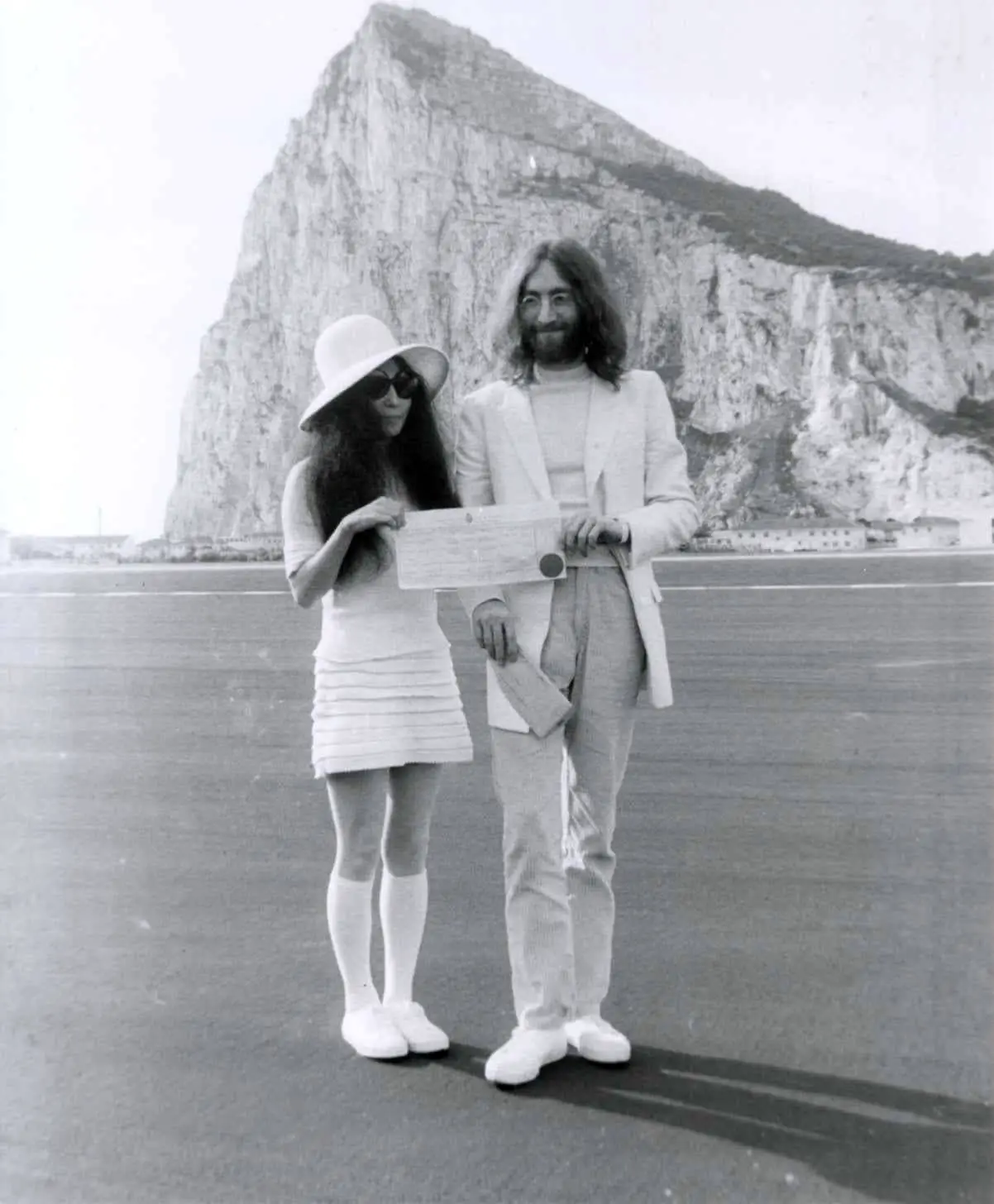
They followed this with the Wedding Album. Most people remember the packaging more than the music. It was a box set designed by John Kosh that came with:
- A copy of their marriage certificate.
- A picture of a slice of wedding cake (in a white sleeve).
- A booklet of press clippings.
- A "Bagism" Mylar bag.
The music was basically them shouting each other's names over heartbeats for twenty minutes. Total art-house stuff. They were sharing their private life as public art, which was a radical concept in 1969.
The Politically Charged "Front Page"
By 1972, the duo had moved to New York. They were deep in the anti-war movement, hanging out with activists like Jerry Rubin and Abbie Hoffman. They wanted to make a record that felt like a newspaper.
Some Time in New York City was the result. It was a loud, messy, "woke" (before that was a word) political statement.
The critics absolutely hated it. Rolling Stone called it "artistic suicide." The lyrics tackled everything: the Attica Prison riots, Northern Ireland, women’s rights, and the jailing of John Sinclair. It was didactic. It was preachy. It also featured "Woman Is the Nigger of the World," a title so controversial it essentially killed any chance of radio play.
Lennon later admitted he might have been a bit distracted during this era. He was being surveilled by the FBI. Nixon was trying to deport him. The album felt like a frantic attempt to scream everything at once.
The Comeback: Double Fantasy and the Bermuda Connection
Then came the silence.
From 1975 to 1980, John vanished. He was a "househusband" at the Dakota, raising their son, Sean. No tours. No albums. Just bread-baking and parenting.
The spark for their most famous Yoko Ono John Lennon album actually happened at sea. In 1980, John took a sailing trip to Bermuda. A massive storm hit. The crew got seasick, and John—terrified but exhilarated—was forced to take the helm for six hours. He said it "tuned him into the cosmos."
The songs started pouring out. He called Yoko, and she started writing, too. They decided the album would be a "Heart Play"—a dialogue between a man and a woman.
Why Double Fantasy Was Different
They signed with David Geffen’s new label because Geffen treated Yoko as an equal partner. That mattered to John. They recorded at the Hit Factory in NYC between August and October 1980.
The vibe was professional. Clean. They even brought in members of Cheap Trick (Rick Nielsen and Bun E. Carlos) to record versions of "I'm Losing You," though those were later swapped for studio musicians to keep the sound "slicker."
On December 8, 1980, the world changed. John was killed outside the Dakota. At the time, Double Fantasy was a modest success, but afterward, it became a global phenomenon, winning the 1981 Grammy for Album of the Year.
The Unfinished Business: Milk and Honey
People often forget that there was a "sequel."
During the Double Fantasy sessions, they recorded so much material they had enough for a second record. Yoko spent three years grieving before she could touch the tapes again. In 1984, she released Milk and Honey.
It’s a strange, beautiful listen. Because John’s vocals are mostly "rough takes" or rehearsals, they sound more intimate than the polished tracks on Double Fantasy. You can hear him joking between takes. Yoko’s contributions, however, were recorded later in 1983, giving them a more 80s synth-pop feel.
The title refers to the "land of milk and honey"—a metaphor for the U.S. and for the "promised land" after death. Yoko later said it felt "scary" that she had picked that title before the tragedy.
How to Listen: A Guide for the Skeptical
If you want to actually "get" the Yoko Ono John Lennon album experience without getting a headache, don't start at the beginning.
- Start with Double Fantasy. It’s the most accessible. Listen to the way the tracks alternate. His "Watching the Wheels" answers her "I'm Moving On." It’s a conversation.
- Move to Milk and Honey. Listen for "Nobody Told Me." It captures that classic Lennon wit that the world missed so much.
- Brave the "Experimental Three" last. Two Virgins, Life with the Lions, and Wedding Album aren't "tunes." They are historical documents of two people trying to be as honest—and as weird—as possible.
If you’re a vinyl collector, keep an eye out for the original Wedding Album box set. A complete version with the cake photo and the certificate is worth a small fortune today. Most of them were lost or trashed because people just didn't understand what they were holding at the time.
For those looking to dive deeper into the technical side, check out the 2020 Gimme Some Truth Ultimate Mixes. They were overseen by Yoko and Sean Lennon, using modern technology to strip away some of the 80s "glaze" and let the raw vocals shine through. It’s probably the closest we’ll ever get to being in the room at the Hit Factory.



