Most people think they know the Yoko Ono story. They’ve got the images of the Bed-ins for Peace, the avant-garde "Cut Piece" performance, and the messy, unfair narrative that she single-handedly broke up the Beatles. But before John Lennon and the Dakota building, there was a jazz musician and film producer named Anthony Cox. He wasn't just a footnote. He was the catalyst for some of her most famous early work and the center of a kidnapping saga that lasted over twenty years.
It’s heavy stuff.
When you look at the relationship between Yoko Ono and Anthony Cox, you aren't just looking at a marriage. You're looking at a collision of the New York art scene, a desperate struggle for parental rights, and a cult-driven disappearance that feels like something out of a Netflix true-crime documentary. Except this was real life, played out in the harsh glare of 1970s tabloid culture.
The Meeting of the Minds and the Fluxus Era
Yoko and Tony met in 1962. At the time, Yoko was in a fragile state, recovering from the end of her first marriage to Toshi Ichiyanagi and dealing with the pressure of the Tokyo art world. Cox was an American art promoter and musician who saw her genius before almost anyone else did. He basically rescued her from a mental health facility in Japan and brought her back to New York.
They married in 1963. Shortly after, their daughter, Kyoko Chan Cox, was born.
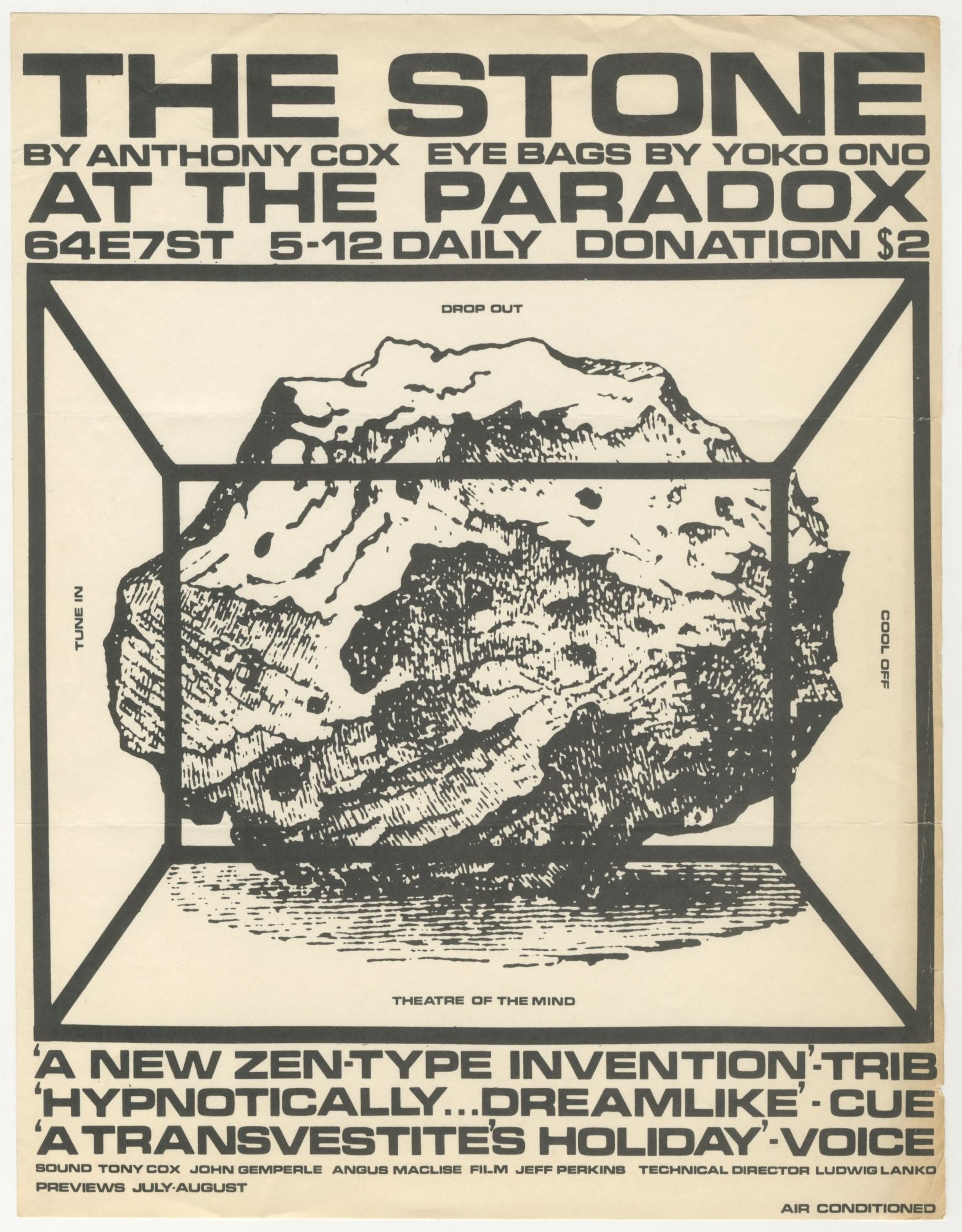
The early years were fueled by a strange, frantic creativity. Cox wasn’t just a husband; he was an executive producer for her vision. He helped manage her career and was instrumental in the production of her legendary Cut Piece and the Bagism concepts. But the marriage was volatile. They divorced, remarried, and eventually split for good as Yoko’s star began to rise in London—right around the time a certain Beatle walked into the Indica Gallery.
The Day Kyoko Vanished
The real drama started after the divorce. In 1971, the legal battle over Kyoko reached a fever pitch. A Virgin Islands court originally granted Yoko custody, but Anthony Cox didn't see it that way. He felt that the lifestyle Yoko was living with John Lennon—which at the time involved drug arrests and a very public, radical political stance—wasn't fit for a child.
So, he took her.
He didn't just move to a different state. He disappeared into the ether. For a long time, Yoko had no idea where her daughter was. Cox joined a group called the Living Word Fellowship, a Christian cult-like organization (then known as the Church of the Living Word). He changed his name. He changed Kyoko's name to Rosemary.
Imagine being one of the most famous women in the world, with the resources of John Lennon behind you, and you still can't find your own kid. They spent millions. They hired private investigators. They ran ads. Lennon even wrote songs with the underlying hope that the message would reach her. But the group was insulated, moving through various communes in California and beyond.
Why the Yoko Ono Anthony Cox Story Still Matters Today
This wasn't just a celebrity spat. It was a precursor to how we understand parental alienation and the influence of high-control groups. Cox believed he was "saving" his daughter from a chaotic life. Yoko felt she was the victim of a vindictive kidnapping.
The nuance here is often lost in the "Yoko is the villain" trope. Whether you like her art or not, she spent the better part of her 40s and 50s in a state of perpetual mourning for a living child. It influenced her albums like Approximately Infinite Universe and Feeling the Space. The lyrics aren't just abstract art; they are the screams of a mother who lost her daughter to a fundamentalist group.
Eventually, the tension broke. But not because of a lawyer or a police raid.
In 1986, Cox actually surfaced to talk to the media. He had left the religious group and was living a relatively "normal" life. However, it wasn't until 1994—twenty-three years after she was taken—that Kyoko, now an adult with her own life, finally reached out to her mother.
The Realities of the Reunion
Reunions after two decades of cult involvement aren't like the movies. There’s no slow-motion run through a field of daisies. It was awkward. It was quiet. Kyoko had grown up under the impression that her mother didn't want her or that her mother’s world was a place of darkness. They had to relearn each other as strangers.
Today, they are reportedly on good terms. Kyoko has stayed largely out of the spotlight, which is understandable given that her childhood was used as a tug-of-war rope between a global icon and a man on the run.
Understanding the Legal and Social Impact
The fallout of the Yoko Ono and Anthony Cox saga changed how the public viewed "child snatching" by parents. Back then, if a father took a child, authorities were often slow to intervene, viewing it as a private family matter rather than a crime.
- The Power of Influence: Cox’s ability to hide in plain sight within the Living Word Fellowship shows how easily individuals can be swallowed by insular communities.
- Media Bias: During the 70s, the press often sided with the "stable" father over the "radical" mother, ignoring the legality of the custody arrangement.
- The Lennon Factor: While John’s fame provided the money to search for Kyoko, it also provided the pretext for Cox to stay underground. He used Lennon’s public image as a justification for his flight.
Honestly, the whole situation is a masterclass in the complexities of the human ego. Cox was convinced of his righteousness. Yoko was desperate for her child. The result was a twenty-year gap in a family tree that can never truly be filled.
Researching the Full Timeline
If you're looking to dig deeper into the primary sources of this era, several biographies and legal records offer a clearer picture than the sensationalist headlines of the time.
- "The Ballad of John and Yoko": Various Rolling Stone archives from the early 70s detail the couple's frantic search and the private detectives they employed.
- Albert Goldman’s Controversial Biography: While widely criticized for its bias against Lennon and Ono, it provides a gritty (if skewed) look at the logistical nightmare of the custody battle.
- Yoko’s Own Statements: Her open letter to Kyoko, published in various outlets over the years, serves as a haunting primary document of her grief.
Moving Toward Clarity
Understanding this history requires looking past the caricature of Yoko Ono. It requires seeing her as a woman who dealt with a parent's worst nightmare while being mocked by the global press. Anthony Cox, for his part, eventually admitted to the complexity of his choices, but the damage of those decades remains a permanent part of the Lennon-Ono legacy.
To get a true sense of this era, start by listening to Yoko's 1973 track "Don't Worry Kyoko (Mummy's Only Looking for Her Hand in the Snow)." It’s harsh, avant-garde, and difficult to listen to. But once you know the context of the Anthony Cox disappearance, it stops sounding like "noise" and starts sounding like a frantic search party set to music.
Actionable Insights for Historical Context:
- Study the Fluxus Movement: To understand why Cox and Ono connected, look into the 1960s Fluxus art movement. It explains the "happening" nature of their early relationship.
- Examine 70s Custody Laws: Contrast the 1971 Virgin Islands ruling with modern Interstate Compact on the Placement of Children (ICPC) laws to see how much harder it would be for a parent to vanish today.
- Review Post-Cult Recovery: Research the "Living Word Fellowship" to understand the psychological environment Kyoko grew up in, which provides context for why the reunion took so long to happen.