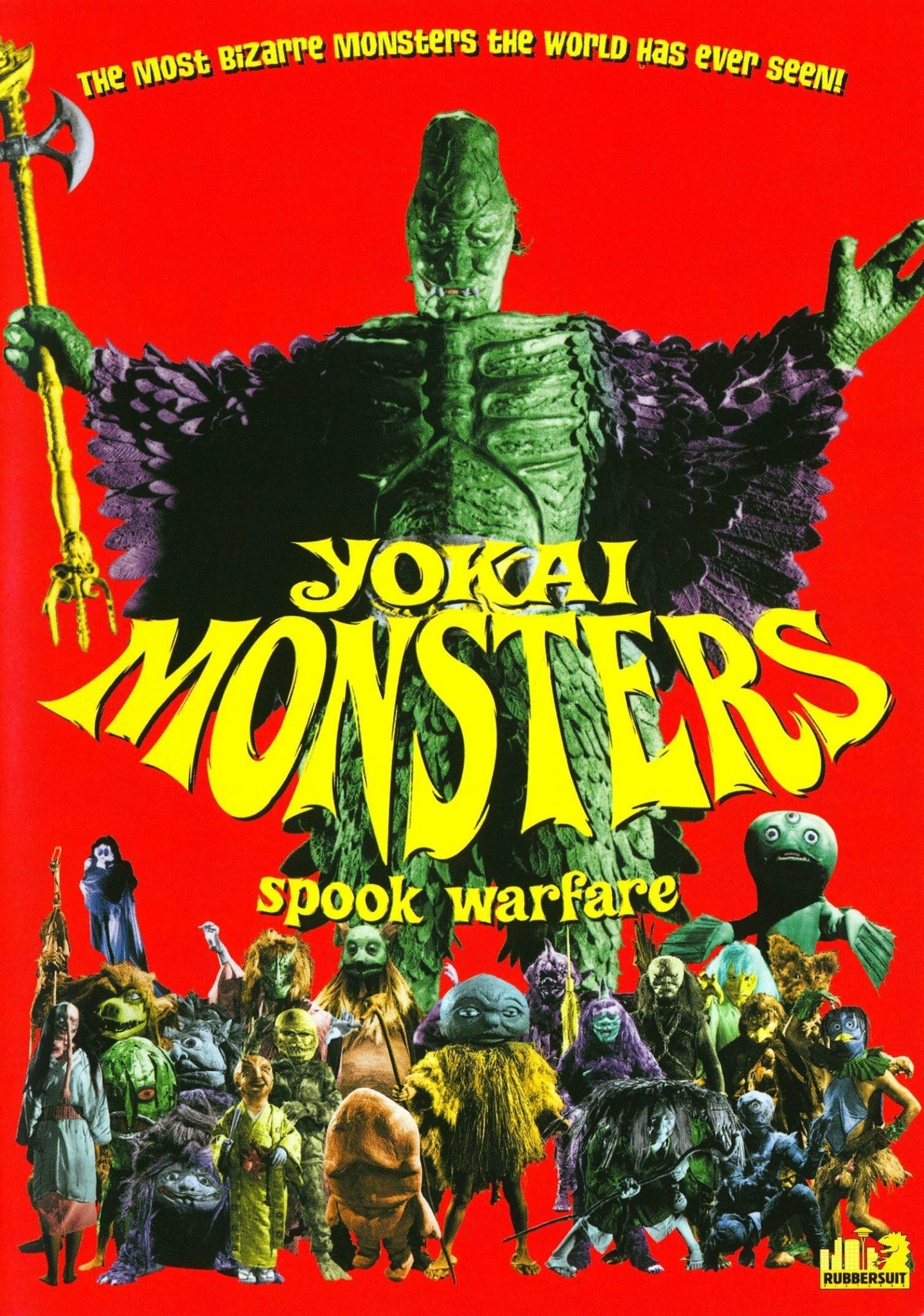
You’ve probably seen the memes. A giant, umbrella-shaped creature with one eye and a long tongue hopping around, or maybe a massive stone wall with eyes that blocks travelers in their tracks. It looks like typical Pokémon-style whimsy. But back in 1968, the Yokai Monsters Spook Warfare movie wasn't just another kids' flick. It was a massive gamble by Daiei Film to reclaim the throne of Japanese special effects from Toho and Godzilla.
Honestly, the movie is a fever dream. It’s officially titled Yokai Hyakumonogatari or Yokai Daisenso depending on which dub you're watching, but for Western cult film fans, it’s forever "Spook Warfare."
The plot is actually pretty dark. A greedy Babylonian vampire named Daimon wakes up and heads to Japan, where he starts wrecking local shrines and possessing high-ranking officials. The local Japanese spirits—the Yokai—aren't having it. They basically form a supernatural militia to kick this foreign invader out. It’s a literal "spook war."
Why the practical effects in Yokai Monsters Spook Warfare still hold up
Most people look at 1960s suitmation and laugh. They shouldn't. The craft behind Yokai Monsters Spook Warfare is actually insane. While Godzilla was all about scale and smashing cardboard buildings, this film focused on "human-sized" horror.
The Kappa. The Rokurokubi. The Abura-sumashi.
Each one was a physical suit or a puppet. Yoshiyuki Kuroda, the director, had to figure out how to make a woman with a neck that stretches ten feet look convincing without the benefit of CGI. They used intricate wirework and physical prosthetics that would make modern horror directors sweat.
Kuroda was a technician at heart. He didn't want the monsters to feel like guys in rubber suits; he wanted them to feel like folklore come to life. In one of the most famous scenes, the Yokai assemble in a forest. It’s a masterclass in lighting and forced perspective. You have dozens of distinct character designs on screen at once, each with unique movements.
Think about the logistical nightmare of that. You have thirty actors in heavy, stifling latex suits, half of whom can't see out of their eye-slits, trying to coordinate a charge against a Babylonian demon. It’s beautiful chaos.
The cultural weight behind the "Spook War"
It isn't just about the monsters.
The film arrived during a specific moment in Japanese cinema. Toho’s Kaiju films were becoming increasingly "kid-friendly" and goofy. Daiei, the studio behind the Gamera series, wanted to pivot. They leaned into Kwaidan—traditional ghost stories.
They tapped into the Hyakumonogatari Kaidankai, the old tradition of telling one hundred ghost stories. Basically, you light 100 candles and blow one out after every story. When the last candle dies, a real ghost is supposed to appear. This movie feels like that 100th candle.
There's a subtle nationalist undertone to the conflict, too. You have the "foreign" demon Daimon invading and disrupting the natural order of Japan. The Yokai aren't necessarily "good" guys in the traditional sense; they are just part of the landscape. They protect their territory. It's an interesting look at how a culture uses its own mythology to define its boundaries.
The 2005 remake and the Takashi Miike touch
You can't talk about Yokai Monsters Spook Warfare without mentioning the 2005 reimagining. Takashi Miike—the guy who gave us Audition and Ichi the Killer—was an odd choice for what was essentially a big-budget family film.
But he nailed it.
Miike’s The Great Yokai War is a direct descendant of the 1968 original. He kept the spirit of the "Spook Warfare" alive by blending early digital effects with that same weird, tactile energy of the original suits.
He even brought back some of the original designs. The Karakasa (the umbrella boy) still looks goofy, but in Miike’s hands, it’s strangely poignant. It’s about the "forgotten things." The film argues that Yokai disappear because people stop believing in the weird and the wonderful.
The 1968 version didn't need to make that argument because the world was still weird then.
How to actually watch these films today
Tracking these down used to be a nightmare of bootleg VHS tapes. Now, it's easier, but you have to be careful which version you're getting.
The Criterion Collection and Arrow Video have done the heavy lifting here. Arrow released a massive "Yokai Monsters" box set that includes the original trilogy: 100 Monsters, Spook Warfare, and Along with Ghosts.
If you want the true experience, watch them in the original Japanese with subtitles. The English dubs from the 70s are hilarious, sure, but they strip away the eerie atmosphere that Kuroda worked so hard to build. The sound design in the original tracks—the wet slaps of the Kappa's feet, the creak of the wood—is essential.
Actionable steps for the budding Yokai fan
If you're looking to dive into the world of Japanese supernatural cinema, don't just start and stop with the movies. The context makes the "Spook Warfare" way more interesting.
- Read Shigeru Mizuki. He is the godfather of modern Yokai. His manga GeGeGe no Kitaro basically revitalized interest in these creatures in the 1960s and directly influenced the look of the film.
- Watch the films in order. Start with 100 Monsters (1968). It’s more of a slow-burn anthology. Then hit Spook Warfare. You’ll appreciate the jump in action and scale much more.
- Check out the 2021 update. The Great Yokai War: Guardians is the most recent entry. It’s very CGI-heavy, which might turn off purists, but it shows how the "Spook Warfare" concept continues to evolve for new generations.
- Learn the "Type" of Yokai. Not all monsters are scary. Some are just annoying. Understanding the difference between a Yurei (a ghost of a human) and a Yokai (a monster/entity) changes how you view the "war" in the movie. The Yokai are fighting for their existence as part of the natural world.
The Yokai Monsters Spook Warfare legacy is one of practical ingenuity and cultural pride. It’s a reminder that before we had pixels, we had people in heavy suits, sweating under hot studio lights, trying to make us believe in the impossible. And honestly? It worked better than most of what we see on screen today.



