When people talk about the "big" names in Ethiopian history, they usually jump straight to Menelik II and his victory at Adwa or Haile Selassie’s international fame. But honestly, if it wasn't for Yohannes IV, there might not have been much of an Ethiopia left to save.
He was the guy who had to pick up the pieces after the chaotic end of Emperor Tewodros II. He didn't just rule from a throne; he lived in a tent, moving his army across some of the most brutal terrain on earth for nearly two decades. He was a monk-warrior, a man who carried a prayer book in one hand and a Remington rifle in the other.
You've probably heard of the Scramble for Africa. While other leaders were signing away their land for beads and cloth, Yohannes IV of Ethiopia was busy crushing an Egyptian invasion, pushing back the Italians, and eventually dying on the front lines against the Mahdist Sudanese. He is the only modern emperor to die in battle. That's a level of "leading from the front" that you just don't see anymore.
The Rise of the "Lion of Tigray"
Before he was Yohannes IV, he was Dejazmach Kassai Mercha. He was born in 1837 in the Tigray region. He wasn't exactly handed the keys to the empire. He had to fight for them.
After Tewodros II committed suicide at Magdala in 1868 rather than surrender to the British, the country was a mess. Kassa was smart, though. He helped the British expedition by providing supplies and securing their route. In exchange, they gave him a "thank you" gift of modern rifles and artillery.
That gift changed everything.
With superior firepower, he defeated his rival, Tekle Giyorgis II, at the Battle of Assam in 1871. He wasn't just a better strategist; he had better tech. On January 21, 1872, he was crowned Emperor at Axum, the ancient holy city. He was the first to be crowned there in centuries. It was a massive statement. He was basically saying, "The old ways are back, and I'm the one in charge."
Why He’s the Most Underestimated Military Genius
Most people don't realize how close Ethiopia came to becoming an Egyptian colony.
In the mid-1870s, Khedive Isma'il Pasha of Egypt wanted to control the entire Nile. He sent massive, European-trained armies into the Ethiopian highlands. Yohannes didn't panic. At the Battle of Gundet (1875) and the Battle of Gura (1876), his forces absolutely obliterated the Egyptian invaders.
We’re talking about a complete wipeout.
He captured thousands of modern rifles and some of the best Krupp artillery pieces of the era. He used their own weapons to build a defense that would keep European powers at bay for years. But he wasn't just a warmonger. He tried diplomacy first. He wrote letters to Queen Victoria, basically saying, "Hey, we're both Christians, why are your allies attacking me?"
The British ignored him. They had interests in Egypt.
It’s a tough lesson in geopolitics that Yohannes learned the hard way. Even when you're right, if you don't have the leverage, the "big powers" won't lift a finger. So, he stopped writing and started fighting.
The Religious Hardliner: The Council of Boru Meda
Now, here is where his legacy gets a bit complicated. Yohannes wasn't a "live and let live" kind of guy when it came to faith.
He believed that a divided church meant a divided country. At the Council of Boru Meda in 1878, he basically told everyone they had to follow the Tewahedo orthodox doctrine. If you were a different kind of Christian, you had to convert. If you were Muslim or followed traditional beliefs, you were often given a choice: convert or leave.
Honestly, it was brutal.
Tens of thousands of people, especially in the Wollo region, were forced into baptism. This is the part of his story that doesn't always make it into the "hero" narrative. He saw Islam as a "fifth column" that foreign powers like Egypt or the Mahdists could use to destabilize Ethiopia. Was he right? Maybe in a strictly strategic sense, but the human cost was massive. It created deep scars that some say still haven't fully healed in Ethiopian society.
The Battle of Metemma: A Heroic (and Messy) End
By 1889, Yohannes was surrounded. The Italians were encroaching from the coast (the start of what would become Eritrea), and the Mahdists were raiding from Sudan.
Then there was Menelik II in the south, who was playing a very clever—and some would say treacherous—game of waiting for Yohannes to fail so he could take the crown.
Yohannes decided to deal with the Mahdists first. He marched a massive army of nearly 150,000 men to Metemma (also known as Gallabat). The Ethiopians were winning. They had broken through the Mahdist lines. But Yohannes, being Yohannes, was at the very front of the charge.
He was hit. Once in the hand, which he ignored, and then a fatal shot to the chest.
The moment the soldiers realized their Emperor was down, the win turned into a rout. The army panicked and retreated. In a gruesome twist, the Mahdists captured his body, beheaded him, and took his head to Omdurman as a trophy.
It was a violent, tragic end for a man who had spent his whole life defending the borders.
His Legacy: Did He Fail or Succeed?
It’s easy to look at his death and the subsequent rise of Menelik II and think Yohannes was just a bridge between two eras. But look at what he actually did:
- He stopped the Egyptian expansion cold.
- He signed the Hewett Treaty, which briefly gave Ethiopia access to the sea.
- He banned the slave trade and cigarette smoking (he was very strict about that!).
- He introduced smallpox vaccinations to his court.
- He founded the Church of Debre Gannat in Jerusalem, which is still a major site for Ethiopian pilgrims today.
He was a man of intense contradictions. He was humble enough to serve his own soldiers dinner, yet proud enough to demand total religious submission from his subjects. He was a brilliant tactician but died because he couldn't resist being in the thick of the fight.
What This Means for Us Today
Understanding Yohannes IV of Ethiopia isn't just a history lesson; it's a study in sovereignty. He shows us that independence isn't something you're given; it's something you defend every single day.
If you want to dive deeper into this, here are some actionable ways to explore his history:
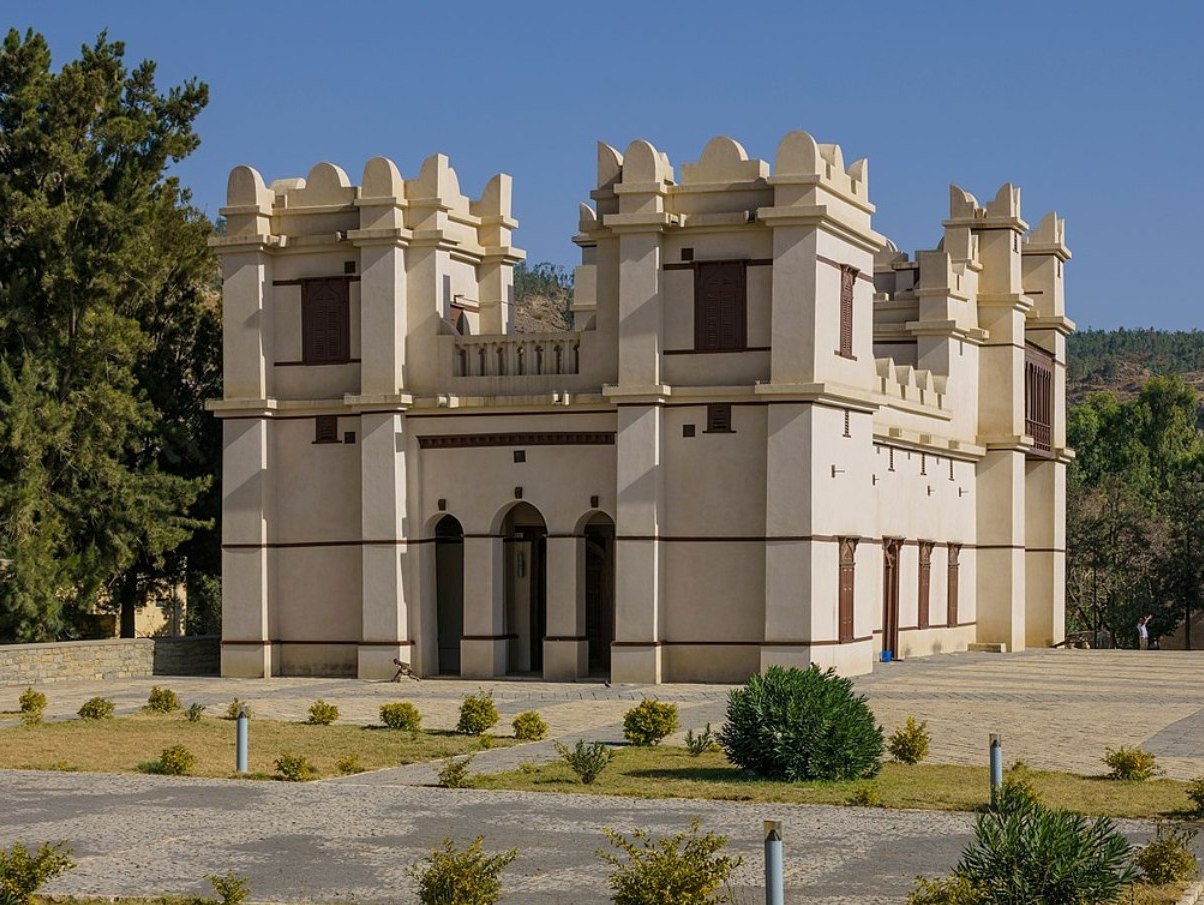
- Check out the Museum of Emperor Yohannes IV in Mekelle. It’s housed in his former palace and contains his personal belongings, including his crown and the gifts he received from foreign monarchs.
- Read "The Life and Times of Emperor Yohannes IV" by Zewde Gabre-Sellassie. It’s the definitive academic source on his reign and goes into the gritty details of his diplomatic letters.
- Explore the Ethiopian Church in Jerusalem. If you ever visit the Holy City, look for the buildings funded by the gold Yohannes captured at the Battle of Gura. It’s a tangible link to a victory that happened over 150 years ago.
- Analyze the map of modern Eritrea. You’ll see how the borders Yohannes fought for were the same ones the Italians eventually occupied after his death, shaping the modern geopolitics of the Horn of Africa.
He was the "Lion of Tigray" for a reason. He kept the flame of independence alive when the rest of the continent was going dark. Whether you agree with his methods or not, you have to respect the sacrifice.