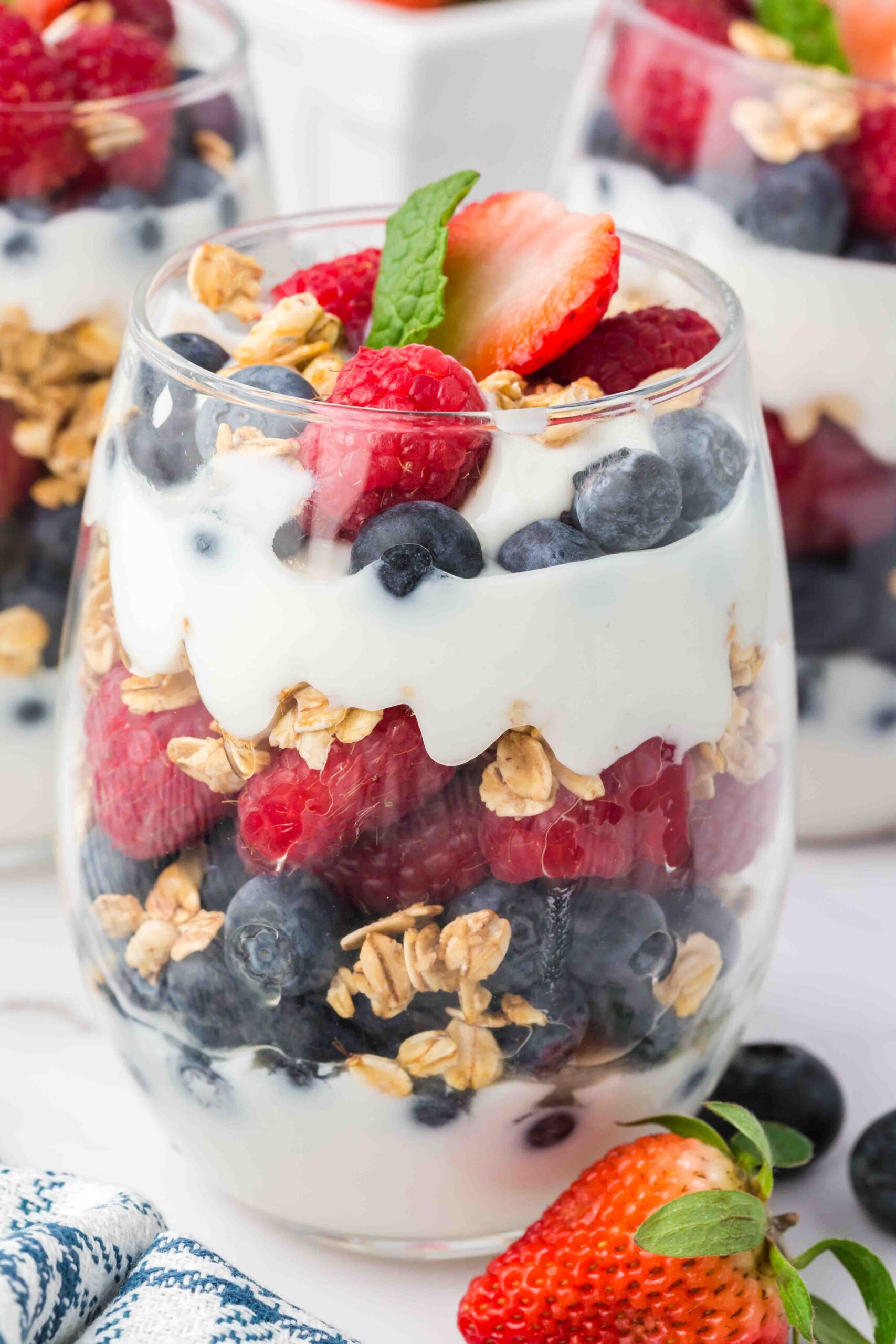
You probably think you're winning at life when you peel back that foil lid. It’s a classic move. You grab a container of yogurt with fruit, maybe a spoon from the office breakroom, and tell yourself you’ve nailed the "healthy snack" game. It’s better than a donut, right? Well, yeah, usually. But honestly, the yogurt aisle is a minefield of marketing fluff and hidden syrups that can turn a probiotic powerhouse into something closer to a melted sundae.
Let’s get real about what’s actually in that cup.
Most people see a picture of a vibrant strawberry on the label and assume they’re getting a serving of fruit. They aren't. In many commercial brands, that "fruit" is actually a jam-like concoction loaded with corn starch, "natural flavors," and enough cane sugar to make a dentist cringe. It’s a bummer because yogurt itself is a fermented marvel. It’s packed with Lactobacillus bulgaricus and Streptococcus thermophilus—the OG bacteria that help your gut stay happy. But when you douse those microbes in twenty grams of added sugar, you're basically sending them into a war zone they can't win.
The weird truth about "fruit on the bottom"
Have you ever wondered why that fruit layer at the bottom of the cup stays so perfectly gloopy and red? It’s not just nature at work. To keep fruit from spoiling or making the yogurt watery, manufacturers use stabilizers like pectin, locust bean gum, or guar gum.
There's a massive difference between a blueberry and "blueberry preparation."
Look at the ingredients list next time you're at the store. If sugar or fruit juice concentrate is listed before the actual fruit, you're eating candy. Dr. Robert Lustig, a neuroendocrinologist and author of Fat Chance, has spent years screaming into the void about how liquid sugar and processed fructose bypass our satiety signals. When you eat yogurt with fruit that’s been pre-mixed or syruped-up, your liver processes that sugar differently than it would if you were chewing a whole apple. You don't get the fiber buffer. You just get the spike.
Then there's the protein problem.
Standard grocery store yogurt often has about 5 to 6 grams of protein. That's not much. If you’re using this as a meal replacement, you're going to be starving by 10:30 AM. Greek yogurt or Icelandic skyr is better because they strain out the liquid whey, concentrating the protein. But—and this is a big but—the second they add "fruit flavors," the nutritional profile usually tanks. You might get 15 grams of protein, sure, but you're also getting 18 grams of sugar. It’s a trade-off many people don't realize they're making.
Why the dairy source actually matters
It’s easy to get caught up in the toppings, but the base is the engine. Grass-fed dairy contains higher levels of conjugated linoleic acid (CLA) and omega-3 fatty acids compared to grain-fed cows. Research published in PLOS ONE found that grass-fed milk has a significantly better fatty acid profile. If you're going to eat dairy, the quality of the cow's life actually shows up in your bloodwork.
Wait.
What about dairy-free? Almond, soy, and oat yogurts are everywhere now. They’re fine, I guess, if you can’t do lactose. But most of them are nutritionally empty compared to the real deal unless they’re heavily fortified. Oat yogurt is basically fermented starch. It’s carb-heavy and protein-light. If you're mixing oat yogurt with fruit, you're essentially having a bowl of sugar on top of a bowl of sugar. It tastes great, but let’s not call it a health food.
Is yogurt with fruit actually good for your gut?
The short answer is: it depends.
Probiotics are live microorganisms. They need to be alive when they hit your tongue and stay alive through the acid bath of your stomach. High sugar content in some yogurt with fruit products can actually feed the bad bacteria in your gut, potentially offsetting the benefits of the probiotics in the yogurt. It’s a bit of a tug-of-war.
The International Scientific Association for Probiotics and Prebiotics (ISAPP) suggests looking for specific strains. If the label just says "live active cultures," that’s the bare minimum required by law. Look for names like Bifidobacterium or Lactobacillus acidophilus. These guys have actual clinical backing for things like improving digestion and even boosting immune function.
- Check for "Live and Active Cultures" seal.
- Avoid "Heat-Treated" yogurts—the heat kills the bacteria.
- Look for at least 1 billion CFUs (Colony Forming Units).
The "Halos" and the "Hype"
Marketing is a powerful thing. We see words like "organic," "non-GMO," and "all-natural" on a container of yogurt with fruit and our brains automatically shut off the critical thinking valve.
"Organic" sugar is still sugar.
"Natural" flavors are often anything but. Under FDA guidelines, a "natural flavor" just has to originate from a plant or animal source. It doesn't mean it hasn't been processed in a lab using chemicals to extract a specific scent or taste. If your strawberry yogurt tastes more like a strawberry than an actual strawberry does, you’re eating science, not nature.
How to do it the right way (The DIY Approach)
If you want the benefits of yogurt with fruit without the metabolic baggage, you have to take control of the assembly line. It takes about thirty seconds longer, but the payoff is huge.
- Buy plain, unsweetened Greek yogurt. It’s thick, tart, and full of protein.
- Throw in actual, frozen or fresh berries.
- Add your own crunch—handful of walnuts or chia seeds.
- If it's too tart, a tiny drizzle of raw honey or a pinch of cinnamon does wonders.
Cinnamon is a secret weapon here. It tricks your brain into thinking something is sweeter than it is, and some studies suggest it helps with blood sugar sensitivity. Plus, when you use real berries, you’re getting anthocyanins—those dark pigments that act as powerful antioxidants. You’re not getting those from the red dye #40 or the "fruit prep" found in the bottom of a plastic cup.
The fat-free myth
We need to talk about fat. For decades, we were told to eat fat-free yogurt. What happens when you remove fat from dairy? It tastes like chalk. To fix that, companies added—you guessed it—more sugar and thickeners.
Full-fat yogurt (usually 4% or 5%) is actually much more satisfying. The fat slows down the absorption of the lactose (milk sugar), meaning you don't get that jagged energy spike and crash. Also, vitamins A, D, E, and K are fat-soluble. If you’re eating 0% fat yogurt, you aren’t even absorbing those nutrients efficiently. Eat the fat. Your brain is 60% fat; it needs the fuel.
Thinking beyond the bowl
Yogurt with fruit doesn't have to be a breakfast thing. It's a killer marinade. The lactic acid in yogurt breaks down proteins in chicken or lamb, making them incredibly tender. While you might not want strawberries in your chicken curry, a yogurt-based sauce with a hit of citrus (fruit!) is a staple in Persian and Indian cuisines for a reason.
It's also about timing.
Eating a high-protein yogurt before a workout can provide a steady stream of amino acids. Eating it after can help with muscle recovery. But if you’re eating a high-sugar version right before bed, you’re likely going to spike your insulin and disrupt your sleep cycle.
The final verdict on your morning habit
Look, I’m not saying you need to throw away every pre-packaged cup in your fridge. Life is busy. Sometimes you just need to grab something and go. But stop lying to yourself about what's in there.
Most commercial yogurt with fruit is a dessert disguised as a health food.
The real magic happens when you treat yogurt as a blank canvas rather than a finished product. If you're buying the "fruit-on-the-bottom" stuff, you're paying a premium for cheap jam and a lot of plastic waste. Switching to a large tub of plain yogurt and adding your own produce is cheaper, cleaner, and honestly, tastes way better once your taste buds stop being addicted to the high-fructose hit.
Your Action Plan for Better Yogurt
- Phase out the pre-mixed: Stop buying the "Fruit Side-Car" or "Fruit on the Bottom" styles. They are almost universally higher in sugar than a glazed donut.
- Go for the "Plain" tub: It’s the only way to ensure there are zero added sugars.
- Defrost your fruit: Keep a bag of organic frozen wild blueberries in the freezer. They are cheaper than fresh, last longer, and have more antioxidants than the bloated, cultivated ones.
- Master the "Texture Stack": If you miss the sweetness, add a sliced banana. It’s nature’s sugar packet, plus it brings potassium to the party.
- Check the protein-to-sugar ratio: Ideally, you want more grams of protein than grams of sugar. If the sugar number is higher, put it back on the shelf.
Everything in the grocery store is designed to make you crave more. The combo of sugar and dairy is particularly addictive. By choosing yogurt with fruit in its simplest, most whole form, you’re opting out of the cycle. You’ll feel fuller, your skin might even look better, and you’ll definitely avoid that 2 PM brain fog that comes from a morning sugar crash. Get a big tub, buy some real berries, and stop settling for the strawberry-flavored syrup. Your gut will thank you.


