You know the drill. You peel back that thin foil lid, and there it is—a pristine, snowy-white surface of plain yogurt. It looks untouched, almost clinical. But you know that deep at the bottom of that plastic cup lies a concentrated, sugary treasure trove of macerated strawberries, blueberries, or maybe some sketchy-looking "mixed berry" jam. This is the ritual of yogurt fruit on the bottom. It's a staple of the American dairy aisle, a nostalgic lunchbox relic, and honestly, a bit of a culinary puzzle that most of us solve without even thinking about it. Some people are "stirrers," aggressively whipping the cup until it turns a uniform, pastel-pink hue. Others are "scopers," carefully mining the depths for a high-fruit-to-yogurt ratio in every bite.
But why do we do this?
It seems like a lot of work for a snack. It’s actually a brilliant piece of food engineering and marketing that has survived decades of diet trends. From the rise of the Dannon Oikos craze to the vintage "Sundae style" cups of the 70s, this specific format has stayed relevant because it offers something pre-mixed yogurt can’t: the illusion of control. You get to decide the sweetness level of every single spoonful.
The Weird Science of Why Fruit Sinks (and Stays There)
Food scientists call this "syneresis control," but let's just call it keeping the goop away from the white stuff. If you just dumped fresh strawberries into a vat of yogurt and shipped it across the country, the acid from the fruit would start breaking down the milk proteins almost immediately. You’d end up with a watery, curdled mess by the time it hit the grocery shelf.
To prevent this, manufacturers like General Mills (who own Yoplait) or Danone use a specific type of fruit preparation. It isn't just fruit; it’s a jam-like preserve thickened with pectin, cornstarch, or carob bean gum. This creates a physical barrier. The density of the fruit prep is significantly higher than the aerated, cultured milk sitting on top of it. Because the fruit is "heavier" and more viscous, it stays anchored at the bottom, creating those distinct layers.
Interestingly, the acidity levels have to be perfectly balanced. Most yogurt sits at a pH of around 4.6. If the fruit layer is too acidic, it leaches into the yogurt. If it's too sweet, the osmotic pressure actually pulls moisture out of the yogurt layer, making the fruit part runny. It’s a delicate chemical dance happening inside a 5.3-ounce plastic container.
Is Yogurt Fruit on the Bottom Actually Healthy?
Let’s be real for a second. Most of the time, that fruit at the bottom is closer to pie filling than it is to a fresh orchard. If you look at the ingredients list on a standard "fruit on the bottom" cup, "sugar" or "fructose" is usually the second or third ingredient in the fruit preparation.
Take a look at the numbers. A typical 6-ounce serving of "Original" fruit-on-the-bottom yogurt can contain anywhere from 18 to 26 grams of sugar. For context, the American Heart Association suggests a daily limit of about 25 to 36 grams of added sugar for adults. You’re basically eating your entire day’s "allowance" in one sitting.
However, there's a nuance here. The yogurt itself contains naturally occurring lactose, which counts toward the sugar total on the label. The "added" sugar is what you really need to watch. Some brands have started using "ultra-filtered" milk to lower the natural sugar, but then they pump up the fruit layer with thickeners to make it feel more indulgent. It's a trade-off. You're getting the probiotics—the Lactobacillus bulgaricus and Streptococcus thermophilus—which are great for your gut biome, but you're also getting a glucose spike.
The Greek Yogurt Pivot
When Chobani and Fage took over the world in the late 2000s, the yogurt fruit on the bottom format had to evolve. Greek yogurt is much thicker and more acidic than the "Swiss-style" runny yogurts we grew up with.
- Because Greek yogurt is strained, it has more protein.
- This protein creates a "stiff" structure that doesn't blend as easily.
- If you try to stir a fruit-on-the-bottom Greek yogurt, you often end up with a chunky, marbleized effect rather than a smooth liquid.
This led to the "side-car" design you see with brands like Fage Total Split Cup. They realized that people were getting frustrated trying to dig through thick Greek yogurt to find the fruit, so they just put the fruit in a separate little compartment. It’s the same concept, just moved two inches to the right.
Why We Are Obsessed With Stirring
There is a psychological component to this. Dr. Brian Wansink, a former researcher in food behavior (though his work has faced significant scrutiny regarding data methods, his observations on "sensory-specific satiety" remain a massive talking point in the industry), often discussed how the "work" we do for our food affects how much we enjoy it.
When you stir your own yogurt, you are participating in the final stage of food production. You’re the chef. It’s called the "IKEA effect"—we value things more when we have a hand in making them. By choosing how much fruit to incorporate, you’re customizing the experience. It feels fresher. Even if that fruit was canned six months ago in a factory in Ohio, the act of mixing it yourself suggests a level of "freshness" that pre-blended yogurt lacks.
Also, let's talk about the "texture contrast."
Pre-blended yogurt is monochromatic. It’s a smooth, boring paste. Fruit on the bottom offers a "gradient" experience. Your first bite might be 90% tart yogurt, and your last bite might be a sugary, fruit-heavy explosion. That variety keeps your taste buds from getting "bored," a phenomenon known as sensory-specific satiety. If every bite tasted exactly the same, you’d feel "done" with the yogurt much faster.
The Environmental Cost of the Cup
It's not all probiotics and rainbows. Most yogurt fruit on the bottom comes in #5 plastic (polypropylene). While technically recyclable, many municipal recycling programs aren't equipped to handle it, especially if there's still a "film" of fruit residue inside.
If you're trying to be a bit more eco-conscious but still crave that specific fruit-bottom experience, the math actually favors buying a large 32-ounce tub of plain yogurt and a jar of high-quality preserves. You can replicate the exact experience in a reusable glass jar.
- You save money (the per-ounce cost of individual cups is nearly double).
- You control the sugar (use one tablespoon of jam instead of the three found in commercial cups).
- You reduce plastic waste significantly.
How to Hack Your Yogurt Experience
If you aren't ready to give up the convenience of the individual cup, there are better ways to eat it. Most people just grab a spoon and start swirling. Stop.
Try the "vertical slice." Instead of stirring the whole thing into a pink soup, dip your spoon straight down to the bottom and pull a vertical column of both layers up. You get the temperature difference—the yogurt is often colder than the dense fruit base—and the flavor contrast is much sharper.
Also, check the "Live and Active Cultures" seal. Not all yogurt is created equal. Some "heat-treated" yogurts kill off the bacteria after fermentation to extend shelf life. If you're eating yogurt for health, you want the ones that still have the bugs alive. Brands like Stonyfield and Siggi's are usually pretty transparent about this.
What to Look for on the Label
Don't just look at the calories. That's a trap.
- Protein-to-Sugar Ratio: Ideally, you want the protein grams to be at least half of the sugar grams. If it has 20g of sugar and only 3g of protein, you're basically eating a melted sundae.
- The Thickener: Look for pectins or fruit fibers rather than "modified food starch." Starch adds empty carbs and can give the fruit a "slimy" mouthfeel.
- The Culture Count: Look for at least five different strains of bacteria if you're looking for gut diversity.
The Future of the Layered Snack
We’re starting to see a shift away from just "fruit." The new wave of yogurt fruit on the bottom includes things like lemon curd, salted caramel, and even savory options like cucumber and dill (though that hasn't quite taken off in the US as much as in Europe).
Savory yogurt is a whole different beast. In countries like Turkey or Greece, yogurt is a salty component. The American obsession with putting sugary fruit at the bottom is a relatively recent phenomenon, largely driven by the dairy industry's need to make yogurt palatable to children in the 1950s and 60s.
Practical Steps for the Yogurt Enthusiast
If you want to master the art of the yogurt cup, start by auditing your fridge. Check those expiration dates—yogurt is surprisingly hardy, but the fruit layer can start to ferment and "fizz" if it sits too long past its prime.
Next time you’re at the store, try a "blind" comparison. Buy a pre-blended strawberry yogurt and a fruit-on-the-bottom strawberry yogurt from the same brand. Taste them side-by-side. You'll notice the fruit-on-the-bottom version usually has larger "chunks" of fruit because they haven't been pulverized by the industrial blending blades.
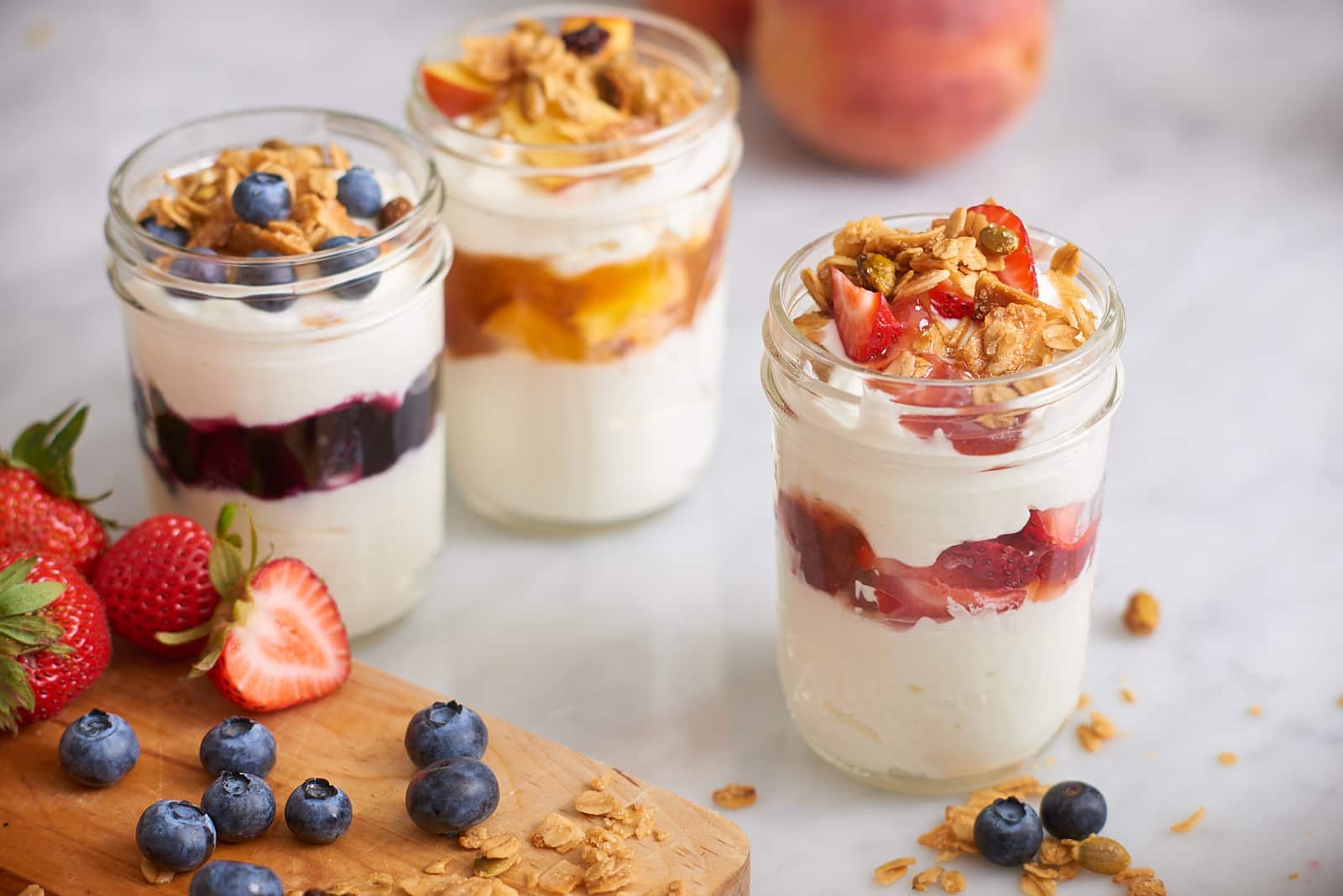
Finally, if you’re feeling adventurous, make your own "fruit bottom" jars for the week. Simmer a handful of frozen berries with a splash of maple syrup for 10 minutes, let it cool, and spoon it into the bottom of four Mason jars. Top with plain Greek yogurt. It’ll stay good for five days, and honestly, it’ll taste better than anything you can buy in a plastic peel-top cup. You get the nostalgia without the corn syrup.
The bottom line is that the "fruit on the bottom" format isn't going anywhere. It satisfies our need for a little DIY project and a lot of sugar, all packaged in a convenient little tub. Whether you stir it, scoop it, or eat it in vertical layers, it remains the ultimate customizable snack. Just remember to check the sugar label before you dive in.