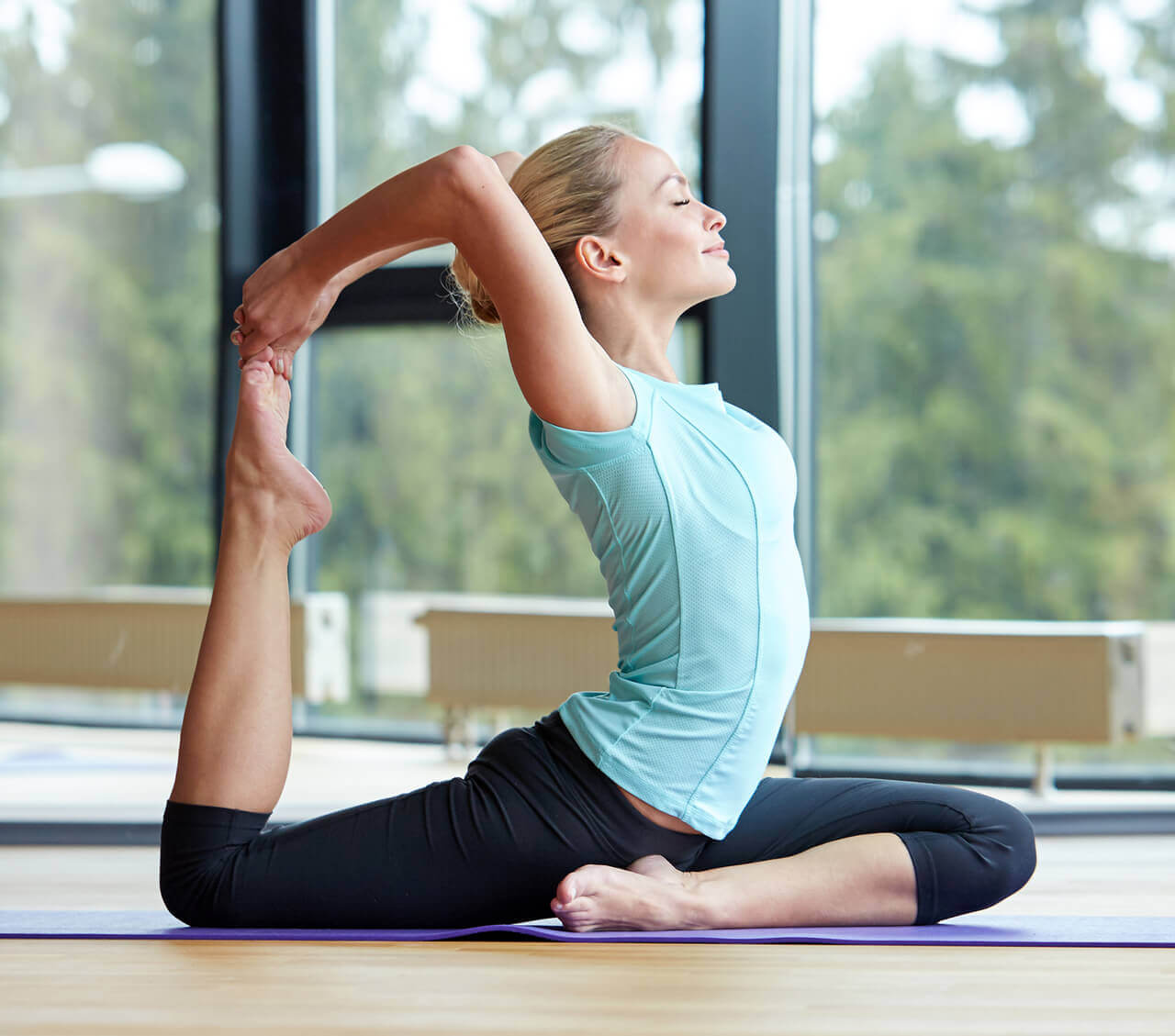
We’ve all seen it. Someone on Instagram is folded into a human pretzel, heels touching their head, while you’re over here struggling to touch your shins without your hamstrings screaming for mercy. It’s frustrating. But honestly? Most of that "yoga-gram" stuff isn't about health; it's about performance art. If you’re looking for a yoga workout for flexibility that actually makes your daily life easier—like putting on socks or reaching the top shelf—the approach needs to be less about "pushing" and way more about biology.
Flexibility is weird. It’s not just about how long your muscles are. It’s mostly about your nervous system. Your brain has a "stretch reflex," basically a security guard that says, "Hey, if you go any further, I’m going to snap, so I’m locking everything down." When you do a yoga workout for flexibility, you aren't just stretching tissues; you’re convincing your brain that it’s safe to let go. If you enjoyed this piece, you should look at: this related article.
Stop Pulling Your Muscles Like Rubber Bands
Most people approach stretching like they’re trying to lengthen a piece of cold plastic. Bad idea. You can’t just yank on a muscle and expect it to stay long. In fact, if you pull too hard, you trigger the Golgi Tendon Organ (GTO), which causes the muscle to contract even harder to protect the joint. You’ve probably felt this: that shaky, "get me out of here" feeling when you’re in a deep forward fold.
Instead of force, think about eccentric loading. This is where the magic happens. A study published in the Journal of Strength and Conditioning Research showed that eccentric training (strengthening a muscle while it’s lengthening) can be just as effective—if not more so—than static stretching for increasing range of motion. For another perspective on this story, see the latest coverage from National Institutes of Health.
Yoga does this naturally if you do it right. Take Warrior II. You aren't just standing there. You’re actively pulling your feet away from each other while keeping your torso centered. That tension is what tells your nervous system, "We are strong in this long position." Strength equals safety. Safety equals flexibility.
The Problem with the "All-Day Desk" Spine
If you sit for eight hours, your hip flexors are basically in a permanent state of contraction. They get "short" and "tight," which pulls your pelvis forward and makes your hamstrings feel tight too. But here’s the kicker: your hamstrings might not actually be short. They might be over-lengthened and tense because they’re trying to pull your pelvis back into place.
If you just keep stretching your hamstrings without addressing your hips, you’ll never get anywhere.
Try this: Low Lunge (Anjaneyasana). But don't just dump your weight into your hips. Squeeze your glute on the back leg. Seriously, squeeze it hard. This uses reciprocal inhibition—a fancy way of saying when one muscle contracts (the glute), the opposite muscle (the hip flexor) is forced to relax. It's a hack for your nervous system.
A Real Yoga Workout for Flexibility (Movements That Actually Work)
Forget the 90-minute classes for a second. You need a handful of moves that hit the high-yield areas: the hips, the thoracic spine, and the posterior chain.
The Dynamic Warm-Up
Never start cold. You wouldn't try to bend a frozen Snickers bar. Start with Cat-Cow. It’s basic, yeah, but it lubes up the spinal discs and gets the synovial fluid moving. Do it for two minutes. Don't rush. Feel every single vertebra moving like a wave.
The "World's Greatest" Modified
In the yoga world, we call this a Twisted Lunge.
- Step your left foot forward into a deep lunge.
- Put your right hand on the floor.
- Reach your left arm to the sky.
- Now—and this is the key—try to bring your left elbow down to the inside of your left arch.
This hits the inner thighs (adductors), the outer hip, and the mid-back all at once. It’s efficient. It's kinda uncomfortable. That's how you know it's working.
PNF Stretching: The Secret Weapon
Proprioceptive Neuromuscular Facilitation (PNF) is what physical therapists use, and you can bake it into your yoga. Let's look at Pyramid Pose. Instead of just hanging over your front leg, try this:
- Get into the pose.
- Press your front heel into the mat as hard as you can for 5 seconds (contracting the hamstring).
- Relax and sink deeper for 10 seconds.
- Repeat three times.
You’ll find you gain more "room" in thirty seconds than you would in five minutes of passive hanging.
Why Your Breath is Non-Negotiable
If you’re holding your breath, you’re wasting your time.
The diaphragm is linked to the vagus nerve, which controls your parasympathetic nervous system (the "rest and digest" mode). When you take long, slow exhales, you’re signaling to your brain that there is no predator chasing you. When the brain feels safe, it releases the tension in your muscles.
Try a 4-7-8 count. Inhale for 4, hold for 7, exhale for 8. Do this while in a Pigeon Pose. Pigeon is notorious for being "the emotional pose" because we carry so much stress in our pelvic floor. If you fight the pose, your hips will fight back. Breathe into the discomfort until it turns into a dull ache, then a release.
Common Mistakes That Kill Progress
- Locking your knees: This just puts stress on the ligaments. Keep a "micro-bend." You want the stretch in the muscle belly, not the joint.
- Rounding the lower back: In a seated forward fold, most people round their spine to reach their feet. Don't. It’s better to have bent knees and a flat back. Your spine will thank you later.
- Consistency over intensity: Stretching once a week for two hours is useless. Stretching for 10 minutes every single day is life-changing.
The Fascia Factor
Flexibility isn't just about muscles; it's about fascia. Fascia is the connective tissue webbing that wraps around everything in your body. It’s like a thin layer of saran wrap. When you stay in one position too long, the fascia gets "sticky" (cross-linking).
To break this up, you need multi-directional movement. Don't just move forward and back. Move side to side. Rotate. In a Wide-Legged Forward Fold, wag your "tail." Shift your weight from the left foot to the right foot. This "shears" the fascia and helps it become more hydrated and slidey.
Actionable Steps for Your Next Session
You don't need a fancy mat or a $120 pair of leggings. You just need a floor and a little bit of patience.
- Test your baseline: Stand up and reach for your toes. See where you land. Don't judge it, just note it.
- Spend 5 minutes on your hips: Use the Low Lunge with a glute squeeze. Spend at least 90 seconds per side. Tissues take time to deform; 30 seconds isn't enough to create lasting change.
- Address the "Tech Neck": Spend 3 minutes in Sphinx Pose. Lie on your belly, prop yourself on your elbows, and pull your chest through your shoulders. This reverses the "hunch" from looking at your phone.
- End with a long hold: Spend 3-5 minutes in Butterfly Pose (bound angle). Let gravity do the work. Focus entirely on making your exhales longer than your inhales.
- Re-test: Reach for your toes again. Usually, you'll find an extra inch or two of space immediately.
Flexibility is a slow game. It’s about convincing your nervous system that it’s okay to be vulnerable. Stop treating your body like an enemy to be conquered and start treating it like a partner to be negotiated with.
Start today by simply sitting on the floor while you watch TV. Vary your leg positions. Fold forward. Lean back. Just move. The best yoga workout for flexibility is the one that happens consistently, in the small gaps of your day, rather than the one you do once a month when you're feeling guilty.