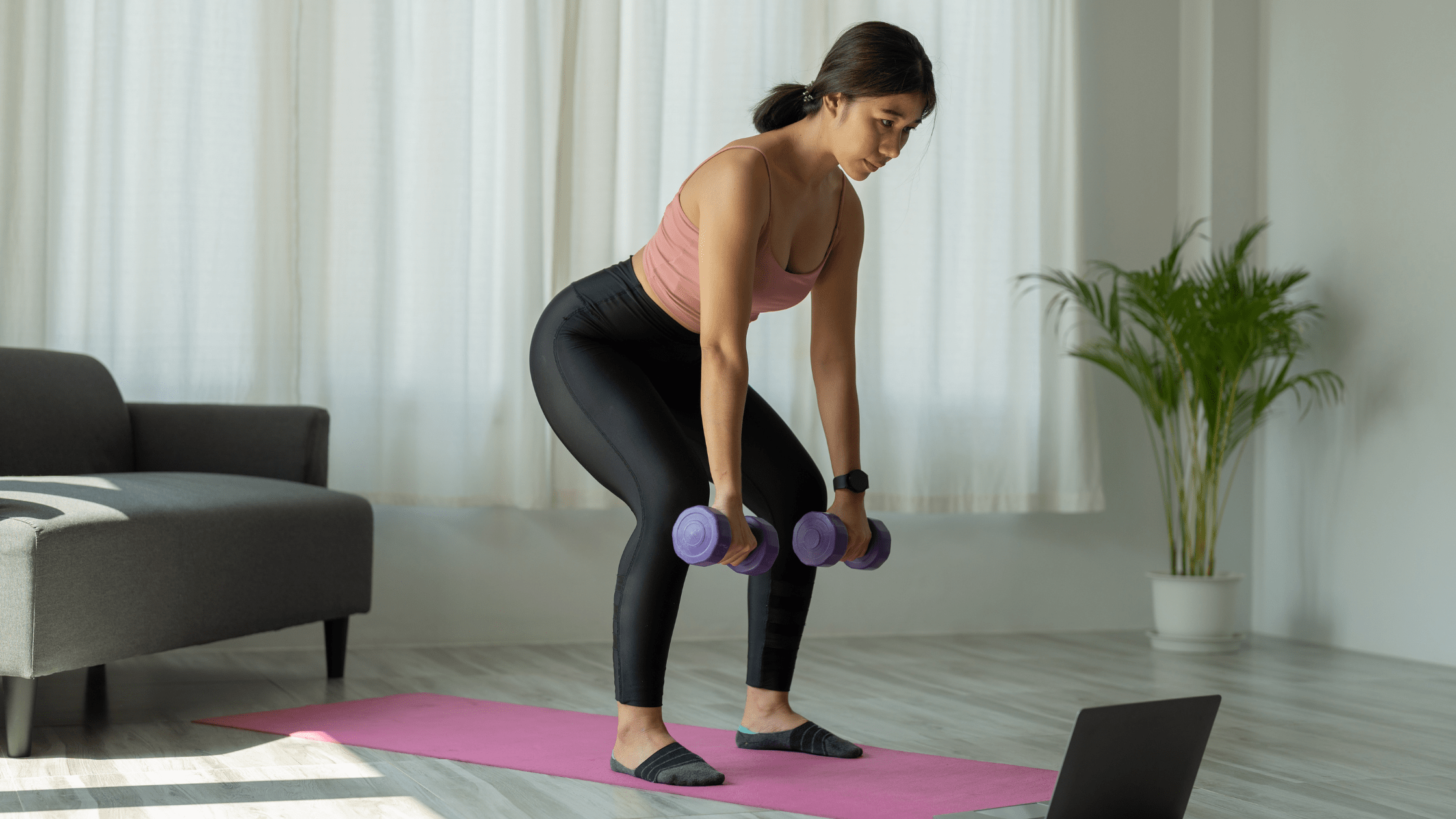
You’ve seen it at the gym. There is the person in the weight room, grunting through a heavy deadlift set, muscles bulging, but unable to touch their toes if their life depended on it. Then, down the hall in the studio, there is the yogi flowing through a graceful Sun Salutation, flexible as a noodle, yet struggling to hold a basic plank for more than thirty seconds without their core shaking like a leaf in a hurricane.
It’s a weird divide.
For years, we’ve been told these two worlds don't mix. People think lifting weights makes you "bulky" and stiff, or that yoga is just "stretching" for people who don't want to work hard. Honestly? Both of those takes are dead wrong. Yoga with strength training is actually the missing link most people need to finally break through a fitness plateau.
If you want to move well into your 80s, you need both. You need the structural integrity of muscle and the functional range of motion that yoga provides. It isn't just about "balancing" your routine; it’s about a physiological synergy that protects your joints and makes you actually powerful, not just "gym strong."
The Science of Cross-Training: Why Your Muscles Are Bored
Muscle tissue is incredibly adaptable. If you only lift heavy weights in a linear fashion—think bench presses or squats—your nervous system gets really good at that specific track. But life doesn't happen in a straight line. Life is messy. You trip over a curb. You reach for a heavy grocery bag in the backseat.
When you combine yoga with strength training, you’re teaching your body to handle load in "end-range" positions. Most injuries happen when a joint is at its weakest point of extension. According to a study published in the Journal of Physical Therapy Science, integrating yoga into a traditional fitness regimen significantly improved balance and flexibility without sacrificing power output. Basically, you get the best of both worlds.
Think about the "eccentric" phase of a movement—the lowering part. In a yoga class, when you slowly lower from a high plank to Chaturanga, you are performing an eccentric contraction that builds serious stability in the rotator cuff. Most lifters ignore these tiny stabilizer muscles until they tear something. Integrating yoga is like buying an insurance policy for your shoulders and hips.
The Myth of the "Bulky" Yogi
Let’s address the elephant in the room. Some people avoid weights because they’re afraid of losing their "yoga body." Here is the reality: muscle is metabolically active tissue. Adding external resistance—whether that’s dumbbells, kettlebells, or a barbell—helps maintain bone density, which is non-negotiable as we age.
Dr. Wolff’s Law states that bones adapt to the loads under which they are placed. If you only do bodyweight yoga, your bones are only getting a certain level of stimulus. When you add a 20-pound weight to a lunging yoga pose, you’re telling your femur and hip socket to get stronger.
It’s not about getting huge. It’s about getting dense.
How to Structure Your Week Without Burning Out
You can't just smash a heavy leg day and then go to a 90-minute Power Yoga class the next morning and expect to feel great. You’ll feel like a wreck. You have to be smart about it.
I’ve seen people try to do "everything at once" and end up with tendonitis in three weeks. Instead, think about your nervous system. Heavy lifting is a high-CNS (Central Nervous System) activity. Restorative yoga is a low-CNS activity. Vinyasa is somewhere in the middle.
A sample split that actually works:
- Monday: Heavy Pull (Deadlifts/Rows) + 10 mins of gentle Yin Yoga
- Tuesday: Vinyasa Flow (Focus on mobility and heart rate)
- Wednesday: Heavy Push (Presses/Squats) + Hip opening stretches
- Thursday: Active Recovery (Walking or a very light yoga flow)
- Friday: Full Body Strength (Functional movements)
- Saturday: "Peak" Yoga Class (Pushing your flexibility)
- Sunday: Total Rest
Notice that the yoga changes based on what the lifting did to the body. If your hamstrings are fried from deadlifts, you don't go into a yoga class and try to force a split. You use the yoga to flush the tissue and find some length.
Why Your Breath is the Secret Weapon
Most lifters hold their breath. They use the Valsalva maneuver to create intra-abdominal pressure. It’s great for a 400-pound squat, but it keeps you in a sympathetic (fight-or-flight) state.
Yoga teaches Ujjayi breath. It’s that ocean-sounding breath through the nose. When you bring that nasal breathing into your strength training, your heart rate stays lower. You recover faster between sets. You stop panicking when the weight gets heavy. Honestly, the mental edge you get from learning how to breathe under the "stress" of a yoga pose is the exact same mental edge you need when you're grinding out the last rep of a shoulder press.
Common Mistakes: What Most People Get Wrong
The biggest mistake? Treating yoga as "just a warmup."
If you treat yoga as a throwaway 5-minute stretch, you aren't doing yoga. You're just stretching. True yoga with strength training requires you to respect the alignment of the poses. If your alignment is trash in a Warrior II, your alignment will probably be trash when you’re doing a weighted lunge.
Another big one: Ego. Lifting people often come into a yoga studio and try to "win" at yoga. They push into poses their joints aren't ready for because they have the muscle to force it. This is a fast track to a torn labrum or a popped hamstring. Conversely, yogis often go into the weight room and use weights that are too light to actually cause an adaptation because they’re "scared of getting tight."
You have to be willing to be a beginner in both spaces.
Real Examples of the Synergy in Action
Take the Turkish Get-Up. It’s a classic strength move. You start lying down with a kettlebell held high and you end up standing. It requires massive shoulder stability, hip mobility, and core integration. It is essentially a series of yoga poses—like Side Plank and Low Lunge—performed under a heavy load.
If you practice yoga, your Turkish Get-Up will be smoother. If you practice the Get-Up, your Side Plank will feel like a vacation.
Or look at the Pistol Squat. It’s a holy grail for many fitness enthusiasts. It requires the ankle mobility of a yogi and the quad strength of a powerlifter. You can't get there by just doing one or the other. You need the eccentric control from the weights and the "opening" of the Achilles tendon and hips from the yoga.
The Nuance of Proprioception
Proprioception is just a fancy word for knowing where your body is in space.
Strength training builds a sense of "power" in space. Yoga builds a sense of "placement" in space. When you combine them, your athleticism skyrockets. You start to move with a kind of feline grace that a pure bodybuilder just doesn't have. You become "supple."
I remember talking to a D1 strength coach who started making his linemen do yoga once a week. They hated it at first. They felt clumsy. But within a month, their "first step" off the line was faster because their hips weren't jammed up. They were more explosive because they could actually access the full range of their muscles.
Actionable Steps to Get Started
If you’re ready to stop choosing sides, don't overcomplicate it.
1. Identify your "tight" spots first. Don't just do random yoga. If your chest is tight from bench pressing, find yoga poses like Matsyasana (Fish Pose) or Ustrasana (Camel) to counter that. If your hips are locked up from sitting and squatting, focus on Anjaneyasana (Low Lunge).
2. Add "Load" to your Flow. Try holding a 5-pound dumbbell during a slow sun salutation. It sounds easy. It is not. It changes the center of gravity and forces your core to work triple time to stabilize the weight as you move through space.
3. Use Yoga for Recovery. On your off-days from the gym, do a 20-minute restorative session. Use blocks. Use bolsters. Allow your nervous system to drop into a parasympathetic state. This is when your muscles actually grow. Growth doesn't happen in the gym; it happens when you're resting. Yoga facilitates that rest better than sitting on the couch watching Netflix.
4. Track your mobility, not just your PRs. Keep a log. Can you reach further in your seated forward fold this month? Great. Did your overhead press feel "smoother" because your shoulders are more open? That’s a win.
5. Find a "Yoga for Athletes" class. If you're intimidated by the spiritual side of yoga, look for "Power Yoga" or "Yoga for Athletes" at your local gym or studio. These classes usually skip the chanting and focus on the biomechanics, which is a great entry point for someone used to a traditional gym environment.
At the end of the day, your body doesn't know the difference between a "yoga pose" and a "gym exercise." It only knows tension, load, and range of motion. By bridging the gap between yoga with strength training, you aren't just working out—you're building a body that is actually capable of handling whatever life throws at it.
Start small. Maybe it’s just ten minutes of yoga after your next leg day. Maybe it’s picking up a kettlebell once a week if you’re a dedicated yogi. Just do something to challenge the way you usually move. Your joints will thank you in twenty years.