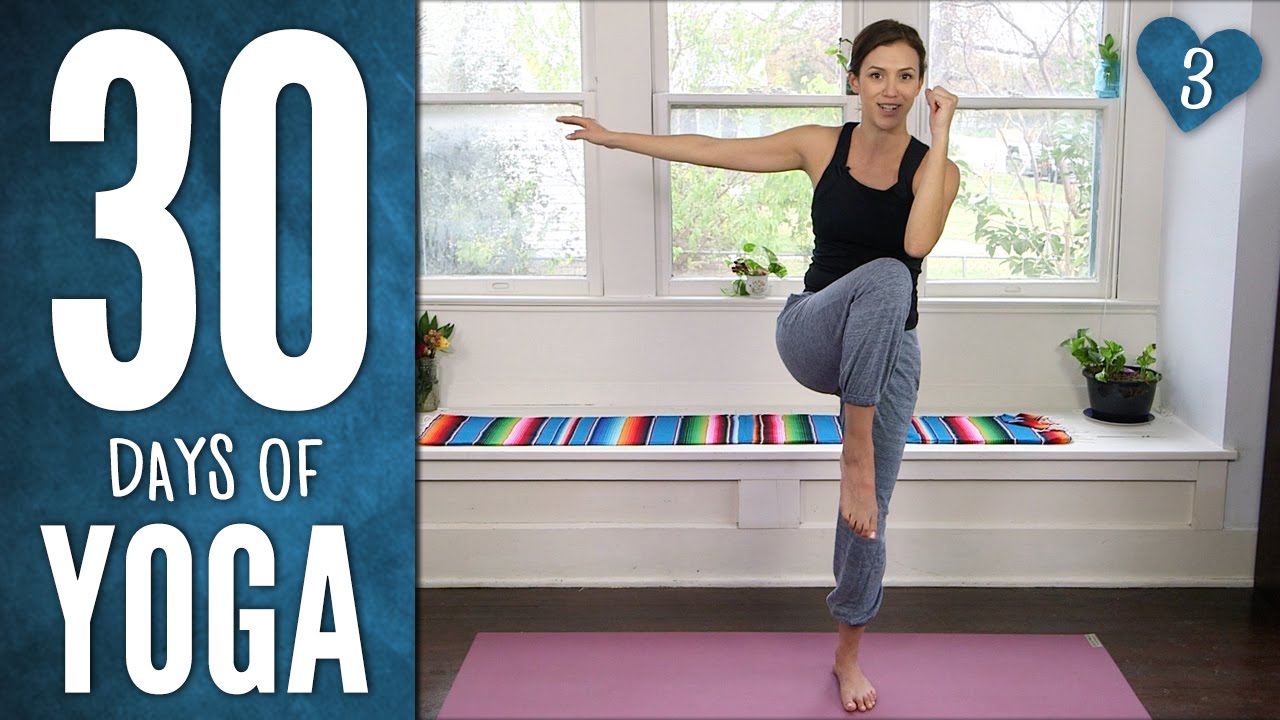
It happens every January. The festive lights come down, the leftover fudge starts looking a bit grim, and suddenly, millions of people are staring at their dusty yoga mats. In 2022, Adriene Mishler dropped Yoga with Adriene Move, her eighth annual 30-day yoga series. Most people expected another month of "stretch and breathe." What they got was a subtle shift in philosophy that actually changed how we look at home practice.
You know that feeling where you're trying to build a habit but your brain just says "no"? Move was designed to tackle that specific wall.
It wasn't just about the physical poses. Honestly, if you've done a few of her series—like Home or Breath—you know the drills. You’ll do your downward dogs. You’ll definitely do some cat-cows. But Move felt... grittier. It wasn't about achieving a "zen" state through forced stillness. It was about the literal mechanics of getting off the couch and onto the floor.
The Core Philosophy Behind Move
Adriene has this way of talking to the camera like she’s your slightly eccentric but very grounded friend. With Yoga with Adriene Move, the focus shifted toward "functional foundation." This wasn't just flow for the sake of flow.
I remember Day 1 of the series. It was called "Welcome." Usually, Day 1 is a gentle "hello" to your mat. But even then, there was this underlying message: movement is a choice, not a chore. The series was released during a time when the world was still collectively shaking off a lot of stagnation. We were stiff. We were tired. Move addressed that head-on.
One of the most interesting things about this specific 30-day journey is how it balances strength with mobility. Some days are deceptively hard. You think you're just doing a lunge, and then suddenly your glutes are screaming because you've been holding it for thirty seconds while she talks about her dog, Benji.
Why the 30-Day Format Works
Habit formation is a fickle beast. Research from University College London suggests it takes about 66 days for a behavior to become automatic, not the 21 days we were all told in the 90s.
By giving us 30 days, Adriene gets us halfway there.
- It creates a "low stakes" environment.
- The videos vary in length, usually between 15 and 30 minutes.
- There's no equipment needed besides a mat (and maybe a couple of sturdy books if you don't have blocks).
The brilliance of Yoga with Adriene Move is the sequencing. It doesn't just throw you into the deep end. It builds. You spend the first week just finding your footing. By week three, you're doing things with your core that you didn't think were possible on a Tuesday morning before coffee.
The Physicality: What to Actually Expect
Let’s be real for a second. Yoga can be intimidating. If you look at Instagram, it’s all people doing handstands on beaches.
Move is the opposite.
There’s a lot of focus on the spine. Adriene often talks about "finding what feels good," which has become her catchphrase, but in Move, it feels more like "finding what feels functional." There are days focused on "Cores" and "Foundation." You’ll do a lot of planks. You will probably hate the planks. But the way she sequences them with restorative movements makes it bearable.
Key Sequences in the Series
One standout session is Day 12, "Curate." It sounds fancy, but it’s basically about organizing your body. You spend time in "Bird-Dog" and "Tabletop," focusing on the tiny micro-adjustments that prevent back pain. For anyone who sits at a desk all day, this is the "secret sauce" of the whole series.
Then you have Day 21, "Flow." By this point, the training wheels are off. It’s faster. It’s more athletic. But because you’ve spent the last 20 days building that "Move" foundation, it doesn't feel like a shock to the system.
Mental Health and the "Move" Mindset
We can't talk about Adriene without talking about the mental aspect. She’s not a licensed therapist, but the way she integrates mindfulness is backed by plenty of E-E-A-T (Experience, Expertise, Authoritativeness, and Trustworthiness) principles.
Yoga has been shown in numerous studies—like those published in the Journal of Physical Activity and Health—to significantly reduce cortisol levels.
In Yoga with Adriene Move, the mental work isn't about clearing your mind. It’s about noticing your mind. If you’re frustrated because you can’t touch your toes, she tells you to notice that frustration. Don't fight it. Just see it. That "noticing" is a core tenet of Mindfulness-Based Stress Reduction (MBSR).
What Most People Get Wrong About This Series
A lot of beginners jump into Move thinking it's a weight loss program.
It’s not.
Can you lose weight doing 30 days of yoga? Sure, if your diet and other habits align. But if you're coming to Move looking for a high-intensity interval training (HIIT) workout, you’re in the wrong place. Move is about longevity. It’s about being able to pick up your groceries without throwing out your back when you’re 70.
Another misconception is that you have to do it perfectly every day.
Life happens. Maybe you miss Day 14 because your kid got sick or your boss stayed late. The "Move" community (which is massive, by the way—check the YouTube comments if you want to see a surprisingly wholesome corner of the internet) is very big on the "just show up when you can" vibe.
Why Move Still Matters Today
Even though newer series like Center or Flow have come out since, people keep circling back to Move.
Why?
Because it’s balanced. It’s the "Goldilocks" of her series. It’s not as slow as Breath, but it’s not as intensely spiritual as some of the others. It’s practical.
The production value is also great. The lighting is soft, the audio is crisp, and Benji the Blue Heeler is usually napping in the background. It feels like you’re in a room with a real person, not a fitness robot.
Actionable Steps to Get Started with Move
If you’re ready to actually do this, don’t just "try" to do it. Have a plan.
- Clear your space. You don't need a yoga studio. Just enough room to lie down without hitting your head on the coffee table.
- Commit to 10 minutes. Tell yourself you’ll only do the first 10 minutes of the video. Usually, once you’re on the mat, you’ll finish the whole thing. If you don't? Ten minutes is still better than zero.
- Ignore the ego. Your downward dog might look like a sad tent. That’s fine. Yoga isn't about the shape of the pose; it's about the feeling of the breath.
- Find a "Mat Buddy." Whether it's a friend or just posting your progress in a Facebook group, accountability helps.
- Use props. Grab a couple of thick pillows or a folded-up blanket. They make a world of difference for your knees.
Yoga with Adriene Move isn't a magic pill. It won't solve all your problems or suddenly make you a flexible gymnast. But it will help you reconnect with your body in a way that feels honest and sustainable. It’s about the "Move" from stagnation to action.
The best time to start was yesterday. The second best time is right now. Put on some sweatpants, find the Day 1 video on YouTube, and just see what happens when you decide to move.
Technical Breakdown of the Series Structure
The series follows a specific arc that mimics a traditional fitness "periodization" schedule, though it’s hidden behind Adriene’s gentle cuing.
- Days 1–7: Initiation. Waking up the joints. High focus on breathing and basic alignment.
- Days 8–15: Integration. Starting to link breath with movement (Vinyasa). This is where the "burn" starts to happen.
- Days 16–23: Exploration. Introducing more balance poses and core-heavy sequences.
- Days 24–30: Celebration. Faster flows and a focus on gratitude and "closing the loop."
By the time you hit Day 30, you aren't just doing yoga; you're living a more mindful version of your daily life. That's the real goal.
Next Steps for Your Practice
Once you finish the 30 days of Move, don't just stop.
- Repeat the "Heavy Hitters": Pick your three favorite videos from the series and keep them in a rotation for a week.
- Deepen the Breath: If you found the breathing difficult, consider looking into the Breath series next, which focuses more on Pranayama.
- Listen to your body: If a certain joint felt "off" during the 30 days, now is the time to look up specific therapeutic yoga videos for that area (like "Yoga for Runners" or "Yoga for Lower Back Pain").
Consistency beats intensity every single time.
Keep your mat rolled out where you can see it. It’s a visual cue for your brain. Even if you just sit on it for five minutes tomorrow, you’re still keeping the momentum of the Move journey alive.