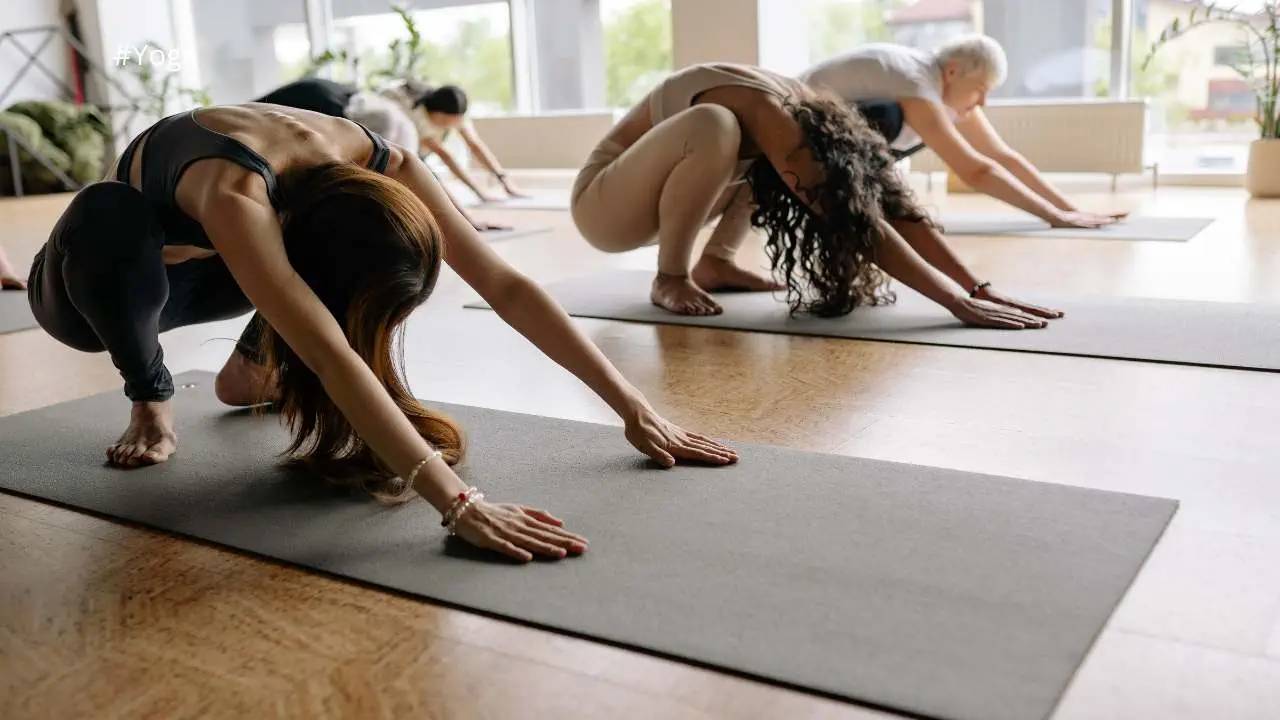
You're staring at a screen, probably in your pajamas, wondering if you're about to snap a hamstring. It's a weird feeling. There are thousands of people on YouTube with perfect leggings and sun-drenched studios telling you to "just breathe," but your hamstrings feel like rusted bridge cables. Finding the right yoga videos for beginners is honestly a minefield of over-complicated poses and "spiritual" talk that might not be your vibe.
Yoga isn't just stretching. It isn't just for flexible people. In fact, if you're stiff as a board, you're exactly who needs it. But the barrier to entry is high because the internet is flooded with "beginner" content that actually requires the core strength of a gymnast.
Let’s be real. If a video asks you to do a "vinyasa" in the first three minutes without explaining what that even means, it’s not for a beginner.
The Search for the Right Teacher
Most people start their journey with Adriene Mishler. Yoga with Adriene is basically the gold standard for a reason. Her "30 Days of Yoga" series has helped millions because she doesn't take it too seriously. She has a dog named Benji. He sleeps on the mat. It makes the whole thing feel less like a scary workout and more like hanging out with a friend who happens to be really good at downward dog.
But maybe her style is too slow for you. That happens.
If you want something a bit more anatomical, you look at someone like Kassandra Reinhardt. She focuses on Yin Yoga. This is different. You aren't flowing; you're holding poses for a long time. It sounds easy until you've been in a pigeon pose for three minutes and start questioning every life choice you've ever made. For people with desk jobs and tight hips, these types of yoga videos for beginners are a godsend, even if they're a bit intense.
Then there’s the "bro yoga" or "power yoga" side of things. Guys like Sean Vigue or the Yoga with Tim channel. They cut some of the fluff. If the "om-ing" and the incense talk makes you roll your eyes, these are the creators you should be looking for. They treat it more like a mobility session for athletes. It’s effective. It’s sweaty. It works.
Why Your Body Feels Like It’s Breaking (And Why That’s Okay)
The first time you try a yoga video for beginners, you will probably feel clumsy. Your wrists might hurt. Your feet might cramp. This is normal.
According to a study published in the International Journal of Yoga, the primary physical benefits for beginners aren't even about flexibility—it's about proprioception. That's a fancy word for knowing where your body is in space. When you're following a video, you're training your brain to talk to your muscles in a way it hasn't since you were a kid on a playground.
- Wrists: If they hurt, you're dumping too much weight into your palms. Claw the mat with your fingertips.
- Lower Back: If it pinches during a fold, bend your knees. Seriously. Bend them a lot.
- Neck: Stop looking at the screen every two seconds. Listen to the cues. Every time you crane your neck to see the instructor, you’re risking a strain.
The Equipment Myth
You do not need a $120 Manduka mat. You really don't.
Sure, a cheap $10 mat from a big-box store will eventually peel and leave little purple flakes all over your floor, but it gets the job done for the first month. What you actually need are props. If you don't have yoga blocks, use thick hardcover books. Use a belt or a towel instead of a yoga strap. The goal is to bring the floor to you. If your hands can't reach the ground in a forward fold, put your hands on a chair.
Yoga is about meeting your body where it is, not forcing it into a shape it's not ready for.
How to Spot a Bad "Beginner" Video
There are red flags. If the instructor starts the video with a headstand? Click away. If they use Sanskrit terms like Adho Mukha Svanasana without translating them to Downward Facing Dog? They aren't teaching beginners.
A good beginner video should focus on:
- Breathwork: If they aren't telling you when to inhale and exhale, they're just giving you calisthenics.
- Alignment: They should explain where your heels are supposed to be, not just "look like me."
- Modifications: A real expert knows that not everyone can touch their toes. They should be showing you the "easy" version alongside the full expression.
The Science of Showing Up
The Harvard Health Publishing team has noted that yoga can significantly lower your heart rate and help with anxiety, but only if it's consistent. Doing one 60-minute video once a week is nowhere near as effective as doing a 10-minute video every morning.
The brain loves rhythm.
When you search for yoga videos for beginners, look for "10-minute" or "15-minute" sessions first. Jumping into a full hour is a recipe for burnout. You'll get bored, your mind will wander to your grocery list, and you'll quit by the twenty-minute mark. Start small. It’s better to do five minutes of sun salutations than zero minutes of a masterclass.
Beyond the Physical
We talk about the "yoga glow," which sounds like some New Age nonsense. But there’s a biological component. Controlled breathing—pranayama—triggers the parasympathetic nervous system. It tells your "fight or flight" response to pipe down.
In a world where our phones are constantly screaming at us, sitting on a mat for fifteen minutes and just focusing on the air moving in and out of your lungs is a radical act. It’s probably the only time in your day when you aren't "productive" in the traditional sense.
And that’s the point.
Common Mistakes to Avoid
- Holding your breath: This is the #1 mistake. If you're holding your breath, your muscles are tensing up to protect you, which is the opposite of what you want.
- Comparing yourself to the screen: That instructor has been doing this for fifteen years. They are literally paid to be flexible. You are a person with a job and a life.
- Skipping Savasana: That’s the part at the end where you just lie there. Don't skip it. It’s the most important part of the practice because it lets your nervous system reset.
Finding Your Path
There isn't one "best" way to do this. You might find that you hate Vinyasa but love Hatha. You might find that you prefer a male instructor’s voice over a female one. That’s fine.
The internet has democratized health in a way that’s pretty incredible. You have world-class teachers available for the price of an internet connection. But the sheer volume of choices can be paralyzing. Don't overthink it.
Pick a video. Any video. If you hate it after five minutes, turn it off and try a different one. The only way to fail at yoga is to stop trying to find the style that fits your specific, unique, and probably very tight body.
Actionable Next Steps
- Clear a dedicated space: It doesn't have to be a room. Just a corner where you don't have to move a coffee table every single time. Friction is the enemy of habits.
- Commit to a 7-day challenge: Search for "7 days of yoga" rather than 30. It’s a lower psychological hurdle.
- Invest in blocks: If you decide to stick with it for more than two weeks, buy two foam blocks. They are the single best investment you can make for your alignment.
- Listen to your joints: Muscle soreness is fine. Sharp pain in a joint is a signal to stop immediately. No "no pain, no gain" in yoga.
Yoga is a practice, not a performance. The videos are just a guide. Your own body is the real teacher, and it’s time you started listening to what it’s trying to tell you.