Getting older usually feels like a series of small negotiations with your own body. You wake up, and your lower back has a "vibe" it didn’t have yesterday. Or maybe you notice that reaching for the top shelf in the kitchen involves a weird, jerky movement you never used to think about. This is where most folks start looking into yoga poses for old people, but there's a problem. Most of the stuff you see on social media—those ultra-bendy people in Lululemon leggings doing handstands—is basically useless for someone dealing with arthritis or a hip replacement. It’s intimidating. It’s also kinda dangerous if you don’t know what you’re doing.
Movement is non-negotiable.
The science is pretty clear on this. According to a study published in the Journal of Physical Therapy Science, yoga significantly improves balance and physical mobility in older adults, which is the biggest factor in preventing falls. Falls are a huge deal. They are the leading cause of injury-related death for those over 65. So, when we talk about yoga poses for old people, we aren't just talking about "stretching." We’re talking about life insurance you can do on a mat.
The Myth of the "Perfect" Pose
Forget about touching your toes. Honestly, who cares? If you can’t touch your toes today, you might not be able to do it in six months either, and that’s perfectly fine. The goal for seniors isn't flexibility for the sake of looking like a pretzel; it’s functional range of motion. You want to be able to put on your shoes without groaning. You want to be able to look over your shoulder when you’re backing the car out of the driveway.
Dr. Loren Fishman, a physical medicine and rehabilitation specialist at Columbia University, has done extensive research on yoga for osteoporosis. He’s found that even short bursts of yoga can increase bone density. But here’s the kicker: you have to do it with the right alignment, or you’re just putting unnecessary stress on fragile joints.
Why the Chair is Your Best Friend
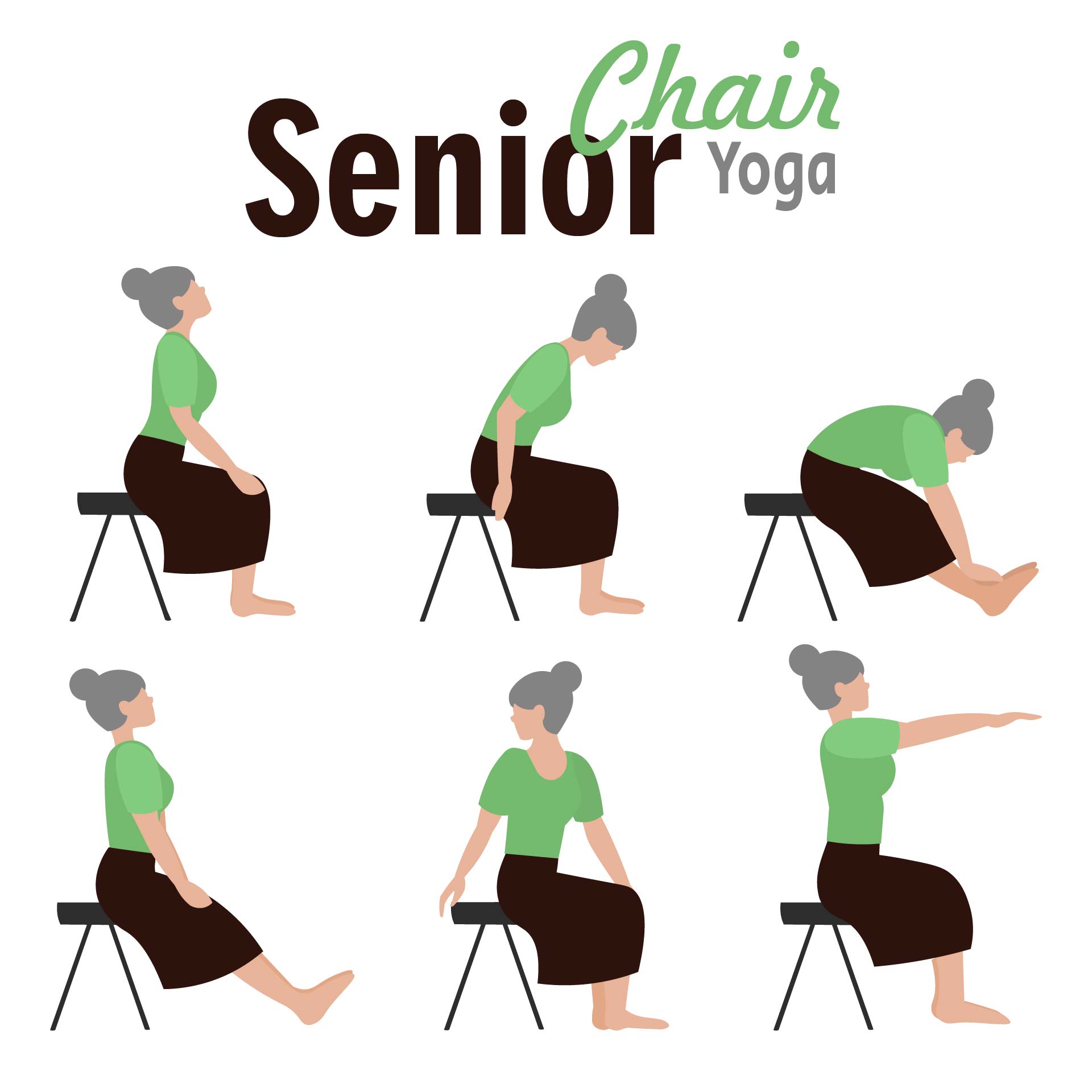
Most "beginner" yoga classes start on the floor. That’s a mistake. Getting down to the floor is hard, but getting back up? That’s the real workout. For many, the best way to start exploring yoga poses for old people is by using a sturdy, armless chair.
Seated Cat-Cow is a game-changer for spinal health. You sit tall, hands on your knees. As you inhale, you arch your back slightly and look up. As you exhale, you round your spine like a grumpy cat. It’s simple. It’s effective. It lubricates the vertebrae without making you dizzy or risking a fall.
Then there’s the Seated Twist. You sit sideways in the chair, using the backrest for leverage to gently rotate your torso. This isn’t about cranking your spine around like you’re trying to crack a safe. It’s a soft nudge. Research from the International Journal of Yoga suggests that this kind of gentle twisting can help with digestive issues, which—let's be real—get more common as the years pile up.
Balance: The "Use It or Lose It" Skill
Proprioception is a fancy word for knowing where your body is in space. As we age, our nerves get a bit frayed, and that sense of balance starts to dull. Tree Pose (Vrksasana) is the gold standard here, but please, for the love of all things holy, keep a hand on a wall or a sturdy table.
You stand tall. You shift your weight to one leg. You place the other foot on your ankle—never the knee. The knee isn’t meant to take sideways pressure. If you feel steady, maybe you lift one hand. Maybe you don’t. The mere act of "micro-wobbling" in your standing ankle is your brain and muscles re-learning how to talk to each other. It’s fascinating how quickly the body remembers these patterns if you give it a chance.
Warrior II: Building Bone Density Without the Gym
If your knees are okay with it, standing poses like Warrior II are incredible for building leg strength. You step your feet wide, turn one foot out, and bend that knee. You stretch your arms out like you’re reaching for two different zip codes.
The weight-bearing aspect is what matters. When you hold this pose, you’re telling your femur and your hip sockets that they need to stay strong. It’s a signal to the body to keep depositing calcium. According to the Oxford University Press, weight-bearing exercise is one of the few ways to naturally combat sarcopenia (muscle loss) and bone thinning.
What No One Tells You About Breathing
Yoga isn't just "stretching with incense." It’s mostly about the breath. As we get older, our lung capacity naturally decreases as the diaphragm weakens and the rib cage gets stiffer. Most people breathe shallowly into their chest.
In a proper yoga practice, you learn "belly breathing." You let the stomach expand. You fill the lower lobes of the lungs. This does something magic to the nervous system—it flips the switch from "fight or flight" to "rest and digest." If you’re dealing with the chronic stress of health issues or just the general anxiety of aging, this is probably the most "expert" tip there is. Control the breath, control the brain.
The Danger Zones: When to Back Off
We need to talk about ego. It’s the biggest cause of injury in senior yoga. You might remember being able to do certain things in your 30s, and your brain still thinks you can. Your hamstrings might disagree.
- Glaucoma: If you have high eye pressure, stay away from any pose where your head is lower than your heart. No Downward Dog. No forward folds. It increases intraocular pressure, which is bad news.
- Joint Replacements: If you have a ceramic hip or a titanium knee, certain rotations are off-limits. Talk to your surgeon. They usually hate yoga because they see the "pretzel" version of it. Explain that you’re doing "functional mobility," and they’ll usually give you a list of forbidden angles.
- Spinal Stenosis: Extreme backbending is a no-go. Keep things neutral.
Tying it All Together
Starting a routine of yoga poses for old people doesn't mean you need to join a studio or buy fancy gear. You can do this in your pajamas. You can do it while the coffee is brewing.
The goal is consistency, not intensity. Five minutes every single day is infinitely better than a 90-minute class once a month that leaves you too sore to walk the next day. We’re aiming for "juicy" joints and a steady gait.
Actionable Steps for Starting Today
- Clear the space. Make sure there are no throw rugs or clutter that you could trip on. Use a hard floor or a very thin mat; thick, squishy mats actually make balance harder because your feet can't feel the ground.
- Find a "Yoga for Seniors" specialist. If you're looking for videos online, search for "Silver Sneakers" or instructors like Adriene Mishler who have specific, slow-paced sequences. Avoid anything labeled "Power Yoga" or "Flow" unless you're already very active.
- The 70% Rule. Never push a stretch to 100% of your capacity. Go to 70%. If it hurts, stop. Yoga should feel like a "good hurt"—the kind of dull ache of a muscle being used—not a sharp, stabbing pain in a joint.
- Hydrate before and after. Dehydrated fascia (the connective tissue in your body) is brittle. It snaps. Hydrated fascia is elastic. Drink a glass of water 30 minutes before you start.
- Focus on the feet. Spend a minute just spreading your toes and pressing them into the floor. Strong, active feet are the foundation of everything else.
- Check your blood pressure. If you have orthostatic hypotension (getting dizzy when you stand up fast), move between seated and standing poses very, very slowly. Keep your gaze on a fixed point on the wall to stay grounded.