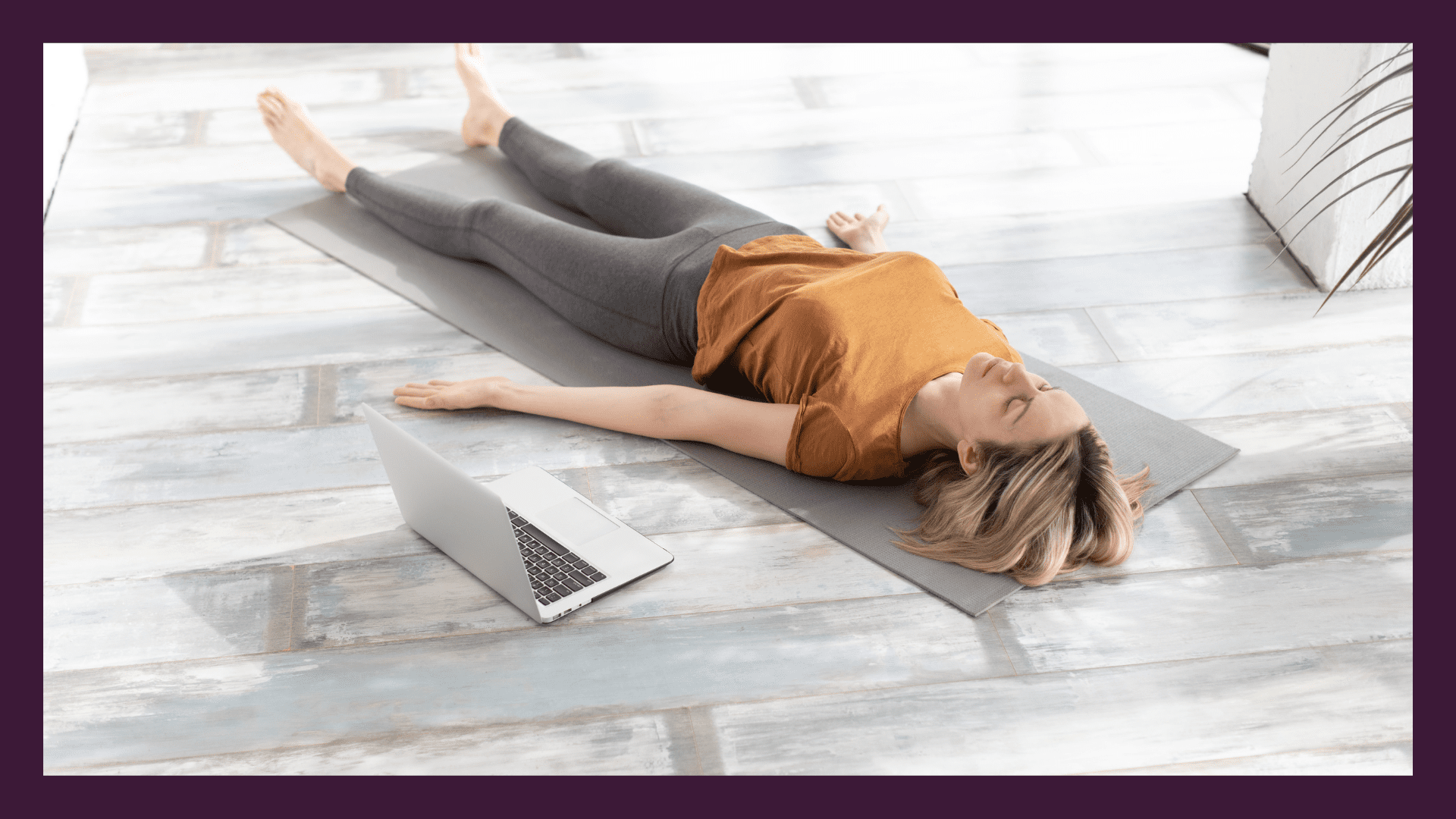
You're lying there. The clock says 3:14 AM. Your brain is doing that thing where it replays a slightly embarrassing conversation from 2017 while simultaneously worrying about a meeting tomorrow. You’ve tried melatonin, but it makes you feel like a zombie the next morning. You’ve tried "sleep hygiene," but staring at your beige walls instead of your phone just makes you more aware of how awake you are. This is where yoga nidra for sleep comes in, and honestly, it’s not what you think it is.
It’s not just "yoga." You aren't doing downward dog in your pajamas. In fact, you don't move at all.
Yoga nidra translates to "yogic sleep," but that’s a bit of a misnomer. You aren't actually aiming for unconsciousness right away—though that’s usually the side effect. It’s more like a state of "system maintenance" where your body thinks it’s asleep but your mind stays just a tiny bit tethered to reality. Think of it as a bridge. A bridge between the high-alert chaos of your day and the deep, restorative rest your brain is literally begging for.
The biology of why yoga nidra for sleep actually works
We need to talk about your nervous system. Most of us are stuck in sympathetic dominance. That’s the "fight or flight" mode. Even if you aren't running from a tiger, your emails, the news, and that weird noise your car is making keep you there. When you try to jump straight from that state into deep sleep, it’s like trying to go from 80 mph to a dead stop without hitting the brakes. You’re going to crash, or you’re going to skid.
Yoga nidra acts as the brakes.
During a session, you typically follow a guided meditation that moves your awareness through different parts of the body. This is called a "body scan," but it’s more specific than that. By focusing on your right thumb, then your index finger, then your palm, you’re engaging the sensory cortex of the brain. You’re basically giving your mind a very simple, very repetitive job to do. It’s just enough to keep the "worrying" part of your brain busy so the rest of your system can finally drop into the parasympathetic state—the "rest and digest" mode.
Research from institutions like the iRest Institute, founded by Dr. Richard Miller, has shown that this practice can significantly reduce PTSD symptoms, anxiety, and insomnia. Dr. Miller’s work with the US Department of Defense actually integrated yoga nidra into military recovery programs. If it works for soldiers dealing with intense trauma, it can probably handle your stress about a deadline.
The "Non-Sleep Deep Rest" (NSDR) connection
You might have heard Stanford neuroscientist Dr. Andrew Huberman talking about NSDR. It’s become a massive buzzword in the biohacking world. Well, guess what? NSDR is basically just a stripped-down, secular version of yoga nidra.
Huberman pushes this because of the dopamine reset. When we are constantly "on," our neuromodulators get fried. We lose focus. We get irritable. Practicing yoga nidra for sleep for even 20 minutes can mimic the recovery of a much longer nap, but without the "sleep inertia" (that gross, groggy feeling) you get when you wake up from a deep midday snooze. It helps the brain move from beta waves (active thinking) to alpha and theta waves (deep relaxation and creativity).
It’s about brain waves.
- Beta: Your normal waking state. Fast, choppy, alert.
- Alpha: You’re chilling. Maybe you’re staring out a window. This is the gateway.
- Theta: The "dream" state. This is where the magic happens in yoga nidra. You’re conscious, but barely.
- Delta: Deep, dreamless sleep.
Yoga nidra hangs out in that theta zone. It’s a liminal space. It’s where your body starts cleaning out metabolic waste from your brain—a process managed by the glymphatic system.
How to actually do it tonight (No, you don't need a mat)
Seriously, don't get out of bed. The best way to use yoga nidra for sleep is to do it exactly where you intend to stay for the night.
First, get comfortable. Use a pillow under your knees if your lower back hurts. Cover yourself with a blanket because your body temperature will drop as you relax. This is a physiological response to the parasympathetic nervous system taking over.
Don't try to "clear your mind." That’s a trap. If you try to stop thinking, you’ll just think about how you’re failing at not thinking. Instead, just listen to the voice of whoever is guiding the session. If your mind wanders to your grocery list, that’s fine. Just come back to the voice. It’s a practice of returning, not a practice of being perfect.
The Sankalpa: Setting an "intention" that isn't cheesy
Most traditional yoga nidra sessions start with a Sankalpa. It sounds fancy, but it’s just a short, positive statement in the present tense. Instead of saying "I want to be less stressed," you might say "I am at peace."
It sounds like woo-woo nonsense to some, but there’s a psychological reason for it. When you’re in that theta wave state, your brain is highly suggestive. It’s like being in a light state of hypnosis. By repeating a positive intention when your "critical filters" are turned off, you’re basically programming your subconscious. It’s a lot more effective than screaming affirmations at yourself in the mirror while you’re stressed out at 8 AM.
Common mistakes that keep people awake
People often think they have to stay awake for the whole session. They get frustrated if they "conk out" ten minutes in. Honestly? If your goal is sleep, then falling asleep is a win. Don't overthink it.
Another mistake is using a guide with a voice that annoys you. It sounds petty, but if the person’s tone or the background music irritates you, your brain will stay in an alert, "judgmental" mode. You want a voice that feels like a warm hug. Or a neutral robot. Whatever works for you.
Also, don't do this while you're driving. Obviously. But people try to "multitask" their relaxation while doing chores. That isn't yoga nidra; that's just listening to a podcast. You need the physical stillness for the brain-body feedback loop to complete.
The 10-minute vs. 45-minute debate
If you’re new, start short. There are plenty of 10-minute "mini" nidras. But if you’re dealing with chronic insomnia, the longer sessions—usually around 35 to 45 minutes—are where the real physiological shifts happen. It takes time for the body to move through the layers of "sheaths" or koshas, as they’re called in the original Sanskrit texts.
The layers go like this:
- The physical body (getting the jitters out).
- The energy/breath body (slowing down the heart rate).
- The mental/emotional body (processing those weird 3 AM thoughts).
- The wisdom/witness body (just observing it all).
- The bliss body (the deep peace right before you blink and it’s morning).
Real talk: Is it a "cure" for insomnia?
Let’s be real. If your insomnia is caused by a thyroid issue, sleep apnea, or a screaming infant in the next room, yoga nidra for sleep isn't a magic wand. It is, however, a tool that lowers the "baseline" of your stress.
Many people find that even if they don't fall asleep immediately, the time spent in yoga nidra is so restorative that they don't feel like a wreck the next day. It's about reducing the anxiety about not sleeping, which is often what keeps us awake in the first place. When you stop fighting the wakefulness, the sleep usually shows up on its own.
Getting started: Your immediate next steps
If you want to try this tonight, don't go out and buy a book. This is an oral tradition; it’s meant to be heard.
- Find a guide: Search YouTube or Insight Timer for "Yoga Nidra for Sleep." Look for names like Jennifer Piercy (her "Healing Darkness" track is legendary for a reason) or Kamini Desai.
- Set the stage: Phone on "Do Not Disturb." Use a blue light filter if you have to look at the screen to press play.
- Use headphones: It makes the experience much more immersive and helps block out the sound of your neighbor’s dog or your heater clicking on and off.
- Lie flat: Savasana (corpse pose) is traditional. Flat on your back, palms up. But if you’re a side sleeper and that’s how you’re going to stay, just do that. Comfort is more important than "perfect" form here.
- Commit to 7 days: Your brain needs to learn how to relax. The first night might feel weird. The third night might feel boring. By the seventh night, your body will likely start to recognize the routine and begin to "power down" as soon as the guide starts speaking.
Stop trying to force your brain to shut up. It won't. Give it something else to do instead. The scan, the breath, the stillness—these are the mechanics of rest.
Try a session tonight. Just one. Don't worry about doing it right. Just lie there and let the words do the heavy lifting. You might find that for the first time in a long time, the morning comes much sooner than you expected.