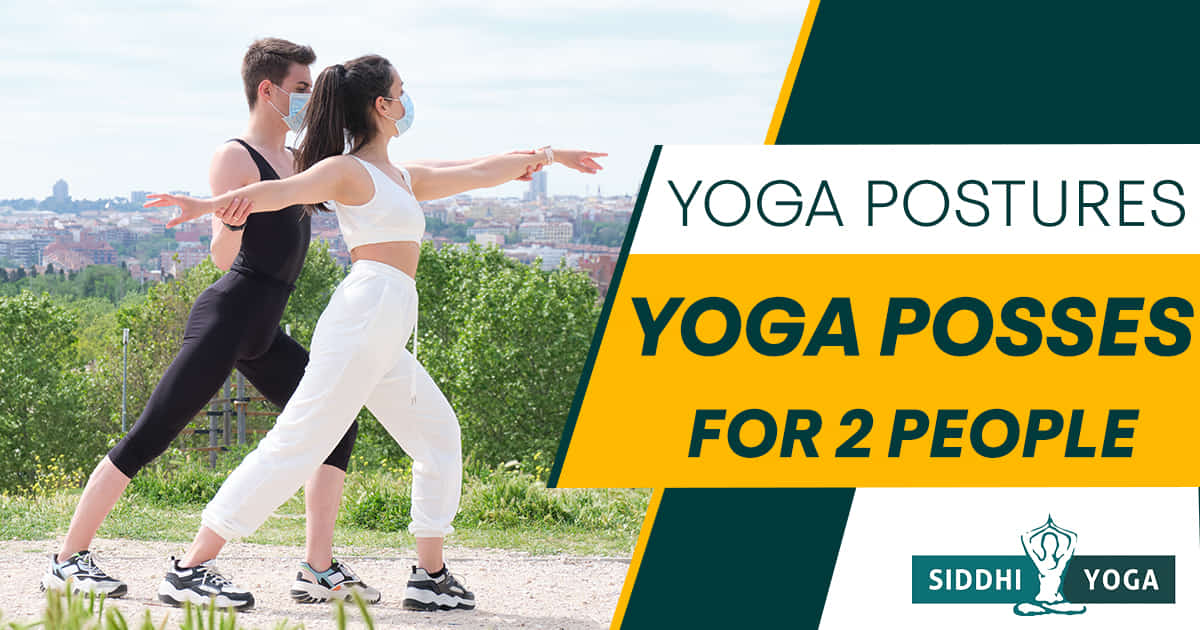
You’ve seen the photos. Those gravity-defying Instagram shots where one person is effortlessly balancing on another's feet while the sunset glows in the background. It looks like magic. Honestly? It's usually a recipe for a pulled hamstring or a very awkward argument if you don't know what you're doing. Partner yoga isn't just about looking cool for the grid. It’s a mechanical dance of weight distribution.
Most people dive into yoga moves for two people thinking they just need to be strong. They're wrong. Strength helps, sure, but it’s actually about "bone stacking." If your bones aren't aligned, your muscles will scream. This isn't just some airy-fairy concept; it’s physics. When you lean against someone, you're looking for a counter-balance point where two bodies become a single, stable tripod.
The Real Science of Connection
Science backs this up. A study published in the Journal of Social and Personal Relationships suggests that engaging in novel, challenging activities together increases relationship satisfaction. It's called "self-expansion." When you try a difficult double downward dog, your brain releases oxytocin. That's the "cuddle hormone."
But let's be real. It’s also frustrating. You’ll probably headbutt each other at least once.
Why Your Body Needs a Partner
Yoga is often a solo journey. You’re on your mat, in your head, trying to breathe. Adding another person changes the sensory feedback. When you do a seated forward fold and your partner pulls your hands, you reach a depth you literally could not achieve alone. The external resistance forces your fascia to release in ways a solo stretch won't touch.
Practical Yoga Moves for Two People
Don't start with the flying stuff. Seriously. You’ll end up in the ER. Start on the ground where the stakes are low and the floor is close.
The Twin Trees Stand side by side. Basically, you’re becoming a single, wide-based tree. Reach your inner arms around each other's waists. Your outer legs come up into tree pose—foot on the calf or thigh, never the knee. Press your palms together in the center.
Why does this work? It forces you to find a middle ground of tension. If one person leans too hard, you both topple. You have to subtly communicate through your hips. It’s a lesson in compromise without saying a word.
Double Downward Dog This one is a classic for a reason. One person starts in a traditional Downward-Facing Dog. The second person places their hands about a foot in front of the first person’s hands. Then, carefully, you step your feet onto the first person's lower back/sacrum area.
Warning: Do not step on the middle of their spine. That's a one-way ticket to a chiropractor visit. Aim for the flat bone at the base of the spine. The person on the bottom gets an intense shoulder stretch and a deeper heel-to-floor connection. The person on top gets a modified handstand that builds massive core stability.
The Seated Twist (The Relationship Saver)
Sit back-to-back with your legs crossed. Feel their spine against yours. Inhale together. As you exhale, both of you twist to the right, reaching your right hand to your own left knee and your left hand to your partner’s right knee.
It feels amazing. The heat from the other person’s back helps your muscles relax. It’s one of those yoga moves for two people that feels more like a massage than a workout.
Common Mistakes That Ruin the Vibe
I’ve seen it a thousand times in workshops. One person tries to "lead" too much.
- Holding your breath: If you stop breathing, your partner feels your body go rigid. It triggers their "fight or flight" response.
- Mismatched heights: If you're 6'2" and your partner is 5'0", you can't use symmetrical cues. You have to adjust your limb angles.
- The "Ego" Push: Trying to force your partner into a deeper stretch than they are ready for. This is how ligaments tear.
Lululemon ambassador and yoga expert Dylan Werner often talks about the "listening" aspect of physical movement. You aren't just moving your body; you’re reading the tension in someone else’s. If they tense up, you back off. Simple.
Advanced Dynamics: Beyond the Basics
Once you’ve mastered the floor, you might look at AcroYoga. This is where the "Base" and the "Flyer" roles come in. The Base is the person on the ground (usually the heavier or stronger individual, but not always). The Flyer is the one in the air.
The "Front Plank" is the entry point here. The Base lies on their back, feet up in the air. The Flyer leans their hips into the Base's feet. As the Base lifts their legs, the Flyer soars. It looks terrifying. In reality, if the Base keeps their legs at a 90-degree angle to their torso, the weight goes straight down into the floor. It’s surprisingly effortless.
The Mental Load
Let's talk about trust. Most people have "trust issues" that manifest physically. If you don't trust your partner to catch you, your core will over-engage, making you heavy and "clunky" to lift. Yoga moves for two people are a mirror. If you’re struggling with the move, look at how you’re communicating. Are you blaming them for the wobble?
Healing and Recovery
A 2021 study in the International Journal of Yoga highlighted how partner-based movement can reduce cortisol levels more effectively than solo exercise in some demographics. There's a grounding effect. Touching another human being's skin—a concept known as "skin hunger" or "affectional deprivation"—is biologically necessary. We are social animals. Doing a back-to-back chair pose satisfies that need for contact while building quadriceps that could crush a walnut.
Actionable Steps for Your First Session
Don't just jump into it. Set the stage so you don't end up annoyed with each other.
- Check the Floor: Use two mats side-by-side or a large "mega mat." Hardwood is better than thick carpet because you need a stable foundation for balancing.
- Trim Your Nails: Sounds weird, but in partner poses, you’re grabbing wrists and ankles. Scratches happen.
- The "Safe Word": Have a word for "get me down right now." Usually, "Down" works. Don't wait until you're falling to say it.
- Mirror Your Breathing: Spend three minutes just sitting back-to-back, breathing. Try to synchronize your inhales. It sounds cheesy, but it aligns your nervous systems.
- Start Small: Spend 10 minutes on seated moves before you even think about standing up together.
Yoga moves for two people should leave you feeling connected, not exhausted. If you’re shaking and swearing, you’ve gone too far. Back off, find the breath, and remember that the point is the partnership, not the pose. Focus on the points of contact. Feel the heat, the pressure, and the subtle shifts in weight. That’s where the real yoga happens.
To move forward, focus on the "Counter-Balance" principle: every time you pull, your partner must pull back with equal force. Practice this by standing, holding hands, and leaning back into a "V" shape. This foundational skill will make every other pose significantly easier to manage.