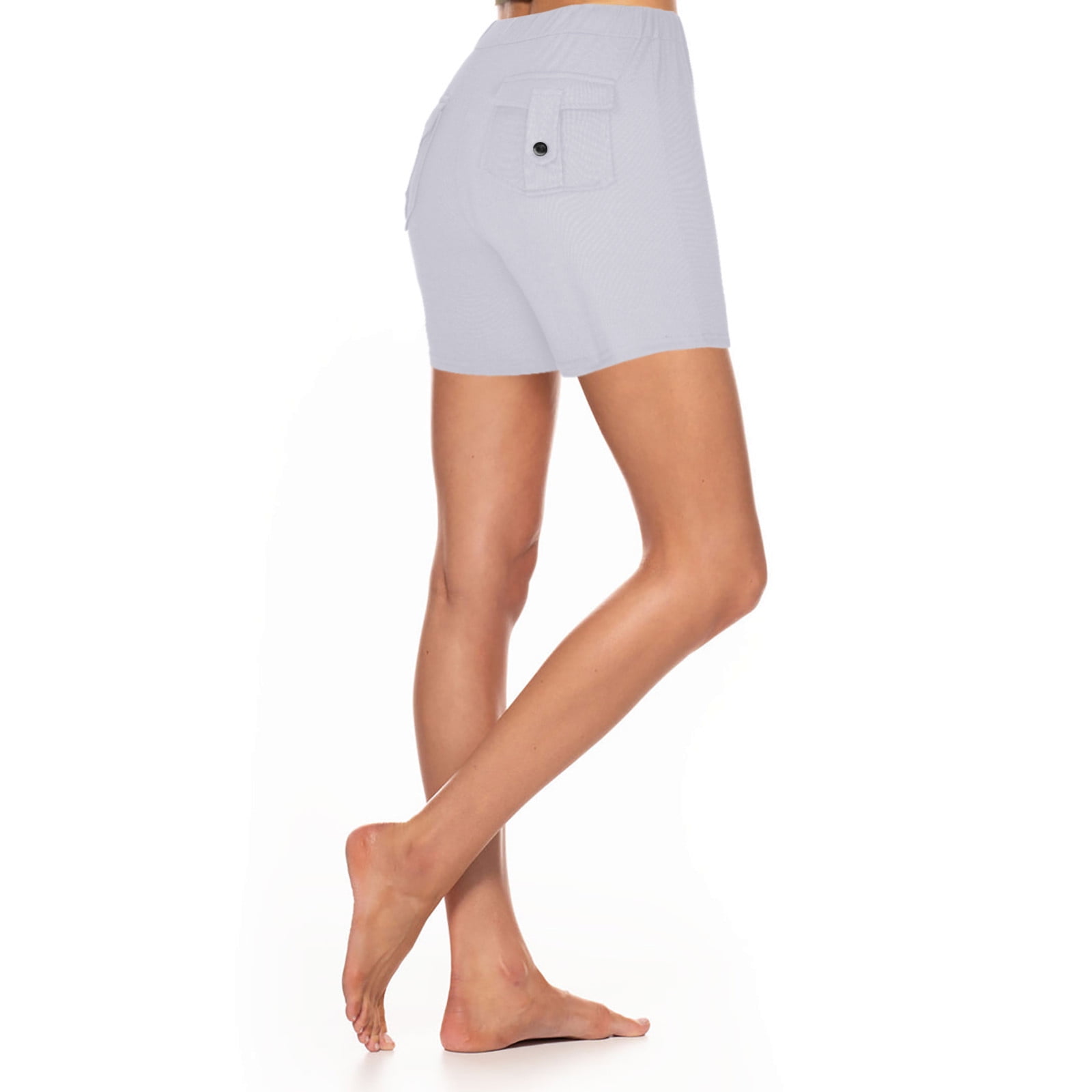
You’ve seen the photos. Everyone is wearing skin-tight spandex that looks like it was spray-painted on. It’s the "uniform" of modern studios. But what happens when you just want to do yoga in loose shorts? Honestly, most people feel a weird kind of pressure to conform to the leggings-only culture, even if they hate the feeling of being vacuum-sealed.
Loose clothing used to be the standard. Look at old photos of B.K.S. Iyengar or Pattabhi Jois. They weren't wearing Lululemon Align pants. They were wearing simple, airy garments that allowed for actual movement without the constant compression.
But there is a catch.
If you walk into a fast-paced Vinyasa class wearing oversized basketball shorts, you might end up showing the person behind you a lot more than you intended. It's a balance. You want freedom, but you don't want a wardrobe malfunction during a three-legged dog.
The Physics of Yoga in Loose Shorts
The primary reason people steer clear of baggy bottoms is gravity. Think about it. When you’re in a standing forward fold (Uttanasana), gravity pulls everything down. If your shorts are wide at the leg, the fabric slides toward your hips. This isn't just about modesty; it’s about distraction.
Yoga is supposed to be a moving meditation. It’s hard to focus on your Ujjayi breath when you’re busy clutching your shorts so they don’t fall past your knees.
However, there is a huge segment of the yoga population that finds tight synthetic fabrics incredibly irritating. For people with sensory processing issues, certain skin conditions, or those who simply run hot, yoga in loose shorts is the only way to go. The air circulation is incomparable.
Cotton and linen are breathable. Synthetics like polyester often trap heat and sweat against the skin, which can lead to "yoga butt" (the literal skin irritation kind, not the muscle kind) or folliculitis. If you’ve ever felt like you were simmering in your own sweat during a 90-degree Bikram class, you know exactly why some people prefer the breeze of a loose fit.
Finding the Right Cut
Not all loose shorts are created equal. You can't just grab a pair of baggy sleep shorts and expect a seamless practice.
Look for styles that have an inner liner. This is basically the "cheat code" for the loose-shorts enthusiast. Brands like Lululemon, Vuori, and Patagonia make shorts specifically for high-impact movement that feature a built-in compression brief. This gives you the aesthetic and airflow of a loose outer layer while keeping everything securely tucked away.
Another option is the "Harem" style or Thai fisherman shorts. These are often tapered at the ankle or have enough weight in the fabric that they don't slide up instantly. They are the gold standard for Yin yoga or restorative practices where you aren't doing a lot of inversions.
Why the "Tight" Narrative Won
Marketing. It's really that simple.
The yoga industry exploded in the early 2000s alongside the rise of "athleisure." Companies realized they could charge $100 for a pair of leggings if they marketed them as high-performance gear. Loose shorts don't have that same "sculpting" appeal that sells on Instagram.
But talk to any long-time practitioner, and they'll tell you that the obsession with tight clothing is a relatively new phenomenon. In the Mysore style of Ashtanga, men have traditionally practiced in short, loose trunks for decades. It's about functionality over fashion.
There's also the "form" argument. Teachers often say they need to see your knees and ankles to ensure proper alignment. While this is true in a clinical sense—it's harder to see if a student is hyperextending their knees through baggy fabric—an experienced teacher can usually tell what's going on by looking at the silhouette and the way the weight is distributed in the feet.
The Hidden Benefits of Roomy Gear
Let's talk about the lymphatic system.
Some holistic health practitioners argue that overly restrictive clothing can actually impede lymphatic drainage. While the evidence is mostly anecdotal in a yoga context, the general principle of "flow" applies to both your movements and your circulation. Constantly squeezing your waist and thighs can feel restrictive to your breath.
When you practice yoga in loose shorts, your diaphragm has more room to expand. You aren't fighting against a high-compression waistband that's trying to push your stomach back in. You can actually feel the belly rise and fall. It's a more honest way to breathe.
Also, skin health. Micro-tears and friction are common with tight gear. If you are doing a lot of floor work or sliding transitions, loose natural fibers like hemp or organic cotton are much kinder to the epidermis than recycled plastic bottles turned into "performance" fabric.
Making the Switch Without the Stress
If you're ready to ditch the leggings, start with a "hybrid" approach.
- The Layering Method: Wear a thin pair of bike shorts underneath your favorite loose gym shorts. You get the look you want with the security you need.
- The Drawstring Rule: Make sure the waistband is adjustable. Loose shorts have a tendency to shift during jumps or sun salutations. A solid drawstring is non-negotiable.
- Fabric Weight: Look for "mid-weight" fabrics. Too light, and they'll fly up in your face during a headstand. Too heavy, and they'll weigh you down when you sweat.
Real Talk: The Modesty Factor
For many practitioners, especially those coming from cultures where modest dress is the norm, the hyper-sexualized world of yoga fashion is a barrier to entry. Offering the option and normalizing the use of looser garments makes yoga more inclusive.
It shouldn't be a requirement to show every curve of your body just to take a fitness class. If someone feels more comfortable in baggy shorts and a t-shirt, that comfort will translate into a better practice. They will be more likely to return to the mat if they aren't constantly self-conscious about their outfit.
What Most People Get Wrong
People think loose shorts mean "lazy" or "beginner."
That’s nonsense.
Some of the most advanced practitioners in the world—people who can hold a handstand for five minutes or tuck their legs behind their heads—do so in loose, comfortable clothing. The clothes don't make the yogi. The awareness does.
The biggest mistake is choosing shorts that are too long. If your shorts go past your knees, you’re going to trip during transitions like stepping forward from Downward Dog to a lunge. Aim for a 5-inch or 7-inch inseam. This is the "sweet spot" where you get the breeze without the bulk.
Actionable Steps for Your Next Practice
Don't go out and buy a whole new wardrobe immediately. Experiment with what you have.
- Test your shorts at home first. Do a couple of Downward Dogs and a Happy Baby in front of a mirror. See what happens. If the fabric ends up around your waist, those are "Yin only" shorts.
- Check the material. If they are 100% cotton, remember they will get heavy and saggy if you're doing Hot Yoga. Look for a cotton-poly blend for better shape retention.
- Invest in one "Yoga Specific" loose pair. Brands like Prana or YogaCrow specialize in shorts that look casual but are engineered for the range of motion required in a yoga class. They often have gusseted crotches, which is a fancy way of saying they won't rip when you go into a deep side lunge.
Ultimately, the best thing you can wear to yoga is whatever allows you to forget about your clothes. If you're constantly pulling, tugging, or adjusting, the clothes are failing you—regardless of how "correct" they look in the studio. Go for the loose fit if that's what makes you feel free. Your practice will thank you for it.
Switching to looser gear is a small rebellion against the commercialization of the practice. It’s a return to the idea that yoga is an internal experience. If you can find a pair of shorts that stays put and lets you breathe, you've found the perfect gear. Forget the trends. Just move.