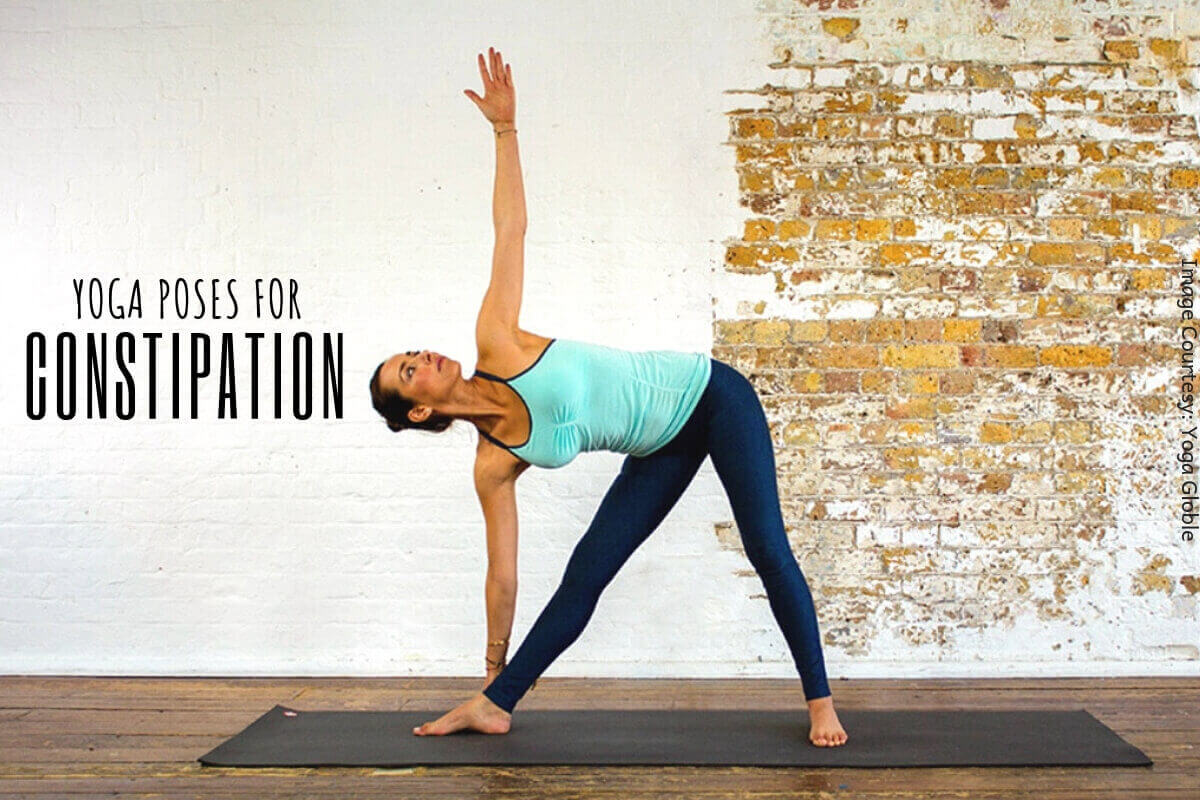
It’s that heavy, bloated, "stuck" feeling that makes you want to cancel every plan on your calendar. Most people immediately reach for the Metamucil or a double espresso when things stop moving, but honestly, those are just temporary fixes for a plumbing issue that often starts with tension. Yoga for relieving constipation isn't just about stretching; it’s about physically manipulating your internal organs to get the "rest and digest" system back online.
You’re probably familiar with the enteric nervous system. It's basically your "second brain." When you're stressed, your body diverts blood away from your digestive tract to your limbs—the classic fight-or-flight response. Your colon basically freezes. Yoga flips that switch.
How Yoga for Relieving Constipation Actually Works (The Science Part)
Let’s get real about the anatomy. Your digestive system is a long, muscular tube. It relies on peristalsis, which are wave-like contractions that push waste along. When you do specific yoga poses, you're performing what some teachers call "internal massage."
A 2016 study published in the European Journal of Gastoenterology & Hepatology found that physical activity, including yoga-based movement, significantly improved transit time in patients with chronic constipation. It's not magic. It’s pressure. When you fold your body over your thighs, you are literally compressing the ascending and descending colon. This creates a pressure gradient. When you release the pose, a fresh rush of blood—and oxygen—floods the area.
Think of it like a garden hose with a kink in it. You're intentionally creating the kink and then letting it go to force a surge of flow.
The Vagus Nerve Connection
The vagus nerve is the superstar of the parasympathetic nervous system. It runs from your brainstem all the way down to your abdomen. Yoga, specifically the deep diaphragmatic breathing associated with it, stimulates this nerve. Why does that matter? Because the vagus nerve is what tells your intestines to contract. No vagus stimulation, no bathroom trip.
Poses That Actually Move the Needle
Not every yoga pose is going to help you poop. In fact, some intense power yoga might even tighten your pelvic floor further, which is the last thing you want. You need poses that focus on twisting and abdominal compression.
Wind-Relieving Pose (Pawanmuktasana) The name says it all. You lie on your back and hug your knees to your chest. But here’s the trick: hug the right knee in first. This puts pressure on the ascending colon. Hold it for a minute. Then switch to the left to hit the descending colon. Finally, hug both. It’s a literal roadmap of your large intestine.
Supine Spinal Twist (Supta Matsyendrasana) Twisting is the gold standard for yoga for relieving constipation. When you twist, you’re wringing out your organs like a wet sponge. It’s crucial to keep your shoulders flat on the floor while your knees drop to the side. If your knees don't touch the ground, grab a pillow. Don't strain. The goal is relaxation, not a workout.
Malasana (Squatting Pose) We were designed to squat. Western toilets actually kink the rectum, making it harder to pass stool. Malasana mimics the natural human elimination posture. It opens the hips and allows the puborectalis muscle to relax completely. If your heels lift off the ground, roll up a towel and put it under them. Stay there for five deep breaths. It might feel awkward at first, but it’s arguably the most effective pose in the entire practice for gut health.
Common Mistakes People Make When They’re Bloated
I see this all the time in studios. Someone is feeling backed up, so they try to "work through it" with a high-intensity vinyasa flow. Huge mistake.
Over-exertion can actually trigger the sympathetic nervous system. That’s the "fight" mode we talked about earlier. If you’re already stressed because you haven’t gone in three days, forcing yourself into a headstand or a heavy power flow might just lock things up tighter.
- Mistake #1: Holding your breath. If you aren't breathing, your diaphragm isn't moving. If your diaphragm isn't moving, your organs aren't getting massaged.
- Mistake #2: Forcing twists. You should never "crank" your spine. Use your core to twist, not your arms to pull.
- Mistake #3: Ignoring hydration. Yoga moves the muscles, but water moves the mass. If you’re dehydrated, no amount of twisting will help a stool that’s as hard as a brick.
The Role of the Pelvic Floor
Here is something most "health" blogs won't tell you: sometimes the problem isn't your colon. It's your pelvic floor.
Hypertonic pelvic floor dysfunction is a fancy way of saying your muscles down there are too tight. They literally won't let the "gate" open. If you’re someone who holds tension in your jaw or shoulders, there’s a high chance you’re holding it in your pelvic floor too.
Yoga for relieving constipation helps here by teaching "softening." Poses like Happy Baby (Ananda Balasana) are vital for this. You aren't just stretching your hamstrings; you’re consciously letting go of the muscles that guard the exit. It’s psychological as much as it is physical.
A Realistic 15-Minute Routine
You don't need a 90-minute class at a boutique studio. You can do this in your pajamas.
- Start with Cat-Cow (2 minutes): Move slowly. Exhale deeply as you round your back. This gets the blood flowing to the torso.
- Downward Facing Dog (1 minute): This inversion lets gravity pull your organs toward your head for a second, shifting the weight and pressure in the gut.
- Malasana Squat (3 minutes): Lean your back against a wall if you need to. Focus on "dropping" your sit-bones toward the floor.
- Seated Twist (2 minutes per side): Sit on the floor with legs extended. Cross one foot over the opposite knee and gently twist toward the upright knee.
- Child’s Pose (5 minutes): Widening the knees and letting your belly hang between your thighs is key. This is where the relaxation happens.
What to Expect (and When to See a Doctor)
Yoga is a tool, not a miracle cure for underlying medical issues. Usually, after a targeted session of yoga for relieving constipation, you might feel some gurgling. That’s a good sign. It’s called borborygmi—the sound of fluid and gas moving through the intestines.
However, if you have sharp, stabbing pain, fever, or blood in your stool, stop the yoga and call a professional. Conditions like bowel obstructions or inflammatory bowel disease (IBD) require medical intervention, not a downward dog.
Also, don't expect instant results every single time. Sometimes the body needs a few hours after the practice to respond to the parasympathetic shift. Be patient with your gut. It’s doing its best.
Actionable Steps to Take Right Now
If you are currently feeling the "stuck" sensation, don't wait until tomorrow morning to start.
- Drink 12 ounces of lukewarm water. Cold water can sometimes cause the stomach to cramp; warm water encourages movement.
- Get on the floor. Spend five minutes in a deep Child's Pose with your knees wide. Focus entirely on breathing into your lower back and belly.
- Check your posture. Are you slouching at your desk? Slouching compresses the digestive organs and slows down transit. Sit up, create space in your torso, and give your intestines room to work.
- Try a "Nadi Shodhana" (Alternate Nostril Breathing). It sounds "woo-woo," but it’s a proven way to lower cortisol levels and move the body into a digestive state.
The most important thing to remember is that your gut reflects your stress levels. Yoga works because it forces you to slow down, breathe, and physically unlock the areas where you’re holding onto tension. Consistency is better than intensity here. A few twists every day will do more for your regularity than one massive yoga session once a week.