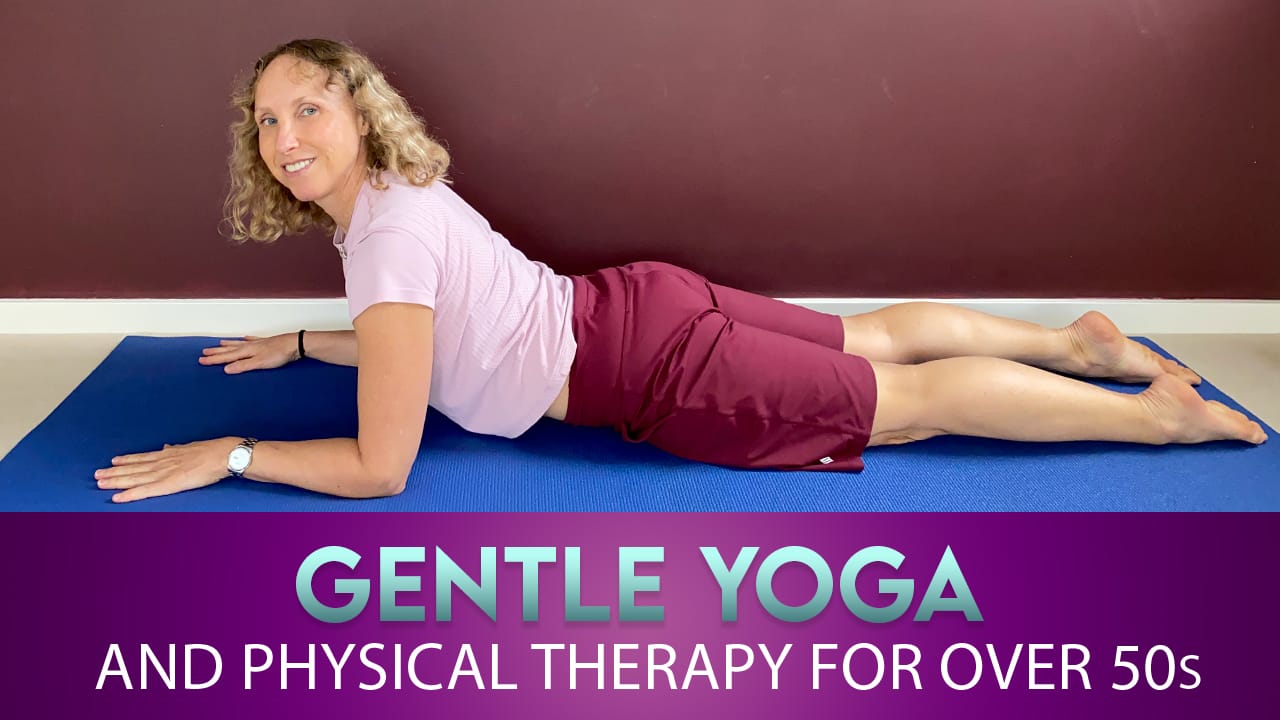
Stop thinking about those Cirque du Soleil contortionists on Instagram. Seriously. If you’re looking into yoga for beginners over 50, that mental image is your biggest enemy. It's the reason so many people in their fifties and sixties stay on the couch, convinced they’ll snap a hamstring or look ridiculous in a room full of twenty-somethings.
Yoga isn't a performance. It’s a maintenance plan for your house—and by house, I mean your body. For another perspective, consider: this related article.
Look, things change after five decades. Your collagen production drops. Your joints might feel like they need a shot of WD-40 in the morning. Bone density becomes a genuine concern, especially for women navigating post-menopause. But here’s the kicker: your body is incredibly responsive to Vitamin M—Movement. According to Dr. Loren Fishman, a Columbia University physiatrist who has studied yoga and bone health for years, even brief daily practice can improve bone mineral density. It’s not about putting your leg behind your head. It’s about standing up from a chair without making a "huff" sound.
The Stiffness Myth and What’s Actually Happening
You aren't "too old" to start. That’s a lie we tell ourselves to avoid the mild discomfort of being a novice. When you hit 50, your fascia—the connective tissue wrapping around your muscles—starts to get a bit more "gluey" if it isn't hydrated and moved. You feel this as morning stiffness. Related coverage on the subject has been provided by WebMD.
Yoga helps by literally shearing those layers of tissue apart, allowing them to glide. It’s mechanical. It’s physics.
A lot of folks worry about their knees. "My doctor said I have bone-on-bone arthritis," is something I hear constantly. While you should always listen to your MD, yoga for beginners over 50 isn't about grinding those joints. It's about strengthening the quadriceps and glutes so they take the load off the knee. If the muscles are weak, the joint pays the price.
Prop It Up or Give It Up
Don’t be a hero. Use the blocks.
If you go into a yoga studio and see a bunch of foam blocks and strapped-up blankets, those aren't "cheating" tools. They are essential equipment. For a 55-year-old with tight hamstrings, trying to touch the floor in a forward fold usually results in a rounded, strained lower back. That's a recipe for a disc injury. But! If you put two blocks under your hands, the floor magically rises to meet you. Your spine stays long. Your hamstrings get a safe stretch. You win.
Yoga for Beginners Over 50: The Moves That Actually Matter
Forget the Headstand. Seriously, don't do it unless you've been doing it for twenty years. The risk-to-reward ratio for a beginner over 50 is terrible. Instead, focus on the "Big Three" needs: Balance, Spinal Extension, and Hip Mobility.
Balance is a "use it or lose it" skill. Falls are a leading cause of injury as we age. Standing on one leg in "Tree Pose" (Vrksasana) trains the proprioceptors in your ankles and the neurological pathways in your brain to catch you when you stumble on a curb.
Mountain Pose (Tadasana) It sounds like just standing there. It isn't. It’s active standing. You’re rooting through the four corners of your feet, engaging your thighs, and lifting your chest. It counters the "tech neck" we all get from staring at phones. It’s basically a posture reset button.
Warrior II (Virabhadrasana II) This one builds leg strength. It’s tough. Your thighs will burn. But that burn is your metabolism waking up and your bone density increasing. Keep your gaze over your front hand and breathe. Just breathe.
Cat-Cow (Marjaryasana-Bitilasana) If your back feels like a rusted hinge, this is your best friend. Moving the spine through flexion and extension while on all fours is low-impact and incredibly lubricating for the intervertebral discs.
The Heart and Brain Connection
It’s not just about the muscles. A 2014 study published in the European Journal of Preventive Cardiology found that yoga can reduce risk factors for heart disease nearly as well as brisk walking or cycling. It lowers blood pressure and improves lipid profiles. Plus, there’s the cortisol factor. Stress kills. Yoga’s focus on the "Ujjayi" breath (that ocean-sounding throat breathing) stimulates the vagus nerve. This flips your nervous system from "fight or flight" to "rest and digest."
You’ll sleep better. Honestly, the sleep benefits alone are worth the price of a sticky mat.
Common Mistakes That Lead to Injury
Most beginners over 50 try to "push through" pain. Don't. There is a massive difference between the "good" discomfort of a stretching muscle and the "bad" sharp, electric, or stabbing pain of a joint or nerve under duress. If it’s sharp, stop. Immediately.
Another mistake? Comparing yourself to the person next to you. Maybe that 60-year-old woman in the front row has been a dancer her whole life. Maybe that guy can touch his toes because he has unusually long arms. Who cares? Your yoga is about your skeleton and your history. If you’ve spent 30 years sitting behind a desk, your hip flexors are going to be tight. That’s just reality.
- Skipping the warm-up: Your tissues need heat to become pliable. Don't jump into deep lunges five minutes after waking up.
- Holding your breath: If you stop breathing, your nervous system panics. It tightens the muscles to "protect" you, which is the exact opposite of what you want.
- Locking your joints: Keep a "micro-bend" in your knees and elbows. Hyper-extending puts the weight on the ligaments, not the muscles.
Real Talk About Gear
You don't need $120 leggings. You really don't. You need:
- A non-slip mat (look for "extra thick" if your knees are sensitive).
- Two foam blocks.
- A yoga strap (or a bathrobe tie, honestly).
- A firm blanket or a bolster.
Sitting on a folded blanket during seated poses is a game-changer. It tilts your pelvis forward, which prevents your lower back from slumping. It makes everything—from simple cross-legged sitting to seated forward folds—feel 50% easier and 100% safer.
Finding the Right Environment
Don't just walk into the first "Power Vinyasa" class you see. You'll likely end up in a fast-paced, sweaty room where the teacher doesn't have time to check your alignment. Look for classes labeled:
- Hatha: Usually slower, focusing on individual poses.
- Iyengar: Very prop-heavy and obsessed with correct alignment (great for beginners).
- Restorative or Yin: Very slow, mostly on the floor.
- Silver Yoga or Chair Yoga: Specifically designed for seniors or those with limited mobility.
If you’re doing this at home, YouTube is a goldmine. Search for "Yoga with Adriene" or "Yoga with Kassandra." They have specific playlists for seniors and absolute beginners. Just remember: they can’t see you. You have to be your own teacher and know when to back off.
The Consistency Secret
Doing 10 minutes every day is infinitely better than doing 90 minutes once a week. Your body craves frequency. Think of it like brushing your teeth. You’re brushing your joints. You’re flossing your fascia.
Actionable Next Steps
If you’re ready to stop thinking about it and actually start, here is your plan for the next 72 hours.
Step 1: The Five-Minute Test. Tonight, before bed or right when you wake up, do three rounds of Cat-Cow and a standing forward fold with your knees deeply bent. Just that. See how your back feels afterward.
Step 2: Clear the Space. You don't need a "Zen den." You need a six-foot by three-foot patch of floor that isn't covered in clutter.
Step 3: Buy or DIY your props. Grab two blocks from a local sports store. If you don't want to buy a strap yet, grab a long belt from your closet.
Step 4: Book a "Beginner" or "Level 1" class. Even if you plan on practicing at home, taking 3-5 in-person classes with a qualified instructor is vital. They can physically adjust your posture to ensure you aren't putting unnecessary pressure on your neck or lower back. Tell the instructor before class: "I’m over 50, I’m a beginner, and I have [mention any injuries]." A good teacher will keep an eye on you.
Yoga for beginners over 50 isn't about reclaiming your youth; it's about owning your age and keeping your body functional, capable, and pain-free for the decades to come. It’s about being able to play with grandkids, carry your own groceries, and move through the world with a sense of ease rather than effort.
Start where you are. Use the blocks. Keep breathing. It’s that simple.