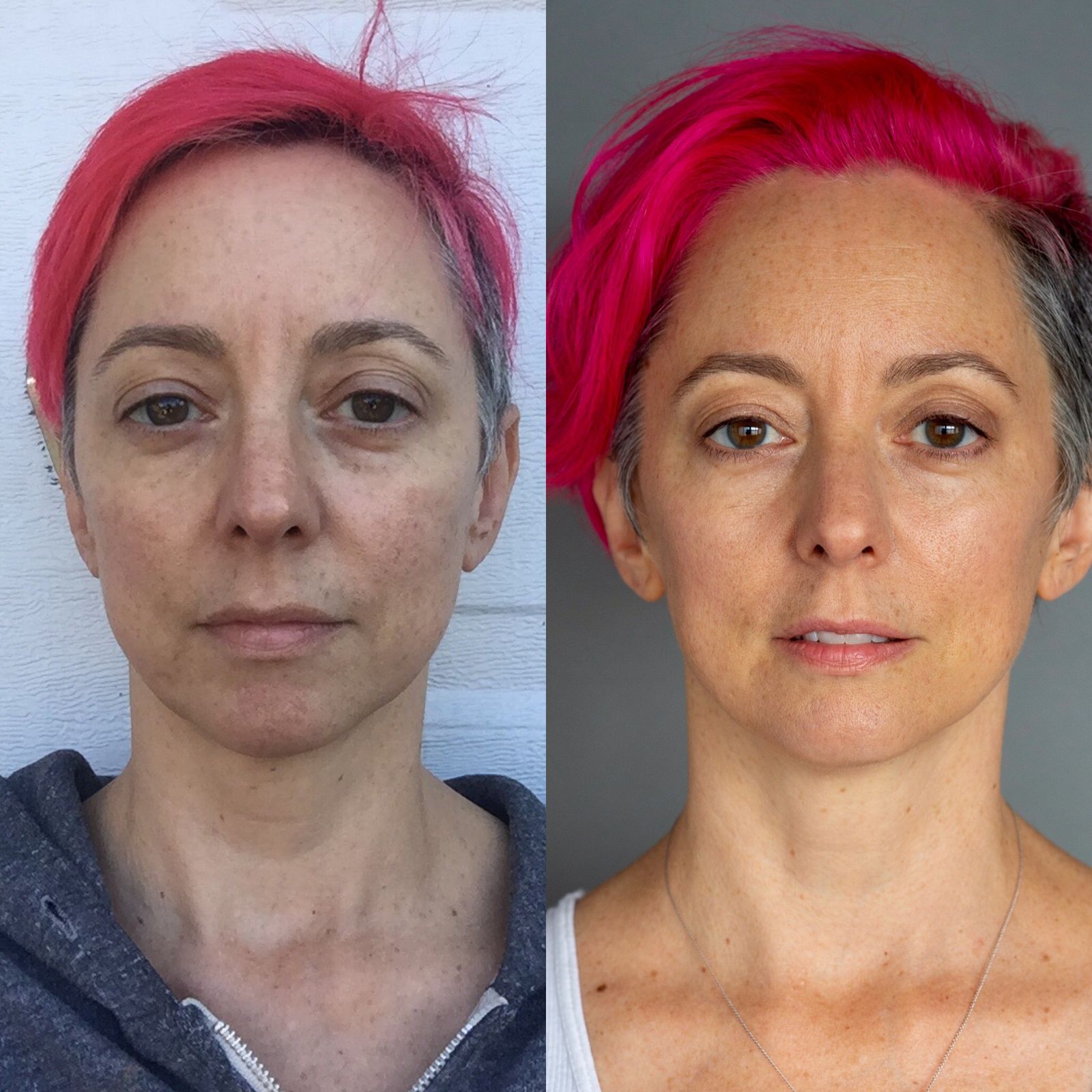
You’ve seen the photos. Those split-screen Instagram posts where someone goes from a slouching, tired-looking human to a glowing, hand-standing deity in six months. It’s compelling. It sells leggings. But honestly? The real yoga before and after isn’t about your hamstrings suddenly deciding to touch your toes, or your spine turning into a cooked noodle.
It's weirder than that.
Most people start yoga because their back hurts or they’re stressed at work. They want a physical fix. What actually happens over a decade of practice is a complete rewiring of how you inhabit your own skin. It’s less about "getting flexible" and more about learning how to stop fighting yourself.
The Physical Shift: Beyond the Hamstrings
Let’s talk about the biology of it first because that’s what everyone looks for in a yoga before and after comparison.
When you start, you’re likely stuck in what Dr. Kelly Starrett calls "the sedentary shape." Your hip flexors are tight from sitting. Your glutes have basically forgotten they exist. Your thoracic spine is locked up. In those first few weeks, yoga feels like an assault on your dignity. You’re shaking in Downward Dog, wondering why your heels won't touch the floor.
But then, the fascia starts to change.
Fascia is that connective tissue web that wraps around your muscles. It’s like a biological wetsuit. If you don’t move, it gets "sticky" and dehydrated. A consistent practice—meaning 3 to 4 times a week for at least six months—literally rehydrates this tissue. Research published in The Journal of Bodywork and Movement Therapies suggests that myofascial release through sustained stretching and movement increases fluid flow and reduces chronic inflammation.
You aren't just stretching a muscle; you're remodeling your structural architecture.
That "glow" people talk about? It’s not magic. It’s improved circulation and a down-regulation of the sympathetic nervous system. When you’re less stressed, your cortisol levels drop. High cortisol is a beauty killer; it breaks down collagen and leads to water retention. So, when someone looks "better" in their yoga before and after shots, they might just be less inflamed and better hydrated at a cellular level.
The Spine is the Real Metric
There’s an old hatha yoga saying: "You are only as young as your spine is flexible."
Modern science kind of agrees. As we age, the intervertebral discs lose moisture. Yoga helps through a process called "loading." By moving the spine in six directions—flexion, extension, lateral bending, and twisting—you’re essentially pumping nutrients into those discs.
Compare a 40-year-old who has never practiced to a 40-year-old who has been on the mat for five years. The difference in posture is usually the first thing you notice. The practitioner sits taller not because they’re trying to, but because their core stabilizers—the multifidus and transversus abdominis—have developed the "quiet strength" necessary to hold them up without effort.
The Invisible "After"
The most dramatic yoga before and after happens inside your skull. Specifically, in your amygdala and your prefrontal cortex.
Most of us live in a state of low-grade "fight or flight." Your boss sends a sharp email? Adrenal spike. Traffic is bad? Adrenal spike. Over time, your brain gets really good at being stressed. It’s a feedback loop.
Yoga breaks the loop using the vagus nerve.
This is the longest cranial nerve in your body. it’s the "reset button" for your nervous system. By focusing on slow, diaphragmatic breathing while holding a difficult pose, you’re training your brain to stay calm under pressure. You’re basically telling your amygdala, "Hey, I know my quads are burning in Warrior II, but we aren't actually being eaten by a tiger, so chill out."
A study from Boston University School of Medicine found that yoga practice increases levels of GABA (gamma-aminobutyric acid) in the brain. GABA is your body's natural chill-pill. Low GABA is linked to depression and anxiety.
The "before" version of you might have snapped at a barista for getting an order wrong. The "after" version of you—the one who has spent three years breathing through uncomfortable poses—just shrugs it off. That’s the real transformation. It’s the gap between a stimulus and your response.
Why Some "Afters" Look Like Injuries
We have to be honest here. Yoga isn't a panacea.
If you look at the yoga before and after of someone who pushed too hard too fast, you might see a different story. Yoga-related injuries are real. Labral tears in the hip from over-aggressive lunges or "Yoga Butt" (proximal hamstring tendinopathy) from overstretching are common in practitioners who treat the mat like a CrossFit box.
The "before" was a healthy but stiff person. The "after" is a flexible person with a chronic hip impingement.
This happens when the ego takes the driver's seat. True yoga progress is non-linear. Some days you’re open; some days you’re a brick. The "after" should be an increased awareness of these fluctuations, not a blind pursuit of a pose that looks good on camera.
The Role of Proprioception
One of the coolest changes is proprioception—your brain's ability to know where your body is in space.
In the "before" stage, you probably couldn't tell if your hips were level in a lunging pose without looking in a mirror. Your brain-to-body map was a bit fuzzy.
After a year of practice, that map becomes high-definition. You can feel the weight distribution in your four corners of your feet. You can tell if your shoulders are creeping toward your ears while you’re typing at your desk. This "interoceptive awareness" is a superpower. It allows you to catch physical tension before it turns into a tension headache or a thrown-back.
The Timeline: What to Actually Expect
Stop looking at 30-day challenges. They’re fine for building a habit, but they won't change your life. Real change is measured in seasons and years.
Month 1: The Honeymoon/Hell Phase Everything hurts. You realize how weak your upper body is. But, you’re sleeping better. You might feel a "yoga high" after class because you finally breathed deeply for 60 minutes.
Year 1: The Structural Shift Your "before" posture is starting to fade. You’ve probably lost a little weight (if that was a goal) simply because you’re more mindful of how you fuel your body. You can touch your toes, sure, but more importantly, you can sit on the floor comfortably.
Year 5: The Mental Integration This is where the yoga before and after gets deep. You don't just "do" yoga; you have a toolkit for life. When things go wrong, you find yourself breathing. Your balance is significantly better than your peers'. Your recovery time from other sports or illnesses is faster.
Year 10+: The Rewiring At this point, the physical poses (asana) are almost secondary. The "after" version of you is someone who is fundamentally more grounded. You have a different relationship with pain and discomfort. You’ve learned that everything is temporary—the burn in your muscles and the stress in your life.
Navigating the Misconceptions
People think you have to be flexible to start. That’s like saying you have to be clean to take a bath.
Another big one: "Yoga isn't a real workout." Tell that to someone holding Plank for two minutes or moving through 50 Sun Salutations. The metabolic demand is real, but it’s different. It’s about "time under tension" and isometric strength.
The "after" of a dedicated practitioner often includes a lean, functional musculature that looks different from a bodybuilder's. It’s "lithe" strength. It’s the ability to move through a full range of motion with control.
Actionable Steps for Your Own Transformation
If you want a meaningful yoga before and after story, you can't just dabble. You need a strategy that respects your biology.
- Start with a "Functional" Style: If you’re stiff, don't jump into advanced Yin. Try Hatha or a slow Vinyasa. You need to build the "container" of strength before you try to pour in the flexibility.
- Audit Your Breath: Spend five minutes a day just noticing your inhale and exhale. If your breath is shallow and in your chest, your nervous system is in "threat" mode. Switch to belly breathing.
- Record Your Baseline: Forget the mirror. Write down how your back feels on a scale of 1 to 10. Note how often you lose your temper. These are your true "before" metrics.
- Focus on the Hips and Spine: Most modern ailments stem from these two areas. Prioritize poses like Pigeon, Cat-Cow, and Low Lunge.
- Find a Teacher, Not an Influencer: Look for someone who talks about anatomy and nervous system regulation, not just someone who looks good in a bikini. You want an expert who understands the mechanics of why a pose works.
- Consistency Trumps Intensity: Twenty minutes every day is infinitely better for your nervous system than a two-hour "marathon" class once a week. You are trying to convince your body that it is safe to open up. Safety requires regularity.
The real transformation isn't a destination. There is no "final" after photo. There’s just the version of you today, and the version of you that shows up on the mat tomorrow. The magic is in the middle. The "after" is simply the realization that you were capable of changing all along, once you stopped standing in your own way.
Check your posture right now. Are your shoulders at your ears? Drop them. Take a breath. That’s the start of your "after."