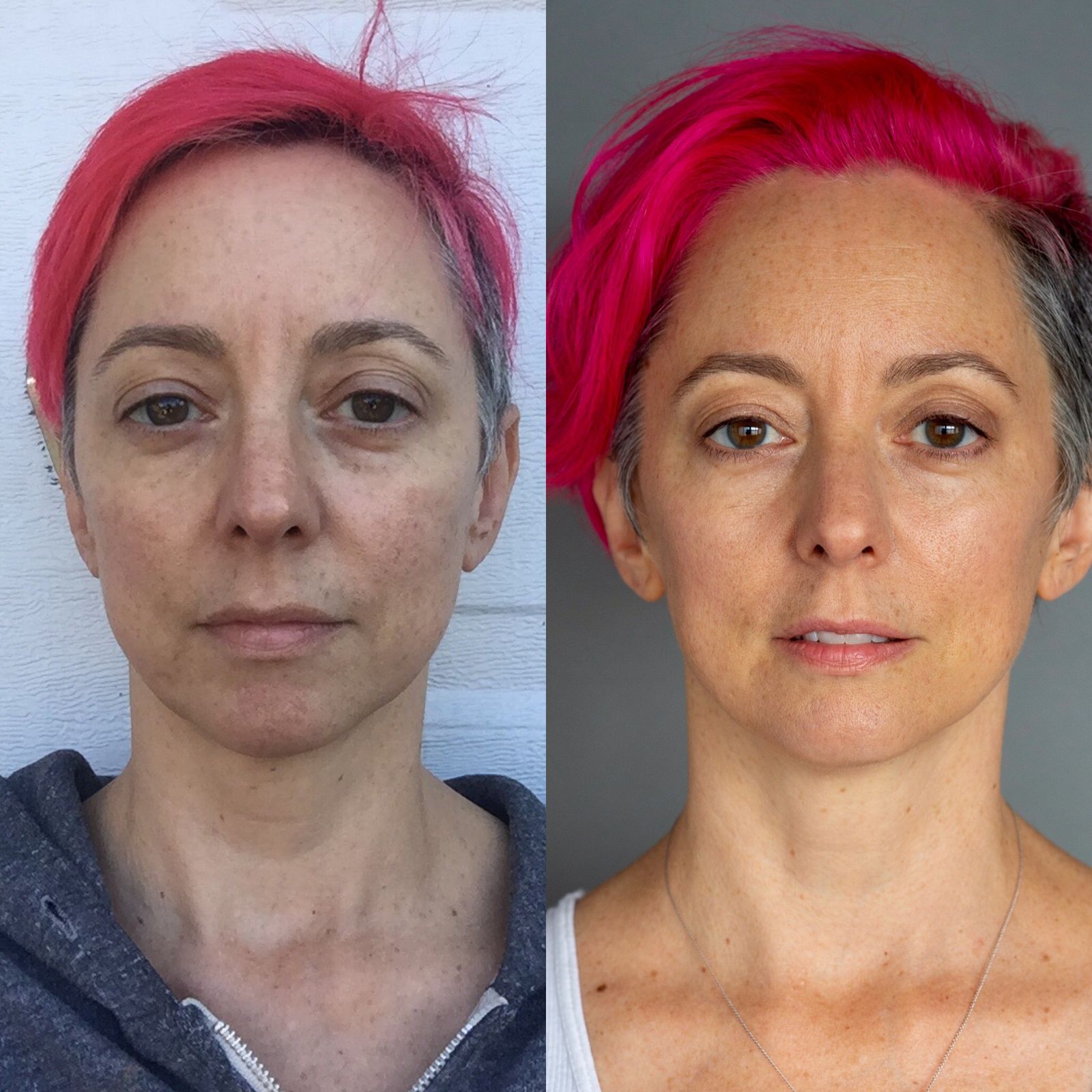
You see them everywhere. Those side-by-side photos on Instagram where someone goes from looking "soft" to looking like they’ve been carved out of marble. The caption usually says something about a 30-day challenge. It’s tempting to believe it. But if you’re looking for the truth about the yoga before and after body transformation, we need to peel back the filters and talk about how muscle physiology and nervous system regulation actually work.
Yoga isn’t magic. It's physics.
I’ve spent years watching people walk into studios with specific aesthetic goals. Some want "long, lean muscles"—a phrase that, honestly, is a bit of a biological myth since your muscle length is determined by where your tendons attach to your bones. Others want to lose weight. What actually happens to your body is a complex mix of hypertrophy, cortisol reduction, and postural realignments that can make you look like a different person even if the scale hasn't moved an inch.
The First Month: It’s Mostly in Your Head (And Your Water Weight)
In those first four weeks, the yoga before and after body changes are often subtle to the eye but massive in how you carry yourself. You aren't growing massive amounts of new muscle fiber yet. Instead, you're waking up your neuromuscular pathways. You’re teaching your brain how to talk to your serratus anterior and your transverse abdominis—muscles most people ignore during a standard gym session.
Most people notice they feel "taller." This isn't just a feeling. According to Dr. Loren Fishman, a specialist in Physical Medicine and Rehabilitation who has studied yoga's impact on bone density and posture, yoga can counteract the "slump" caused by modern desk work. By strengthening the erector spinae and opening the chest, you stop compressing your torso. You look thinner because you’re finally standing at your actual height.
There's also the "de-puffing" phase. If you're doing a vigorous style like Vinyasa or Ashtanga, you’re moving lymph. The lymphatic system doesn't have a pump like the heart; it relies on muscle contraction. Intense twisting and inversion help flush out retained fluids. This is why some people look significantly less bloated after just two weeks of consistent practice. It’s not fat loss; it’s systemic efficiency.
Why Some People Get "Toned" and Others Don't
Let’s get real about the term "toned." It’s just a way of saying you have low body fat and enough muscle mass to see the definition. If you’re practicing Yin yoga—a delicious, slow, floor-based practice—you aren't going to see a radical yoga before and after body shift in terms of muscle definition. Yin targets connective tissue, not muscle protein synthesis.
To change your physical shape, you need mechanical tension and metabolic stress.
Styles like Power Yoga or Rocket Yoga utilize eccentric loading. Think about the transition from High Plank to Chaturanga Dandasana. You are slowly lowering your entire body weight against gravity. That is a massive stimulus for the triceps, pectorals, and core. A study published in the Journal of Strength and Conditioning Research indicated that bodyweight exercises, when performed to near failure, can induce muscle hypertrophy similar to external weights.
But there’s a catch.
If your goal is a complete body recomposition, your "after" photo depends heavily on your "before" diet. You can’t out-asana a high-calorie, inflammatory diet. However, yoga has a secret weapon: the parasympathetic nervous system. High cortisol (the stress hormone) is a notorious culprit for abdominal fat storage. By lowering cortisol through pranayama (breathing) and meditation, yoga can actually make it easier for your body to shed visceral fat that has been "stuck" due to chronic stress.
The Six-Month Shift: Structural Changes
By the six-month mark, the yoga before and after body results start to settle into the bones. Literally.
You’ll notice your shoulders sit further back. Your pelvic tilt might have corrected itself. This is where the "yoga butt" phenomenon comes from. It's not just about the glutes getting bigger; it's about the hip flexors (psoas) lengthening. When your hip flexors are chronically tight from sitting, they pull your pelvis into an anterior tilt, which makes your glutes look flat and your stomach poke out. Stretch those hip flexors out while strengthening the posterior chain in Bridge pose or Warrior III, and suddenly your silhouette changes entirely.
Real Evidence vs. Social Media Hype
- Muscle Endurance: A study in the Asian Journal of Sports Medicine followed adults doing Sun Salutations (Surya Namaskar) for 24 weeks. The results? A significant increase in upper body strength and a decrease in body fat percentage.
- Flexibility: This is the obvious one, but the "after" body moves differently. You lose the "stiffness" in your gait that comes with aging.
- Balance: Your stabilizer muscles—the tiny ones around your ankles, knees, and hips—become robust. This prevents the "widening" of the lower body that sometimes happens when larger muscle groups overcompensate for weak stabilizers.
The "Yoga Belly" and Digestive Health
It sounds weird, but your gut changes. All those twists—Ardha Matsyendrasana and the like—are often described as "massaging the internal organs." While that’s a bit of a simplification, the movement does stimulate peristalsis.
Better digestion equals less chronic inflammation. Less inflammation equals a flatter midsection. This isn't about "burning calories" during the class; it’s about optimizing how your body processes waste. You might find that your yoga before and after body journey includes much clearer skin and less puffiness in the face, which are direct results of better internal regulation.
Common Pitfalls: Why You Might Not See Changes
Honestly, some people do yoga for years and look exactly the same. Why?
Usually, it's a lack of progression. If you go to the same "Gentle Flow" class three times a week and never break a sweat or challenge your balance, your body has no reason to adapt. The human body is incredibly efficient; it wants to do the least amount of work possible. To see a transformation, you have to introduce "progressive overload," even in yoga. This means holding poses longer, trying more complex inversions, or moving through transitions with more control.
Also, let’s talk about the "Yoga appetite." Some people finish a hot yoga session, feel like they've burned a thousand calories (spoiler: they probably burned closer to 300-400), and then eat a massive acai bowl loaded with sugar or a heavy pasta dinner. If you're eating back more than you're burning, the "after" body is going to be hidden under a layer of insulation.
Nuance: The Psychology of the "After"
The most profound change in the yoga before and after body isn't something you can see in a photo. It’s proprioception—your ability to sense where your body is in space.
Before yoga, many people treat their body like a vehicle they're just driving around. After six months of consistent practice, they inhabit it. You start to notice when your shoulders are creeping up to your ears while you’re driving. You notice when you’re holding your breath. This mindfulness leads to better choices outside the studio. You might find yourself reaching for water instead of soda, or deciding to go for a walk because your body feels "tight." These micro-decisions are what actually fuel the long-term physical transformation.
Actionable Steps for a Yoga Transformation
If you want to actually see a difference in your physique through yoga, you need a strategy. Don't just wander into random classes.
- Prioritize Resistance-Based Styles: If you want muscle definition, look for Ashtanga, Power, or Forest Yoga. These styles emphasize long holds and repetitive transitions that build genuine strength.
- Frequency Matters: One day a week is great for mental health, but for physical body changes, you need 3 to 5 sessions. Your tissues need consistent stimulus to remodel.
- Don't Ignore the "Boring" Parts: The core engagement (Mula Bandha and Uddiyana Bandha) is what creates that deep internal strength. If you're just "hanging out" in your joints, you won't get the results and you’ll probably end up with an injury like "Yoga Butt" (proximal hamstring tendinopathy).
- Track Functional Wins: Don't just look in the mirror. Can you hold a plank longer? Can you touch your toes? Is your back pain gone? These are the indicators that your structural "after" is forming.
- Mix in a Little Weights or Cardio: While yoga is a fantastic "all-in-one," the body thrives on variety. Adding one day of heavy lifting or some zone 2 cardio can accelerate the fat loss that allows your yoga-built muscles to show through.
The yoga before and after body is a marathon, not a sprint. You're rewriting your posture, your nervous system, and your cellular makeup. Give it time, stay consistent, and stop comparing your Day 1 to someone else's Day 1,000.
Practical Starting Framework
Start with a 15-minute daily Sun Salutation practice. It sounds small, but the repetitive nature of the movement—moving from a forward fold to a plank, to a backbend, and back again—hits every major muscle group. Within three weeks, your hamstrings will be longer and your triceps will start to show some life. From there, move into a 60-minute Vinyasa flow three times a week. Focus on the "slow" parts of the transitions; that's where the muscle is built. Pay attention to your breath during the hardest poses; that's where the nervous system is retrained.