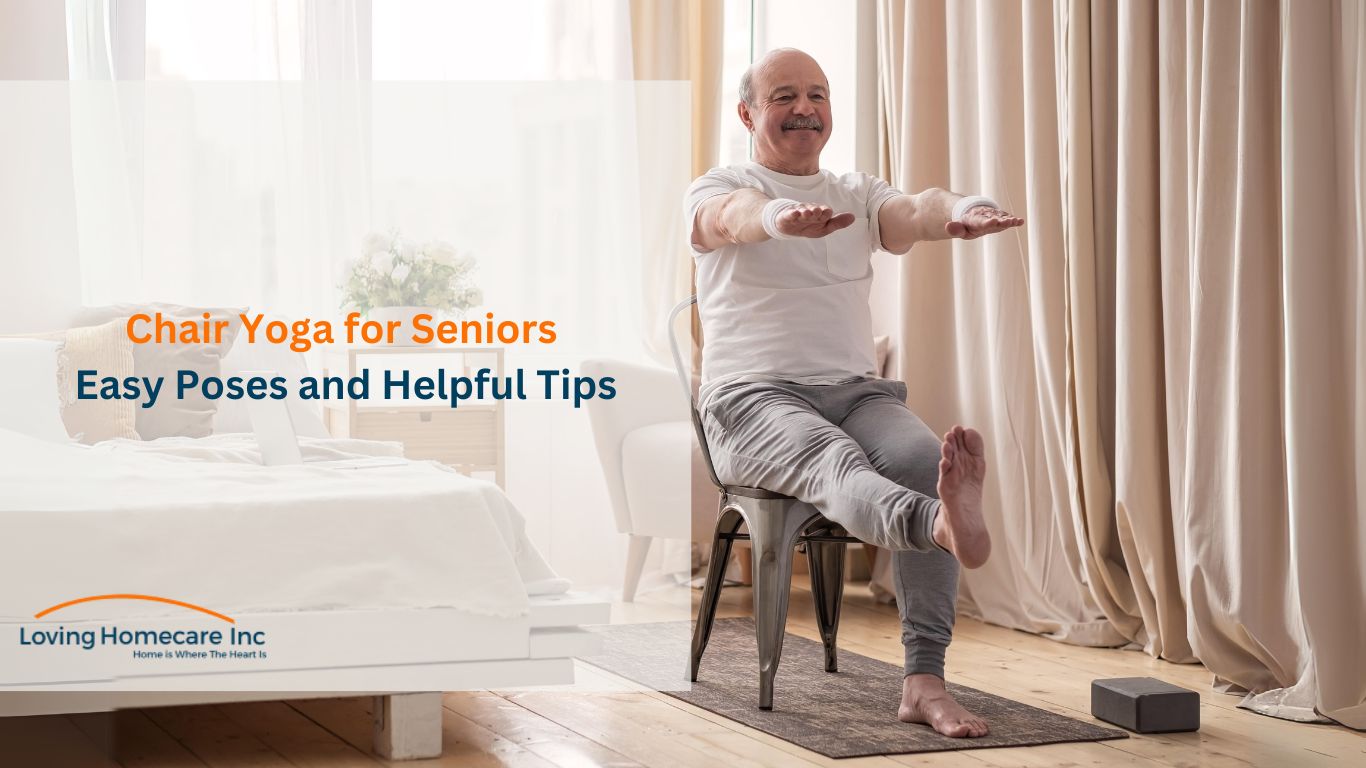
Fear is a heavy thing. For many people over 65, that fear isn't about the dark or the unknown—it's about the floor. One trip, one missed step, and suddenly the world changes. It sounds dramatic, but the CDC reports that one out of every four older adults falls each year. This is exactly why yoga balance poses for seniors have moved from trendy boutique studios into the heart of preventative medicine. It’s not about looking like a pretzel on Instagram. Honestly, it’s about being able to put your pants on one leg at a time without leaning against the dresser.
Balance isn’t a "set it and forget it" feature of the human body. It’s a complex conversation between your inner ear, your eyes, and your "proprioception"—that's your brain's ability to know where your limbs are without looking at them. As we age, that conversation gets a bit static-y. Yoga acts like a signal booster.
The Science of Not Falling Down
Why does yoga work better than just walking? Because walking is linear. Yoga is multi-planar. When you practice yoga balance poses for seniors, you are challenging your center of gravity in ways that a treadmill just can't replicate. A 2016 study published in the American Journal of Occupational Therapy found that an 8-week yoga program significantly improved balance and reduced the fear of falling among older adults.
Dr. George Salem at the University of Southern California has done some incredible work using 3D motion capture to see what's actually happening in a senior's body during a pose. He found that certain poses, like the Tree Pose (Vrksasana), demand a high level of "co-contraction." That basically means your muscles on both sides of the joint are firing at once to create a biological brace. It's fascinating. Your body is essentially teaching itself how to stay upright in real-time.
It’s Not Just About Muscle
Your bones care about this, too. When you stand on one leg, you’re putting a healthy amount of stress on the femur and the hip joint. According to Dr. Loren Fishman, a specialist in Physical Medicine and Rehabilitation at Columbia University, this weight-bearing aspect of yoga can actually help improve bone density. It’s a two-for-one deal: you’re less likely to fall, and if you do happen to stumble, your bones might be resilient enough to handle it.
People think they’re "too old" for balance work. That’s a myth. The neuroplasticity required to improve balance remains present well into your 80s and 90s. You just need the right entry point.
Essential Yoga Balance Poses for Seniors (And How to Actually Do Them)
Let’s get practical. You don’t need a fancy mat or Lululemon gear. You need a sturdy chair and maybe a wall.
Mountain Pose (Tadasana) sounds like you’re just standing there. You aren’t. It is the foundation of every single balance movement. You’ve got to feel your big toe, your pinky toe, and your heel all pressing down equally. It’s about alignment. If your head is jutting forward—a common thing called "forward head posture"—your center of gravity is already off.
The Tree Pose Variation
Tree Pose is the classic. But for seniors, we do it differently.
- Stand next to a wall.
- Keep one hand on the wall for "training wheels."
- Instead of putting your foot on your inner thigh (which can be hard on the hip), just rest your heel against your ankle with your toes still touching the floor.
- It’s called a "kickstand."
You're still training the standing leg to handle 90% of your weight. Eventually, you might lift the toes an inch. Then maybe you let go of the wall for two seconds. That’s progress. It’s slow. It’s supposed to be.
Bird Dog is another powerhouse, though it’s done on the floor on all fours. If your knees are cranky, put a thick blanket under them. You reach one arm forward and the opposite leg back. This forces the "cross-lateral" stabilizers in your spine to wake up. It’s sort of like a core workout and a balance drill had a baby.
Moving Beyond the Physical: The Mindset Shift
Yoga is often sold as this "zen" experience where you find total peace. Kinda. But for seniors, the real mental benefit is proprioceptive awareness.
Have you ever noticed how some people shuffle when they walk? That often happens because they don't trust their balance, so they stop lifting their feet. Yoga balance poses for seniors teach you to trust your feet again. You start to feel the ground. You become aware of the subtle shifts in your weight before they become a full-blown stumble.
There’s also the breath. Most people hold their breath when they feel off-balance. Big mistake. When you hold your breath, your body tenses up. Tension makes you top-heavy. Yoga teaches you to breathe through the wobbles. In a yoga class, we actually want you to wobble.
"Wobbling is your nervous system learning."
If you aren't wobbling, you aren't challenging your brain's balance centers. Don't be afraid of the shakes. It's just your muscles having a conversation.
What to Watch Out For (The Safety Talk)
I’d be irresponsible if I didn’t mention the risks. Glaucoma and inner ear issues (like BPPV) can make balance poses tricky. If you have low blood pressure, moving from the floor to standing too fast can make you dizzy.
- Check your surroundings. No sharp corners. No rugs that slide.
- Use props. A chair isn't a sign of weakness; it’s a tool for precision.
- Hydration matters. Dehydration is a leading cause of dizziness in older adults, which completely undermines your balance efforts.
Also, please stop trying to look like the person on the cover of the yoga magazine. Their anatomy isn't yours. Your "Tree Pose" might look like a gentle sway, and that is perfectly fine.
Making it a Habit
You don't need a 90-minute class. Honestly, five minutes while the coffee brews is better than an hour once a week. Practice your Mountain Pose while you brush your teeth. Try the "kickstand" Tree Pose while you're waiting for a phone call.
Consistency is the only "secret sauce" here. Your nervous system needs frequent reminders that it’s capable of staying upright.
Actionable Steps for Starting Today
- Clear a 5x5 foot space near a wall or a heavy, non-sliding chair. This is your "safe zone."
- Start with your feet. Spend two minutes in Mountain Pose. Close your eyes for five seconds to see how much harder it gets when you lose visual input. (Keep your hand near the wall!)
- Incorporate "The Kickstand." Practice the modified Tree Pose for 30 seconds on each side. Focus on a non-moving point on the wall in front of you—this is your "Drishti" or focal point.
- Find a local "SilverSneakers" or "Chair Yoga" class. Community matters. Having an instructor watch your alignment can prevent the kind of minor injuries that set you back weeks.
- Track your progress, not your poses. Don't worry about how high your leg goes. Instead, track how many seconds you can stand without touching the wall.
Balance is a skill, not a static trait. You can get better at it. You can reclaim that sense of security when walking down a driveway or navigating a crowded grocery store. It starts with one breath and one foot firmly planted on the ground.