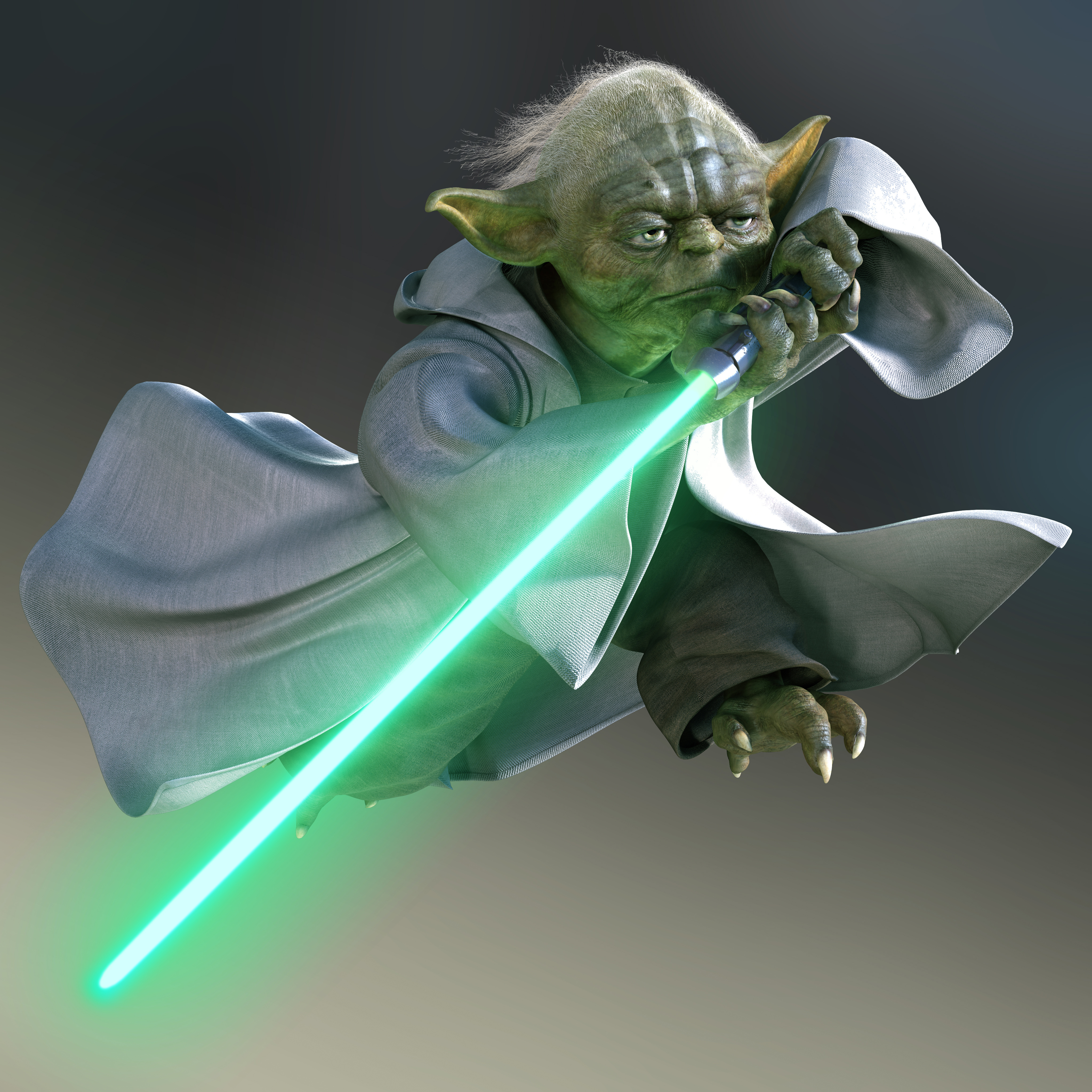
Honestly, if you saw a two-foot-tall, swamp-dwelling frog person today, you probably wouldn't think, "Yeah, that's the greatest warrior in the galaxy." But that was the whole point when George Lucas introduced us to Yoda in 1980. The Yoda Star Wars movie debut in The Empire Strikes Back wasn't just a special effects milestone; it was a total subversion of what a hero looks like.
People forget how much of a risk he was.
He's a puppet. Well, mostly. Frank Oz, the man behind Miss Piggy and Fozzie Bear, was the one crawling under the set in the literal mud of Elstree Studios to bring him to life. It was backbreaking work. Oz would often be tucked into cramped "human Tetris" positions for hours just to get the tilt of Yoda’s head right. Lucas actually considered using a monkey in a mask at one point. Can you imagine? Thankfully, the puppet won out, and a legend was born.
The Mystery of the Species Nobody Names
One of the weirdest things about Yoda is that after forty-odd years and dozens of movies, shows, and books, we still don't know the name of his species. It's just "Yoda's Species." That's it. Lucas was notoriously protective of this. He wanted Yoda to be the "mysterious stranger" who arrives, teaches, and leaves.
Even now in 2026, with The Mandalorian and Grogu (Baby Yoda) being a global phenomenon, the secret holds. We know they live for a long time—Yoda made it to 900. We know they age at a snail's pace. Grogu is 50 and still basically a toddler in a pram. We also know they are all naturally gifted with the Force. You've got Yoda, Yaddle, and Grogu. That’s the list. Every single one of them is a Force powerhouse.
Why He Talked That Way
The "Yoda-speak" isn't just a gimmick. It’s called "anastrophe." Basically, it’s Object-Subject-Verb order. Frank Oz and the writers used it to make him sound ancient and foreign, like his thoughts were coming from a different era of the galaxy. It forces you to listen. You can't just zone out when Yoda is talking; you have to mentally reassemble the sentences.
That Prequel Trilogy Transformation
When the Yoda Star Wars movie appearances shifted to the prequels, things got controversial. For The Phantom Menace in 1999, they used a puppet that... well, it looked a bit rough. Fans hated it. It looked like he’d had some bad work done. By the time Attack of the Clones rolled around, Lucas went full CGI.
This was a massive shift. Suddenly, the old man who walked with a cane was doing triple-backflip-spin-kicks against Count Dooku.
Some fans felt it betrayed the character. They thought Yoda should be above physical fighting. But if you look at the lore, he’s a master of Ataru (Form IV). It’s an incredibly aggressive, acrobatic style of lightsaber combat. He had to use the Force just to move like that because his body was so old and frail. It showed that his "weakness" was an illusion. Size matters not, right?
The Duel with Sidious
The climax of Revenge of the Sith is arguably Yoda's biggest failure. He goes toe-to-toe with Palpatine in the Senate pod. It’s a literal battle for the soul of the Republic. And he loses. Not because he's weaker, but because the Sith had evolved while the Jedi had grown stagnant. Yoda himself realizes this in the novelization—the Jedi were preparing for the last war, while the Sith were preparing for the future.
He goes into exile on Dagobah not just to hide, but to wait. He had to learn how to become a Force Ghost from the spirit of Qui-Gon Jinn. That’s a detail a lot of casual fans miss. Yoda wasn't just sitting in a swamp; he was studying the afterlife.
The Return of the Puppet
Rian Johnson made a big call for The Last Jedi. He brought back the puppet. He actually used the original molds from 1980 to recreate the Empire look. Seeing "Ghost Yoda" whack Luke Skywalker over the head with a cane was a highlight for many. It brought back the "crazy hermit" energy that defined his first appearance.
It reminded us that Yoda isn't just a stoic general. He's a troll. He likes to mess with people to test their patience.
Yoda's Timeline: A Quick Reality Check
If you're trying to track him through the saga, here is the basic flow of his life:
- The High Republic Era: This is about 200 years before the movies. Yoda is already a Grandmaster, traveling the galaxy and teaching younglings. He’s in his prime here.
- The Prequels: He’s the head of the Council on Coruscant. He's wise but blinded by the dark side's shroud.
- The Clone Wars: He becomes a General. He hates it. He realizes the war is a trap but doesn't see a way out.
- The Dark Times: Twenty years of isolation on Dagobah. He eats root leaf stew and waits for a Skywalker.
- The Original Trilogy: He trains Luke, dies peacefully at 900, and disappears into the Force.
- The Sequels: He returns as a spirit to remind Luke that "failure is the greatest teacher."
Actionable Insights for Fans
If you want to understand the character beyond the memes, you should really look into the "Yoda's Species" lore in the High Republic books. It shows a much more active, adventurous version of him that we never got in the films.
Also, pay attention to his hands. In the original trilogy, he has three fingers. In some early merchandise and weird animation frames, people occasionally mess this up, but the "three-finger" rule is a hallmark of the species' design.
If you’re a collector, the 2011 Blu-ray version of The Phantom Menace is the one where they finally replaced the "ugly puppet" with a digital version that matches the other prequels. It makes the marathon watch much less jarring.
The best way to experience the "real" Yoda is still The Empire Strikes Back. Forget the lightsabers for a second. Watch the scene where he lifts the X-Wing out of the swamp. The music, the puppetry, and the dialogue about belief—that is the core of the character. He wasn't meant to be a superhero; he was meant to be a philosopher who happened to be able to kick your ass if he really had to.
Next time you watch a Yoda Star Wars movie moment, look for the subtle ear wiggles. Those were often ad-libbed by Frank Oz to give the puppet a sense of "thinking." It’s those tiny, human touches that made a green piece of latex the most respected mentor in cinematic history.
To get the most out of Yoda's story, start by watching The Empire Strikes Back specifically for his dialogue on the Force, then compare it to his more dogmatic views in The Phantom Menace. You'll see the arc of a character who had to lose everything to finally understand the truth of his own teachings.



