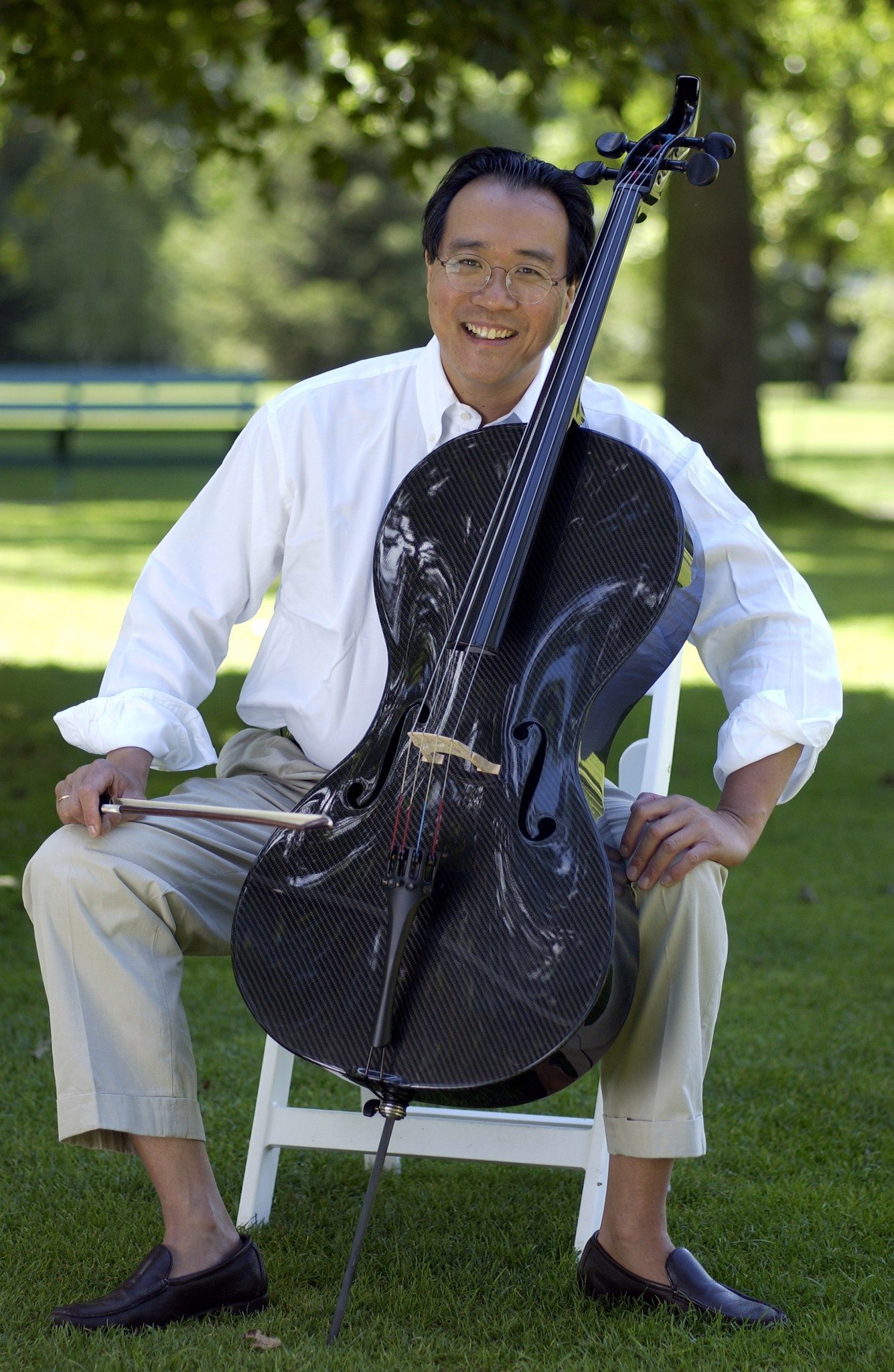
You’ve probably seen the video. A man sits in a folding chair at a mass vaccination site, his sleeves rolled up, playing a cello while people wait their mandatory fifteen minutes after a shot. That was Yo-Yo Ma in 2021. No stage lights, no $200 tickets. Just a guy and a very expensive piece of wood trying to make a gymnasium feel a little less like a sterile clinic.
Honestly, it’s the most Yo-Yo Ma thing ever.
Most people know him as the "cello guy." The child prodigy who played for JFK at age seven. The winner of 19 Grammys. But if you think his career is just about playing Bach suites in fancy concert halls, you’re missing the point of the last thirty years of his life. He doesn't even call himself a "cellist" most of the time anymore. He calls himself a venture culturalist.
What the "Venture Culturalist" Label Really Means
It sounds like corporate jargon, right? It's not. For Ma, it’s a lifestyle. He basically treats culture like a startup investor treats a tech company, but instead of looking for an exit strategy, he's looking for "trust."
He believes that in a world that’s increasingly fractured—politically, socially, economically—music is the "connective tissue." When he founded the Silkroad Ensemble back in 1998, people thought he was crazy. Why would a world-class classical musician spend his time with people playing the pipa (a Chinese lute) or the duduk (an Armenian woodwind)?
Because he was bored.
Okay, maybe not bored, but he was curious. He wanted to know how a musician from the edge of the Gobi Desert thinks about rhythm compared to a guy from the Juilliard School.
The Silkroad Experiment
Silkroad wasn't just a band; it was a laboratory. It’s still going strong today under the leadership of Rhiannon Giddens, but Ma’s fingerprints are everywhere. He proved that you could take a 1712 Davidoff Stradivarius cello and a Mongolian horse-head fiddle and make them sound like they belonged together.
It wasn't always "perfect" in the classical sense. Some critics hated it. They called it "crossover fluff." But Ma didn't care. He was looking for what he calls the "edge." He once told an audience at MIT that if you stay in the center of your field, you stop growing. You have to go to the edges to find the ideas that actually change things.
The Bach Project and "Our Common Nature"
If you want to understand the scale of his ambition, look at the Bach Project. Starting in 2018, he decided to play all six of Bach’s Cello Suites in 36 different locations across six continents.
One sitting. No intermission. Just him and the music.
But here’s the kicker: he didn't just play the concerts and leave. In every city, he hosted a "Day of Action." He met with community leaders in Chicago to talk about gun violence. He played at the border between Laredo, Texas, and Nuevo Laredo, Mexico, to prove a point about shared culture.
His latest obsession? Our Common Nature. It’s a multi-year journey exploring how culture connects us to the natural world. He’s been visiting places like the Grand Canyon and the Smoky Mountains, performing in the wild to remind us that we aren't separate from the planet. It’s less about "save the whales" and more about "remember you're a human who breathes air."
The Physical Toll Nobody Talks About
We see the smile. The "perpetual joy" that everyone associates with him. But being Yo-Yo Ma is physically brutal.
Back in the late 70s, right after he graduated from Harvard with an anthropology degree, his career almost ended. He had a massive surgery for scoliosis. He was in a body cast for six months. He couldn't play. He didn't know if he’d ever play again.
He credits that moment with his "liberation." He realized that if he could lose it all, then every day he could play was a gift. That’s why he says "yes" to things most classical stars say "no" to.
- He showed up on Sesame Street.
- He played with a jookin dancer named Lil Buck in a viral video.
- He collaborated with Bobby McFerrin on an album called Hush that was mostly improvised vocalizing.
He isn't afraid of looking silly. He isn't afraid of a "bad" performance. He’s only afraid of a meaningless one.
The Gear: 1712 and 1733
For the gearheads, yes, he plays some of the most famous instruments on earth.
- The 1712 "Davidoff" Stradivarius: Previously owned by Jacqueline du Pré. It’s one of the most famous cellos in existence.
- The 1733 Montagnana: This is his "workhorse." It has a deeper, broader sound than the Strad.
- The Moes & Moes: A modern cello made in 2003. He uses this for travel or when the weather is too "wicked cold" (his words) for the old Italians.
Remember the 2009 Obama Inauguration? It was so cold the instruments wouldn't stay in tune. Ma and the quartet actually used a pre-recorded track for the TV broadcast while they played along live. People were mad, but Ma was practical. "A broken string was not an option," he said. He’s a realist first, an artist second.
Why He Still Matters in 2026
In an era of AI-generated music and hyper-polished streaming, Yo-Yo Ma represents the "messy human." His playing isn't always technically "perfect" (though it’s close). It’s emotional. It’s tactile.
He has this theory about "shared values" versus "shared memories." He thinks we spend too much time arguing about values and not enough time building memories together. Music is the shortcut.
If you want to follow in his footsteps or just understand the man better, don't just listen to his Greatest Hits. Dig into the weird stuff. Listen to the Goat Rodeo Sessions where he plays bluegrass with Chris Thile and Edgar Meyer. Or find the Obrigado Brazil recordings.
Actionable Insights for the "Venture Culturalist" in You
You don't need a $10 million cello to act like Yo-Yo Ma.
- Go to the Edge: If you’re a programmer, go talk to a poet. If you’re a chef, talk to a gardener. Find the "edge" of your knowledge.
- Practice Empathy: Ma says his job is to make sure the listener is the most important person in the room. In your work, who is your "listener"?
- Embrace the Variation: Life isn't a straight line. The 6-month body cast was Ma's biggest "variation," and it defined his career. When things go wrong, treat it like a new musical theme.
- Just Show Up: Sometimes the most important thing you can do is play a cello in a vaccination center or a subway station. Use your skill where it's needed, not just where it's celebrated.
The next time you hear a cello, don't just think of a tuxedo. Think of a man who traveled to the Kalahari Desert to learn from the Bushmen because he wanted to know what "meaning" felt like. That’s the real Yo-Yo Ma.
Next Steps for You
- Listen to "The Goat Rodeo Sessions": It’s the perfect example of his "venture culture" philosophy in action—total genre-blurring.
- Watch the documentary "The Music of Strangers": It tracks the founding of the Silkroad Ensemble and shows the literal sweat and tears involved in his global projects.
- Explore the "Our Common Nature" map: Check his official site to see where he's performing next in his quest to connect music with environmental stewardship.



